PCB convinces top players to sign three-year deal with enhanced retainer, match fees
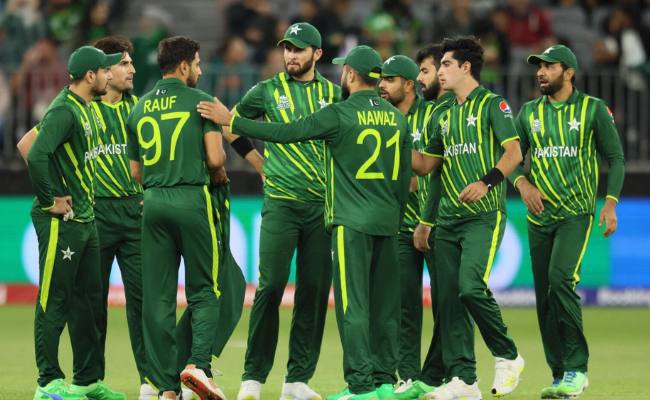
Lahore (PTI): The central contracts stand-off between Pakistan Cricket Board and top national players ended on Wednesday after the parent body announced a significant enhancement in match as well as retainer fees apart from a committed percentage earned from ICC media rights revenue.
This is the first time that the PCB has agreed to give a portion of the ICC revenues to players and according to a reliable source in the board under the three-year deal the players will get from 3 to 5 percent of the ICC revenues.
The PCB is expected to get an annual sum of around USD 33-34 million from its share of revenues earned from media rights of ICC events.
The three-year deal will run from July 1 2023 to June 30, 2026 with as many as 25 cricketers able to get a pie from the ICC revenue share.
The board said the players' match fees will also see a major hike: 50% increment in Test, 25% in ODI and 12.5% in T20I.
The PCB has also given a significant increase in monthly retainers to contracted players across all its four categories with the top A category players including captain, Babar Azam, Muhammad Rizwan and Shaheen Shah Afridi earning a 202% increase their monthly salary. This would be roughly around 4.5 million rupees with just a 10% tax deduction.
Players in the remaining three categories have also got substantial increases in their retainers with a 144% increase for B category, 135% for C and 127% enhancement for D category players.
Centrally contracted players who are playing domestic cricket will be paid half of international players' match fee. In addition, players will be allowed to play two foreign leagues in each season.
The PCB, unlike last season, also merged the red-ball and white-ball national contracts on the recommendations of the central contract committee as a way to evaluate players in terms of winning matches and aimed at promoting fairness, transparent selection process.
PCB chairman Zaka Ashraf said that the PCB had agreed to new contracts with players after lengthy negotiations.
"We believe that our players are the true assets of Pakistan cricket, and it is our utmost priority to ensure their well-being and provide them with the best possible services."
"As we move forward, the entire nation stands behind these players to do well in the upcoming ICC Men's World Cup. We have faith in their abilities, and we are confident that they will make the nation proud with their outstanding performances.
Pakistan captain, Babar Azam termed it a historic deal.
"I am extremely happy and satisfied that we have reached an agreement with the PCB. It has been a lengthy and, at times, challenging negotiation process, but I believe we have reached a fair and beneficial agreement for both parties."
List
Category A: Babar Azam, Mohammad Rizwan and Shaheen Shah Afridi
Category B: Fakhar Zaman, Haris Rauf, Imam-ul-Haq, Mohammad Nawaz, Naseem Shah and Shadab Khan
Category C: Imad Wasim and Abdullah Shafique
Category D: Fahim Ashraf, Hasan Ali, Iftikhar Ahmed, Ihsanullah, Mohammad Haris, Mohammad Wasim Jr, Saim Ayub, Salman Ali Agha, Sarfaraz Ahmad, Saud Shakeel, Shahnawaz Dahani, Shan Masood, Usama Mir and Zaman Khan.
Let the Truth be known. If you read VB and like VB, please be a VB Supporter and Help us deliver the Truth to one and all.
Man arrested with Rs 2.54-crore heroin in Mumbai

Mumbai (PTI): Police have arrested a man and seized over 500 grams of heroin worth Rs 2.54 crore in the illicit market from him in Mumbai, officials said on Friday.
The police's Anti-Narcotics Cell (ANC) made the drug seizure in Santacruz in the western suburbs. The operation was conducted by the Kandivali unit of the ANC on Thursday as part of a special crackdown against drug trafficking in the area, they said.
Acting on specific inputs, an ANC team conducted a raid in Santacruz (East) and intercepted a man. During a search, the team recovered 508 grams of high-grade heroin from his possession, an official said.
The seized contraband, a highly addictive, opioid drug derived from morphine, is estimated to be worth Rs 2.54 crore in the international market, he informed.
Following the seizure, a case was registered against the man under relevant sections of the Narcotic Drugs and Psychotropic Substances (NDPS) Act, 1985, and he was formally placed under arrest in the early hours of Friday.
The police are currently investigating the source of the drug and trying to identify the intended recipients of the consignment, he said.