Progress for Ukraine talks in Paris uncertain with US focus shifting to Venezuela
Paris (AP): Ukraine's allies are meeting on Tuesday in Paris for key talks that could help determine the country's security after a potential ceasefire with Russia. But prospects for progress are uncertain with the Trump administration's focus shifting to Venezuela.
Before the US capture of Venezuelan leader Nicolas Maduro, French President Emmanuel Macron had expressed optimism about the latest gathering of so-called “coalition of the willing” nations. For months, they have been exploring how to deter any future Russian aggression should it agree to stop fighting Ukraine.
In a December 31 address, Macron said that allies would “make concrete commitments” at the summit “to protect Ukraine and ensure a just and lasting peace."
Macron's office said on Tuesday's meeting will gather an unprecedented number of officials attending in person, with 35 participants, including 27 heads of state and government. The US will be represented by President Donald Trump's envoys, Steve Witkoff and Jared Kushner.
Macron's office said the US delegation was initially set to be led by Secretary of State Marco Rubio, who changed his plans for reasons related to the military intervention in Venezuela.
Participants seek concrete outcomes on five key priorities once fighting ends: ways to monitor a ceasefire; support for Ukraine's armed forces; deployment of a multinational force on land, at sea and in the air; commitments in case there's another Russian aggression; and long-term defence cooperation with Ukraine.
But whether that's still achievable on Tuesday isn't so clear now, as Trump deals with the aftermath of his decision to effect leadership change in Venezuela.
Ukraine seeks firm guarantees from Washington of military and other support seen as crucial to securing similar commitments from other allies. Kyiv has been wary of any ceasefire that it fears could provide time for Russia to regroup and attack again.
Recent progress in talks
-------------------------------
Before the US military operation targeting Maduro, Witkoff had indicated progress in talks about protecting and reassuring Ukraine.
In a Dec. 31 post, Witkoff tweeted that “productive” discussions with him, Rubio, and Kushner on the US side and, on the other, national security advisers of Britain, France, Germany and Ukraine had focused on “strengthening security guarantees and developing effective deconfliction mechanisms to help end the war and ensure it does not restart.”
France, which, with the United Kingdom, has coordinated the monthslong, multination effort to shore up a ceasefire, has only given broad-brush details about the plan's scope. It says Ukraine's first line of defence against a Russian resumption of war would be the Ukrainian military and that the coalition intends to strengthen it with training, weaponry and other support.
Macron has also spoken of European forces potentially being deployed away from Ukraine's front lines to help deter future Russian aggression.
Important details unfinalized
------------------------------------
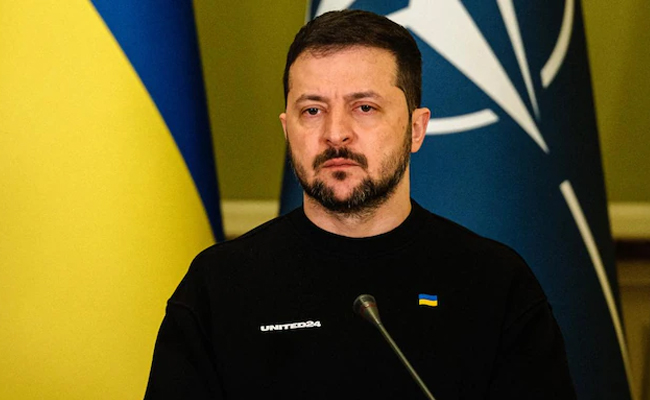
Ukraine's President Volodymyr Zelenskyy said during the weekend that potential European troop deployments still face hurdles, important details remain unfinalized, and “not everyone is ready” to commit forces.
He noted that many countries would need approval from parliament even if leaders agreed to military support for Ukraine. But he recognised that support could come in forms other than troops, such as “through weapons, technologies and intelligence.”
Zelenskyy said that post-ceasefire deployments in Ukraine by Britain and France, Western Europe's only nuclear-armed nations, would be “essential” because some other coalition members ”cannot provide military assistance in the form of troops, but they do provide support through sanctions, financial assistance, humanitarian aid and so on.”
“Speaking frankly as president, even the very existence of the coalition depends on whether certain countries are ready to step up their presence," Zelenskyy said. "If they are not ready at all, then it is not really a coalition of the willing.”
Let the Truth be known. If you read VB and like VB, please be a VB Supporter and Help us deliver the Truth to one and all.
Zubeen Garg's drowning in Singapore highlights vessel operators' responsibility: legal experts
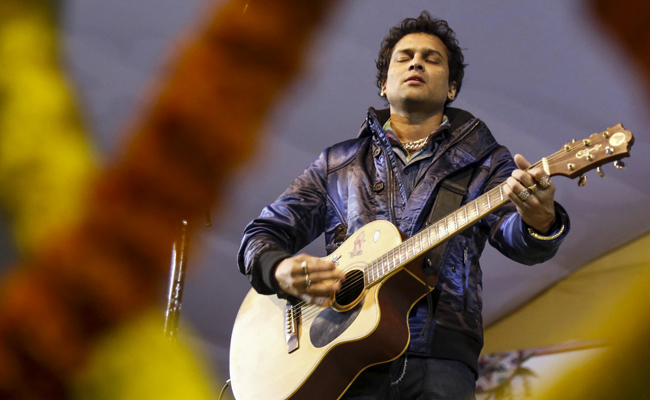
Singapore (PTI): The drowning of Indian singer-composer Zubeen Garg has brought the spotlight on rules and regulations that concern responsibilities of vessel operators when dealing with intoxicated passengers, according to a media report that cited legal experts.
A cultural icon in India’s northeastern region, 52-year-old Garg travelled to Singapore in September 2025 to perform at a live event. A day before his performance, he went on a yacht trip with a group of people. He drowned while swimming in the sea near Lazarus Island, which is a popular diving spot.
His death shook his home state Assam, where millions came out on the streets mourning. Later, police cases were registered against the organiser of the event, his manager and some others.
Nico Lee, managing director of the Triangle Legal law firm, told The Straits Times that Singapore has Maritime and Port Authority of Singapore (Port) Regulations under which there are provisions to debar drunk passengers.
The owner, agent or captain of the vessel must not allow persons under the influence of alcohol or drugs onboard if they are intoxicated to a point where they endanger safety of the vessel, its crew or any person in it.
“In terms of civil liability, it could be argued that a yacht captain is negligent, as he owes a prima facie duty of care to guests on board under general negligence principles,” Lee was quoted as saying by the newspaper.
The singer and his entourage of about 15 individuals were partying on a chartered vessel, which they had boarded at Marina at Keppel Bay.
A death certificate issued by the Singapore General Hospital listed his cause of death as drowning.
An autopsy report suggested that Garg had 333 mg of alcohol per 100 ml of blood in his system, which was four times the legal limit for driving in Singapore and is likely to have impacted his coordination.
Citing Garg’s case, Lee said the circumstances were serious, as the controller of the vessel knew that the guest was intoxicated. Also, he may not have understood or processed a safety briefing for all passengers.
“That combination makes reliance on an ordinary briefing inadequate. If intoxication reaches a level that endangers the safety of the vessel or persons on board, the person in charge should not permit boarding at all,” he said.
According to Lee, the vessel’s operators could also have assigned a crew member to directly supervise him or ensure that he received a one-to-one explanation when he was capable of understanding.
Part of the responsibility could be attributed to the guest if he chose to enter the water and ignore instructions or behave dangerously despite the yacht owner or charterer’s best efforts, Lee said.
Vanessa Sandhu from Clifford Law LLP told The Straits Times that a key question is whether the yacht captain or operator owed a “duty of care” to the passenger and, if so, whether a breach of that duty caused the death.
“A yacht captain and operator generally owe passengers a duty to take reasonable care for their safety while on board, including swimming or water activities. This may include providing safety equipment and issuing appropriate safety instructions,” the daily quoted Sandhu as saying.
“However, the standard of care is an objective one, based on what a reasonable captain or operator would have done in the circumstances. It is not an absolute obligation to prevent all harm,” she said.
During the coroner’s inquiry, the operators of the vessel had said that no one had forced the singer to consume alcohol or enter the water, and that the entire entourage was informed on the yacht about the necessity of wearing life jackets before going for a swim.
A coroner’s inquiry on March 25 ruled Garg’s death as accidental drowning. On April 1, the police said that investigations into the singer's death had concluded, with no evidence of foul play.
However, in Assam, where seven persons were arrested in connection with Garg’s case, and some of them charged with murder, the matter is being heard in the court. All the suspects have denied any wrongdoing.