Russia arrests over 4,000 at wide protests backing opposition leader Alexei Navalny
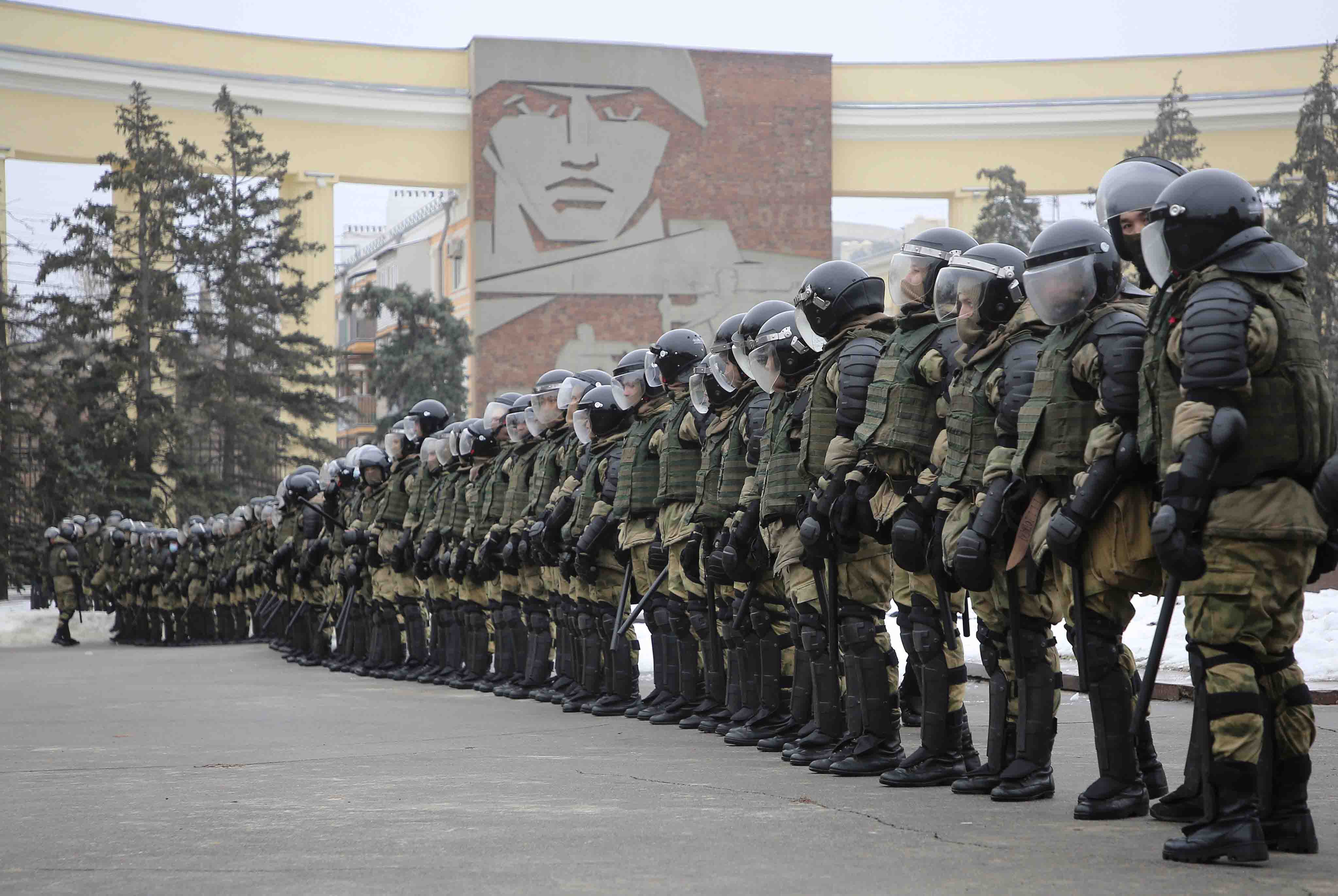
Moscow, Jan 31: Chanting slogans against President Vladimir Putin, tens of thousands took to the streets Sunday across Russia to demand the release of jailed opposition leader Alexei Navalny, keeping up nationwide protests that have rattled the Kremlin. More than 4,000 people were detained by police, according to a monitoring group, and some were beaten.
Russian authorities mounted a massive effort to stem the tide of demonstrations after tens of thousands rallied across the country last weekend in the largest, most widespread show of discontent that Russia has seen in years. Yet, despite threats of jail terms, warnings to social media groups and tight police cordons, the protests again engulfed cities across Russia's 11 time zones on Sunday.
The 44-year-old Navalny, an anti-corruption investigator who is Putin's best-known critic, was arrested on Jan.17 upon returning from Germany, where he spent five months recovering from nerve-agent poisoning that he blames on the Kremlin. Russian authorities have rejected the accusations. He was arrested for allegedly violating his parole conditions by not reporting for meetings with law enforcement when he was recuperating in Germany.
The United States urged Russia to release Navalny and criticized the crackdown on protests.
The U.S. condemns the persistent use of harsh tactics against peaceful protesters and journalists by Russian authorities for a second week straight, U.S. Secretary of State Antony Blinken said on Twitter.
The Russian Foreign Ministry rejected Blinken's call as a crude interference in Russia's internal affairs" and accused Washington of trying to destabilize the situation in the country by backing the protests.
On Sunday, police detained more than 4,100 people at protests in cities nationwide, according to OVD-Info, a group that monitors political arrests. Those arrests followed some 4,000 detentions at demonstrations on Jan. 23 in more than 100 Russian cities.
In Moscow, authorities introduced unprecedented security measures in the city center, closing subway stations near the Kremlin, cutting bus traffic and ordering restaurants and stores to stay closed.
Navalny's team initially called for Sunday's protest to be held on Moscow's Lubyanka Square, home to the main headquarters of the Federal Security Service, which Navalny claims was responsible for his poisoning. Facing police cordons around the square, the protest then shifted to other central squares and streets.
Police were randomly picking up people and putting them into police buses, but thousands of protesters marched across the city center for hours, chanting Putin, resign! and Putin, thief!" a reference to an opulent Black Sea estate reportedly built for the Russian leader that was featured in a widely popular video released by Navalny's team.
I'm not afraid, because we are the majority," said Leonid Martynov, who took part in the protest. We mustn't be scared by clubs because the truth is on our side."
At one point, crowds of demonstrators walked toward the Matrosskaya Tishina prison where Navalny is being held. They were met by phalanxes of riot police who pushed the march back and chased protesters through courtyards, detaining scores and beating some with clubs. Still, demonstrators continued to march around the Russian capital, zigzagging around police cordons.
More than 1,200 people were detained in Moscow, including Navalny's wife, Yulia. If we keep silent, they will come after any of us tomorrow, she said on Instagram before turning out to protest.
Several thousand people marched across Russia's second-largest city of St. Petersburg, chanting Down with the czar! and occasional scuffles erupted as some demonstrators pushed back police who tried to make detentions. Nearly 900 were arrested.
Some of the biggest rallies were held in Novosibirsk and Krasnoyarsk in eastern Siberia and Yekaterinburg in the Urals.
I do not want my grandchildren to live in such a country," said 55-year-old Vyacheslav Vorobyov, who turned out for a rally in Yekaterinburg. "I want them to live in a free country.
As part of a multipronged effort by authorities to block the protests, courts have jailed Navalny's associates and activists across the country over the past week. His brother Oleg, top aide Lyubov Sobol and three other people were put Friday under a two-month house arrest on charges of allegedly violating coronavirus restrictions during last weekend's protests.
Let the Truth be known. If you read VB and like VB, please be a VB Supporter and Help us deliver the Truth to one and all.
Austrian police detain suspect in case of rat poison found in baby food jars on supermarket shelves
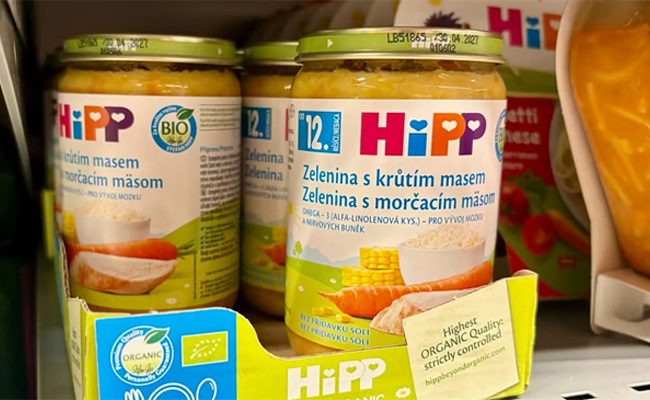
Vienna (AP): Police in eastern Austria say a 39-year-old suspect has been arrested after rat poison turned up in some HiPP baby food jars on supermarket shelves in central Europe.
HiPP, which recalled some of its baby food jars in Austria, Slovakia and the Czech Republic after the case came to light last month, said in a statement Saturday it was “greatly relieved” by the arrest, and would provide further updates as verified details come in.
The Burgenland State Criminal Police Office, under the direction of prosecutors, said a probe was launched after poison turned up in a baby food jar purchased at a supermarket in the city of Eisenstadt on April 18.
It said the suspect was being questioned, and that no further details would be immediately provided. The Burgenland public prosecutor's office has announced an investigation into suspected “intentional endangerment of the public.”
The Austrian Press Agency reported that an expert report on the toxicity of the poison was pending. A total of five tampered baby food jars were seized before they could be consumed, APA reported.
Authorities said previously they believe the tampering occurred in 190-gram (6.7-ounce) jars of baby food made with carrots and potatoes for 5-month-olds that were sold from SPAR supermarkets in Austria.
HiPP responded by recalling all of its baby food jars sold at SPAR supermarkets — which include SPAR, EUROSPAR, INTERSPAR and Maximarkt stores — in Austria as a precaution. Vendors in Slovakia and the Czech Republic also removed all of the brand's baby jars from sale.
The company said the recall was not due to any product or quality defect on its part, and said the jars left its facility in “perfect condition.”
Police said a customer at the time of the discovery had reported that a jar appeared to have been tampered with, but no one had consumed the baby food.