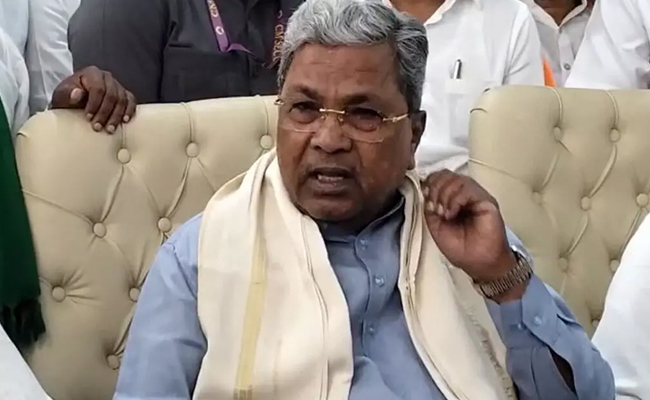
Russian opposition leader Navalny in coma, allegedly poisoned by toxic tea
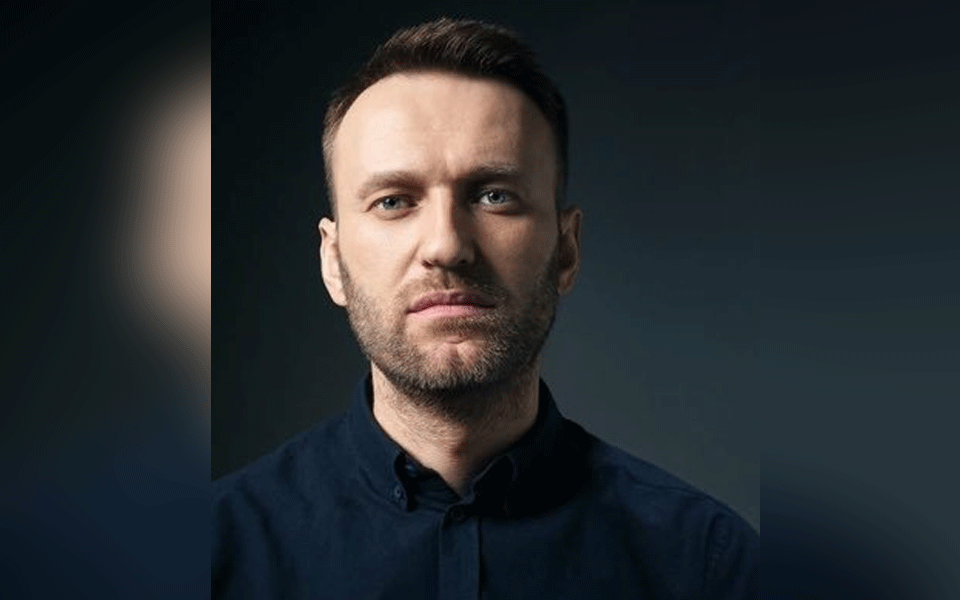
Moscow: Russian opposition leader Alexei Navalny, one of Vladimir Putin's fiercest critics, lay in a coma Friday at a Siberian hospital, the victim of what his allies said appeared to be a poisoning engineered by the Kremlin.
Navalny's organisation was scrambling to make arrangements to transfer him to Germany for treatment; a German group said it was ready to send a plane for him and that a noted hospital in Berlin was ready to treat him.
The 44-year-old Navalny fell ill on a flight back to Moscow from the Siberian city of Tomsk on Thursday and was taken to a hospital after the plane made an emergency landing in Omsk, Navalny's spokeswoman, Kira Yarmysh, said on Twitter.
She told the Echo Moskvy radio station that he must have consumed poison in tea he drank at an airport cafe before boarding the plane early Thursday.
During the flight, Navalny started sweating and asked her to talk to him so that he could focus on the sound of a voice." He then went to the bathroom and lost consciousness, and has been in a coma and on a ventilator in grave condition ever since.
In a video statement released early Friday in Omsk, Yarmysh said Navalny remained in critical condition and she called on the hospital's leadership not to obstruct us from providing all necessary documents for his transfer.
It was not clear what the possible obstructions could be. Other opposition figures were quick to suggest Kremlin involvement.
We are sure that the only people that have the capability to target Navalny or myself are Russian security services with definite clearance from Russia's political leadership, Pyotr Verzilov, a member of the protest group Pussy Riot who ended up in intensive care after suspected poisoning in 2018, told The Associated Press.
We believe that Putin definitely is a person who gives that go-ahead in this situation.
Jaka Bizilj of the German organization Cinema For Peace, which arranged for Verzilov's treatment in Germany, said that at Verzilov's request we will send at midnight an air ambulance with medical equipment and specialists with which Navalny can be brought to Germany.
Omsk is about 4,200 kilometers (2,500 miles) east of Berlin, roughly a six-hour flight.
Doctors at Omsk Ambulance Hospital No. 1, where the politician was being treated, remained tight-lipped about his diagnosis saying only that they were considering a variety of theories, including poisoning. Local health officials said they found no indication that Navalny had suffered from a heart attack, stroke or the coronavirus.
Authorities initially refused to let Navalny's wife, Yulia, see her husband and have rejected requests for documentation that would allow him to be transferred to a European hospital for treatment, Yarmysh said.
Verzilov, who was flown to Berlin for treatment in 2018, said hospitals in Omsk or Moscow would not be able to treat Navalny properly and expressed concern about possible pressure from security services that doctors could be under in Russia.
Kremlin spokesman Dmitry Peskov said it was necessary to wait for test results showing what caused Navalny's condition, adding the authorities would consider a request to allow Navalny to leave Russia, which has not fully opened its borders after a coronavirus lockdown, for treatment.
State news agency Tass reported that police were not considering deliberate poisoning, a statement the politician's allies dismissed. Reports about the alleged poisoning made waves in the West.
French President Emmanuel Macron said France was ready to offer Navalny and his family all necessary assistance ... in terms of health care, asylum, protection" and insisted on the need to clarify what happened.
German Chancellor Angela Merkel, speaking at a joint news conference with Macron, echoed that sentiment. What is very important is that it will be clarified very urgently how it could come to the situation."
British Foreign Secretary Dominic Raab and the United Nations also expressed concern over what happened to Navalny, and Amnesty International demanded a full and thorough investigation.
The widow of Alexander Litvinenko, the Russian agent who was killed in London by radioactive poisoning in 2006, voiced concern that Navalny's enemies within Russia may have decided that it's time to use a new tactic.
Maybe they decided ... not to stop him just with an arrest but to stop him with poison. It looks like a new tactic against Navalny, Marina Litvinenko told The Associated Press from Sicily, Italy.
Like many other opposition politicians in Russia, Navalny has been frequently detained by law enforcement and harassed by pro-Kremlin groups. In 2017, he was attacked by several men who threw antiseptic in his face, damaging an eye.
Last year, Navalny was rushed to a hospital from prison, where he was serving a sentence following an administrative arrest, with what his team said was suspected poisoning. Doctors said he had a severe allergic attack and discharged him back to prison the following day.
Navalny's Foundation for Fighting Corruption has been exposing graft among government officials, including some at the highest level. Last month, he had to shut the foundation after a financially devastating lawsuit from Yevgeny Prigozhin, a businessman with close ties to the Kremlin.
Let the Truth be known. If you read VB and like VB, please be a VB Supporter and Help us deliver the Truth to one and all.
Karnataka MLA Vinay Kulkarni disqualified after conviction in Goudar murder case
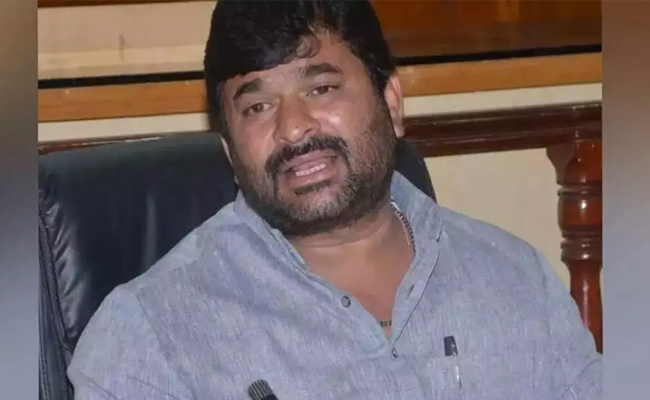
Bengaluru (PTI): The Karnataka Legislative Assembly on Saturday issued an official notification regarding the disqualification of Congress MLA Vinay Kulkarni following his conviction in the murder case of BJP leader Yogeshgouda Goudar.
The former minister is currently in prison, serving life imprisonment in the case.
“Consequent upon the conviction of Vinay Kulkarni, Member of the Karnataka Legislative Assembly representing the Dharwad constituency, by the LXXXI Additional City Civil & Sessions Judge, Bengaluru City (CCH-82), in Spl CC No. 565/2021, he stands disqualified from the membership of the Karnataka Legislative Assembly from the date of conviction, i.e, April 15, 2026,” the notification read.
“He stands disqualified in terms of the provisions of Article 191(1)(e) of the Constitution of India, read with Section 8 of the Representation of the People Act, 1951, and such disqualification shall continue for a further period of six years after his release, unless the conviction is stayed by a competent court,” it added.
Hence, one seat in the Karnataka Legislative Assembly has fallen vacant, the notification said.
Bypolls were held on April 9 to fill two other seats in the 224-member Assembly that fell vacant due to the death of sitting MLAs. The results will be declared on May 4.
On April 15, Judge Santhosh Gajanan Bhat convicted Kulkarni and others under various IPC sections, including criminal conspiracy and murder. Subsequently, on April 17, the court sentenced Kulkarni and 15 others convicted in the case to life imprisonment.
The case pertains to the killing of Goudar, a BJP Zilla Panchayat member, in Dharwad on June 15, 2016. Kulkarni was a minister at that time. Hired assailants attacked and hacked Goudar to death in his gym at Saptapur in Dharwad.
Following demands from Goudar’s family and others, the then-BJP government transferred the case to the CBI in 2019.
The CBI filed a supplementary chargesheet in 2020, naming Vinay Kulkarni as the “main conspirator.” It alleged that he perceived Yogeshgouda Goudar as a growing political rival in Dharwad and hired contract killers to eliminate him.
Kulkarni was arrested by the CBI in 2020. He was granted bail by the Supreme Court in August 2021 under certain conditions, including a ban on entering Dharwad district. However, in June 2025, the apex court cancelled his bail following allegations of witness tampering and attempts to influence prosecution witnesses.
Kulkarni again sought bail in January 2026, but the High Court rejected it, citing judicial propriety.
However, the Supreme Court granted him bail on February 27 after noting that all witnesses had been examined.