Russians strike Ukraine as Kremlin-staged votes continue
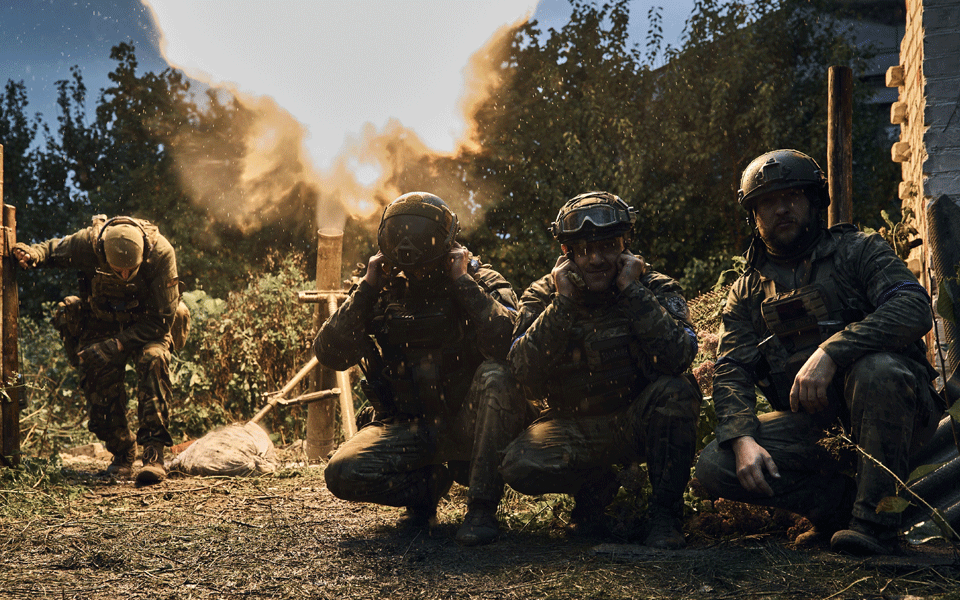
Kyiv (AP): Russian forces launched new strikes on Ukrainian cities Saturday as Kremlin-orchestrated votes continued in occupied regions of Ukraine to pave the way for their annexation by Moscow.
Zaporizhzhia Gov. Oleksandr Starukh said the Russians targeted infrastructure facilities in the Dnieper River city, and one of the missiles hit an apartment building, killing one person and injuring seven others.
The Russian forces also struck other areas in Ukraine, damaging residential buildings and civilian infrastructure.
The British Defense Ministry said that Russia was targeting the Pechenihy dam on the Siverskyy Donets River in northeastern Ukraine following previous strikes on a dam on a reservoir near Kryvyi Rih, causing flooding on the Inhulets River.
Ukrainian forces are advancing further downstream along both rivers, the British said. As Russian commanders become increasingly concerned about their operational setbacks, they are probably attempting to strike the sluice gates of dams, in order to flood Ukrainian military crossing points.
Amid the fighting, voting continued in Kremlin-organized referendums in occupied areas votes that Ukraine and its Western allies dismissed as a sham with no legal force.
In the five-day voting in the eastern Luhansk and Donetsk regions and Kherson and Zaporizhzhia in the south that began Friday, election officials accompanied by police officers carried ballots to homes and set up mobile polling stations, citing safety reasons. The votes are set to wrap up Tuesday when balloting will be held at polling stations.
The voting was also was held in Russia, where refugees and other residents of those regions cast ballots.
Russian President Vladimir Putin has said that Moscow will heed the residents' will, a clear indication that the Kremlin is poised to quickly annex the regions once the voting is over.
Ukraine and the West said the vote was an illegitimate attempt by Moscow to slice away a large part of the country, stretching from the Russian border to the Crimean Peninsula. A similar referendum took place in Crimea in 2014 before Moscow annexed it, a move that most of the world considered illegal.
Ukrainian President Volodymyr Zelenskyy urged Ukrainians in occupied regions to undermine the referendums and to share information about the people conducting this farce. He also urged Ukrainians to avoid being called up in the Russian mobilization announced Wednesday.
But if you do end up in the Russian army, then sabotage any enemy activity, interfere with any Russian operations, give us all important information about the occupiers. ... And at the first opportunity, switch to our positions, he said in his nightly address.
Russia's Defense Ministry said that a partial mobilization ordered by Putin aimed to add about 300,000 troops, but the presidential decree keeps the door open for a broader call-up.
Across Russa's 11 time zones, men hugged their weeping family members before being rounded up for service amid fears that a wider call-up might follow. Some media reports claimed that the Russian authorities actually plan to mobilize more than 1 million, the allegations denied by the Kremlin.
Protests against the mobilization that erupted Wednesday in Moscow, St. Petersburg and several other Russian cities were quickly dispersed by police, who arrested over 1,300 and immediately handed call-up summons to many of them. Anti-war activists are planning more protests Saturday.
Many Russian men tried desperately to leave the country, buying up scarce and exorbitantly priced plane tickets. Thousands others fled by car, creating lines of traffic hours or even days long at some borders. The lines of cars were so long at the border with Kazakhstan that some people abandoned their vehicles and walked just as some Ukrainians did after Russia invaded their country Feb. 24.
In a bid to calm public fears over the call-up, the authorities announced that many of those working in high tech, communications or finance will be exempt.
Let the Truth be known. If you read VB and like VB, please be a VB Supporter and Help us deliver the Truth to one and all.
Ladakh a living land of dharma for centuries: Amit Shah
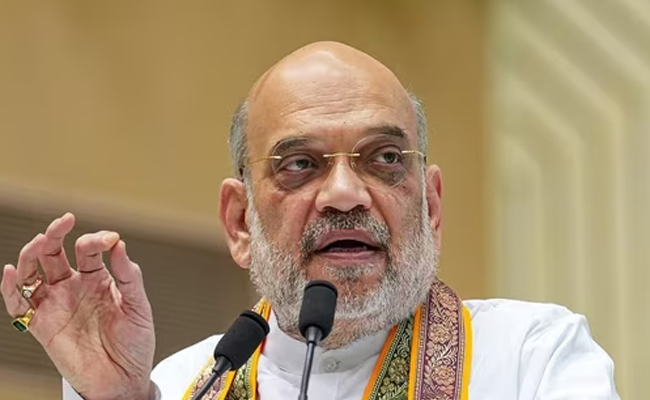
Leh/Jammu (PTI): Union Home Minister Amit Shah on Friday described the return of sacred relics of Lord Buddha to Ladakh after 75 years as a "historic reunion" and said that the Union Territory has remained a "living land of dharma", preserving and nurturing Buddhist knowledge for centuries.
Stressing the relevance of Buddha's teachings in modern times, Shah said the message of peace, compassion and the middle path was even more important today than it was 2,500 years ago.
"Ladakh has been a living land of dharma for centuries. When the Dalai Lama comes here, he says this land is not merely a geographical land but a living laboratory of Buddhist culture and compassion," Shah said, speaking after the inauguration of the sacred holy relics exposition of Tathagata Buddha and the 2569th Buddha Purnima celebrations at Jivetsal in Leh during his two-day visit to Ladakh.
Calling Ladakh a land of compassion, he said this land has preserved and nurtured knowledge. "Whenever Buddhism faced crises, this land worked to protect the teachings of Buddha. And when peace returned, it helped to expand and carry forward that preserved wisdom," he added.
"Unless one internalises knowledge and makes it a part of oneself, liberation is not possible. Knowledge is incomplete without spiritual practice, while spiritual practice without knowledge is blind. Therefore, the union of spiritual practice and knowledge is the right path. Even after all this, if there is no moral discipline, one cannot lead a truly wise life. The basis of a life of wisdom is moral discipline," he said.
Shah said it was through Ladakh and adjoining routes that the teachings of Tathagata Buddha, which originated in India, spread to China and several other countries.
"The message that emerged from the land of Ladakh has become a guiding force for many people around the world to take their lives forward. The presence of these sacred relics in Ladakh reminds us that India's civilisation has, for thousands of years, given the message of peace and coexistence," he said.
He said that in a diverse region like Ladakh and Kargil, this message becomes even more relevant. "This heritage still tells us today that amidst conflict and unrest, only the path of peace and compassion can provide solutions."
He said the return of the relics on Buddha Purnima had enhanced the significance of the festival for the people of Ladakh.
"These sacred relics have come to Ladakh after 75 years. It is as if Buddha himself is present here today," Shah said, adding that followers of Buddhism and people of other faiths in Ladakh and Kargil would draw spiritual energy from the relics.
Highlighting Ladakh's role in the spread of Buddhism, Shah said Kashmir was once an ancient centre of Buddhist studies, Mahayana philosophy and Buddhist art, from where Ladakh first came into close contact with Buddhism.
He said Emperor Ashoka's envoys laid the foundation of Buddhist influence in Ladakh through Kashmir and Gandhara, while Mahayana Buddhism expanded in the region during the Kushan period between the first and third centuries CE.
The Silk Route linking Kashmir, Leh, Yarkand, Khotan and Tibet became a channel not only for trade but also for ideas, monks, manuscripts and artistic traditions, Shah said.
He added that later, Tibetan influence between the seventh and tenth centuries further enriched Ladakh through Mahayana and Vajrayana traditions.
Stressing the relevance of Buddha's teachings in modern times, Shah said the message of peace, compassion and the middle path was even more important today than it was 2,500 years ago.
"Amid conflict and unrest, only the path of peace and compassion can provide solutions," he said.
Shah also appealed to the Ladakh administration to ensure complete arrangements so that followers of all faiths, especially Buddhists, could visit and pay obeisance to the relics.
#WATCH लेह, लद्दाख: केंद्रीय गृह मंत्री अमित शाह ने कहा, "जब दलाई लामा यहां आते हैं तो वे कहते हैं कि यह भूमि केवल भौगोलिक भूमि नहीं है। यह भूमि बौद्ध संस्कृति और करुणा की जीवंत प्रयोगशाला है। इस भूमि पर ज्ञान का संरक्षण हुआ है... भारत की सभ्यता हजारों वर्षों से शांति का संदेश… https://t.co/2nwG0w2CE6 pic.twitter.com/W13itRBqeX
— ANI_HindiNews (@AHindinews) May 1, 2026