Stopped India-Pak conflict with trade, should get Nobel Prize for ending seven wars: Trump
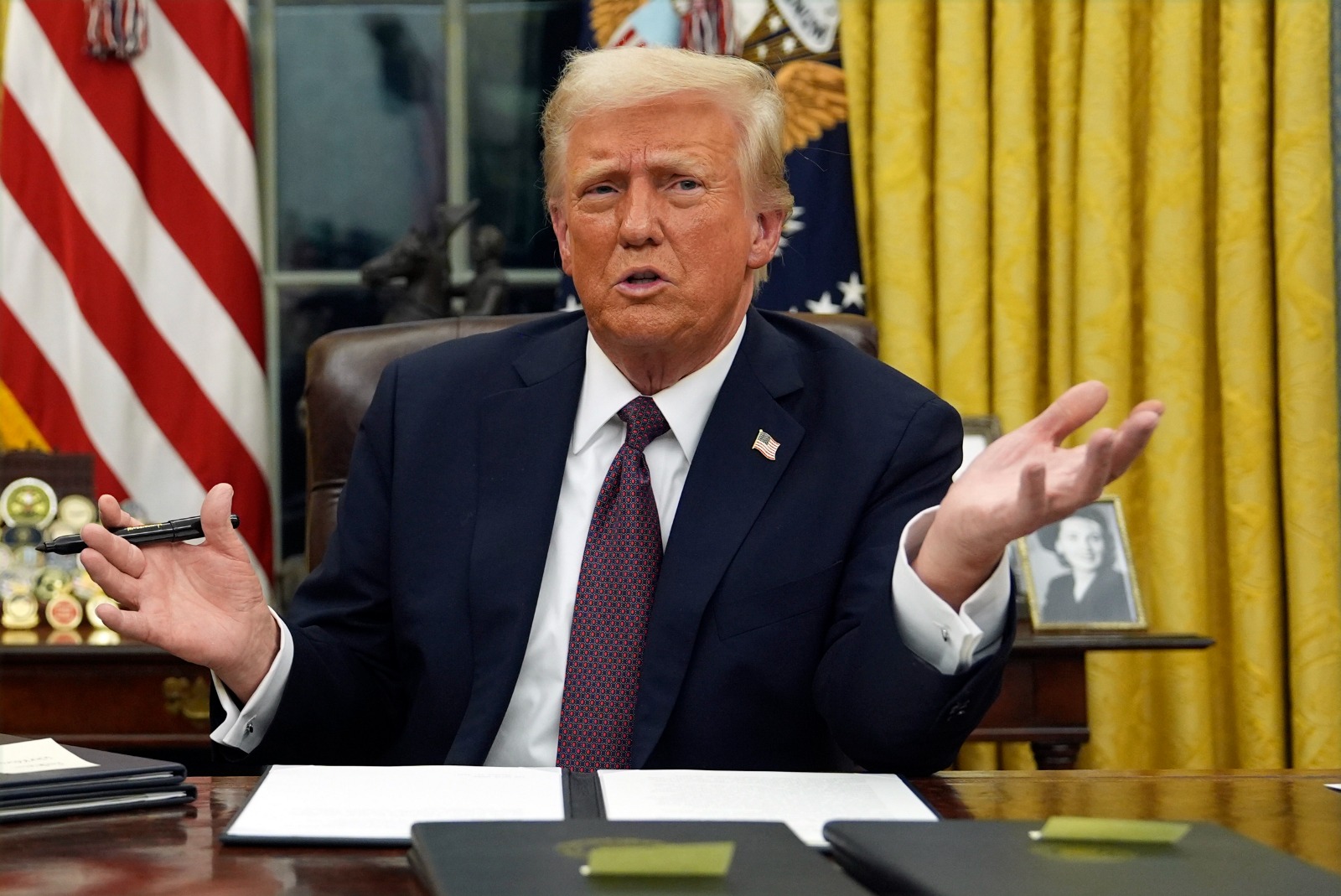
New York/Washington(PTI): US President Donald Trump has repeated his claim that he solved the India-Pakistan conflict earlier this year with trade and asserted that he should get the Nobel Peace Prize for "ending seven wars".
Since May 10, when Trump announced on social media that India and Pakistan had agreed to a “full and immediate” ceasefire after a “long night” of talks mediated by Washington, he has repeated his claim over 40 times that he “helped settle” the tensions between India and Pakistan.
India has consistently denied any third-party intervention.
"On the world stage, we are once again doing things that we are just respected at a level that we have never been respected before. We are forging peace agreements, and we are stopping wars. So we stopped wars between India and Pakistan, Thailand and Cambodia," Trump said at the American Cornerstone Institute Founder's Dinner on Saturday.
He went on to say, "Think of India and Pakistan. Think of that. And you know how I stopped that -- with trade. They want to trade. And I have great respect for both leaders. But when you take a look at all of these wars that we've stopped."
"Just look at that. India, Pakistan, Thailand, Cambodia, Armenia, Azerbaijan, Kosovo and Serbia, Israel and Iran, Egypt and Ethiopia, Rwanda and the Congo. We stopped all of them. And 60 per cent of them were stopped because of trade," the US president claimed.
He added that "like with India, I said, 'look, we're not going to do any trade if you're going to fight and they have nuclear weapons. They stopped."
India launched Operation Sindoor on May 7, targeting terror infrastructure in Pakistan and Pakistan-occupied Kashmir in retaliation for the April 22 Pahalgam attack that killed 26 civilians.
India and Pakistan reached an understanding on May 10 to end the conflict after four days of intense cross-border drone and missile strikes.
India has been consistently maintaining that the understanding on cessation of hostilities with Pakistan was reached following direct talks between the Directors General of Military Operations (DGMOs) of the two militaries.
Prime Minister Narendra Modi has made it clear in Parliament that no leader of any country asked India to stop Operation Sindoor.
External Affairs Minister S Jaishankar has categorically said there was no third-party intervention in bringing about a ceasefire with Pakistan during Operation Sindoor.
Trump said he was told that if he could stop the conflict between Russia and Ukraine, he should get the Nobel Prize.
"I said, 'Well, what about the seven others? I should get a Nobel Prize for each one'. So they said, 'but if you stop Russia and Ukraine, sir, you should be able to get the Nobel'. I said I stopped seven wars. That's one war, and that's a big one," Trump said.
He added that he had thought the Russia-Ukraine conflict would be easy to resolve "because I have a good relationship with President Putin, disappointed in him, but I do. I thought that would be the easiest one, but we'll get it done one way or the other."
Let the Truth be known. If you read VB and like VB, please be a VB Supporter and Help us deliver the Truth to one and all.
SC to hear on May 4 PIL seeking stringent guidelines for issuing Aadhaar to adolescents, adults
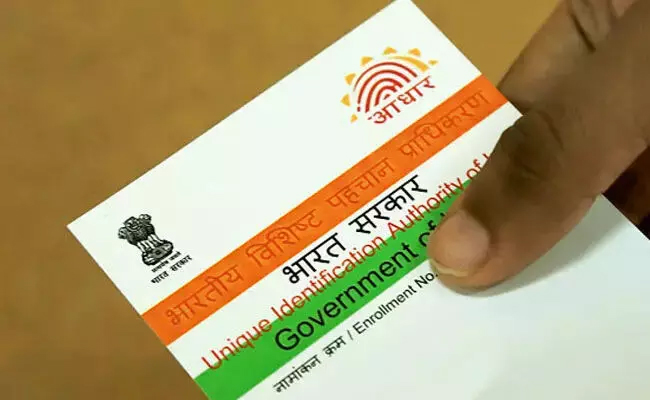
New Delhi (PTI): The Supreme Court is scheduled to hear on Monday a plea seeking a direction to the Unique Identification Authority of India to issue new Aadhaar cards only to citizens up to the age of six years, and frame stringent guidelines for its issuance to adolescents and adults to stop infiltrators from masquerading as Indian citizens.
As per the apex court's causelist of May 4, the plea would come up for hearing before a bench of Chief Justice Surya Kant and Justice Joymalya Bagchi.
The Public Interest Litigation (PIL) filed by lawyer Ashwini Upadhyay has also sought a direction to the authorities to install display boards at common service centres stating that the 12-digit unique identification number is only a "proof of identity" and not a proof of citizenship, address or date of birth.
Besides all the states and Union Territories, the plea has made the UIDAI -- which is the authority that issues Aadhaar -- and the Union ministries of home, law and justice, and electronics and information technology as parties.
The plea, filed through advocate Ashwani Dubey, said Aadhaar, originally intended as a proof of identity, has increasingly become a "foundational document" enabling individuals to obtain other identification documents, such as ration cards, domicile certificates and voter identity cards.
"The UIDAI has issued 144 crore Aadhaar and 99 percent Indians have been enrolled. Therefore, the petitioner is filing this writ petition as a PIL under Article 32, seeking a direction to UIDAI to issue new Aadhaar to children only and frame new stringent guidelines for adolescents and adults, so as to stop infiltrators from getting it and masquerading as Indian citizens," the plea said.
It said the need to file the plea arose when the petitioner came to know the manner in which infiltrators are able to procure Aadhaar through a verification process that is weak and can be easily manipulated.
"Foreigners apply for Aadhaar under the 'foreign' category. But infiltrators apply for Aadhaar under the 'Indian citizen' category and get it easily made. Thereafter, they obtain a ration card, birth and domicile certificate, driving licence, et cetera, essentially becoming indistinguishable from Indian citizens…," it said.
Besides seeking other directions, the plea has raised legal questions, including whether the Aadhaar Act 2016 has become "temporally unreasonable" for failing to keep up with the legislative intent of distinguishing foreigners from Indian citizens.
It said the alleged misuse of Aadhaar undermines targeted welfare delivery and leads to diversion of public resources.