Story on Delhi education system based on impartial, on-the-ground reporting: New York Times
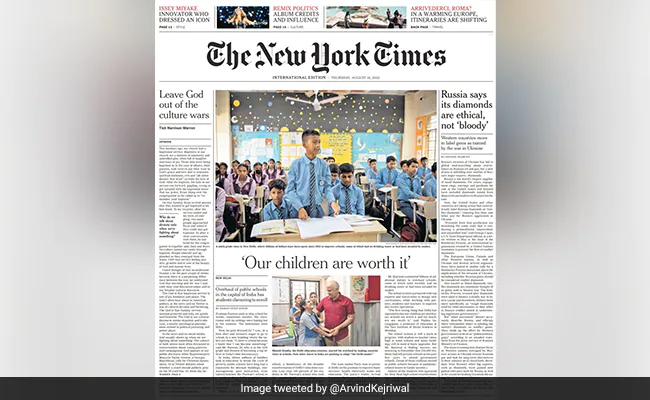
New Delhi, Aug 19: The New York Times story on Delhi's education system was based on "an impartial and on-the-ground reporting", the American newspaper said on Friday, rejecting the paid news charge.
The report triggered a war of words between the BJP and the Aam Aadmi Party after the CBI raided the residence of Delhi Deputy Chief Minister Manish Sisodia, who also hold the education and excise portfolios, on Friday in connection with alleged irregularities in the framing and implementation of the AAP's government's excise policy.
The AAP said the Narendra Modi government sent the CBI to Sisodia's home after The New York Times carried a positive story on the Delhi model of education, and the BJP hit back saying it was a "paid" article.
Requested for a clarification on the matter, the NYT's external communications director Nicole Tylor told PTI in an email, "Our report about efforts to improve Delhi's education system is based on impartial, on-the-ground reporting."
She said education is an issue that The New York Times has covered over many years.
Journalism from The New York Times is always independent, free from political or advertiser influence, she added.
On the charge that the same story was also published by the Khaleej Times, Tylor clarified, "Other news outlets routinely license and republish our coverage."
On August 18, The New York Times published the story, titled 'Our children are worth it', in the front page of its international edition, highlighting the broader transformation of Delhi's education system during the Aam Aadmi Party regime and noting that the overhaul of the public schools in the capital of India has students clamouring to enroll".
Along with the story, the NYT published a picture of Sisodia with three girl students of Delhi government schools, with the caption, "Manish Sisodia, the Delhi education minister, started the overhaul by making surprise visits to schools. Now other states in India are pushing to adopt the Delhi model."
Let the Truth be known. If you read VB and like VB, please be a VB Supporter and Help us deliver the Truth to one and all.
Four children drown in lake while trying to catch ducks in Chikkamagaluru

Chikkamagaluru: Four children drowned in a lake in Aralaguppe village after reportedly going to catch ducks, police said.
The deceased have been identified as Mahdia, Arunus, Nayus, and Abdul Rehman. The children were aged between 5 and 14 years. Another child, Armaan (4), escaped unhurt.
Police said the incident occurred at Karanji Lake in Aralaguppe village. Rural police visited the spot and are investigating the case. A case has been registered at the local rural police station.