Trumps backs bill for very high tariffs on India, China for buying Russian oil: US Senator
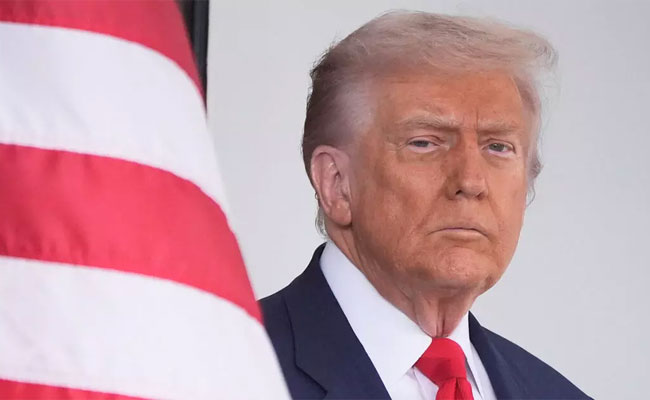
New York/Washington (PTI): US President Donald Trump has backed a sanctions bill that could impose 500 per cent tariffs on countries buying Russian oil, giving the White House leverage against countries like China and India to stop them from purchasing cheap oil from Moscow.
US Senator Lindsey Graham on Wednesday said that the legislation would give the White House "tremendous leverage" against countries like China, India and Brazil to incentivise them to stop buying cheap oil from Russia.
“After a very productive meeting today with President Trump on a variety of issues, he greenlit the bipartisan Russia sanctions bill that I have been working on for months with Senator Blumenthal and many others,” Graham said in a post on X Wednesday.
ALSO READ: ‘No state has right to use force’: Russia on US seizure of tanker in North Atlantic
“This will be well-timed, as Ukraine is making concessions for peace, and Putin is all talk, continuing to kill the innocent. This bill will allow President Trump to punish those countries who buy cheap Russian oil, fuelling Putin’s war machine,” he said.
“This bill would give President Trump tremendous leverage against countries like China, India and Brazil to incentivise them to stop buying the cheap Russian oil that provides the financing for Putin’s bloodbath against Ukraine,” he added.
Graham said he looks forward to a “strong” bipartisan vote on the bill, “hopefully as early as next week.”
Trump has imposed 50 per cent tariffs on India, among the highest in the world, including 25 per cent levies for its purchases of Russian energy.
Graham and Blumenthal have introduced the Sanctioning Russia Act of 2025, which would impose secondary tariffs and sanctions on “countries that continue to fund Putin’s barbaric war in Ukraine.”
The legislation has proposed a 500 per cent tariff on secondary purchase and reselling of Russian oil and one that almost every single member of the Senate Foreign Relations Committee has co-sponsored.
“President Trump and his team have made a powerful move, implementing a new approach to end this bloodbath between Russia and Ukraine...However, the ultimate hammer to bring about the end of this war will be tariffs against countries, like China, India and Brazil, that prop up Putin’s war machine by purchasing cheap Russian oil and gas,” a joint statement by Graham and Blumenthal had said last year.
Earlier this week, Graham had said that Indian Ambassador to the US Vinay Kwatra informed him about New Delhi reducing its purchases of Russian oil and asked him to convey to President Donald Trump to “relieve the tariff” imposed on India.
Graham, accompanying Trump on Air Force One on Sunday, was talking about his tariff bill.
Graham said that to end the Russia-Ukraine conflict, pressure must be put on Russian President Vladimir Putin’s customers. Trump said that the sanctions are hurting Russia very badly and then mentioned India.
Graham then said that the US put a 25 per cent tariff on India for buying Russian oil.
“I was at the Indian Ambassador's house about a month ago, and all he wanted to talk about is how they are buying less Russian oil," Graham said. He added that the Indian envoy conveyed to him 'Would you tell the President to relieve the tariff?'"
“This stuff works...but if you are buying cheap Russian oil, keeping Putin's war machine going, we are trying to give the President the ability to make that a hard choice by tariffs. I really do believe that what he (Trump) did with India is the chief reason India is now buying substantially less Russian oil,” Graham said.
India’s Ambassador to the US Vinay Kwatra had last month hosted US Senators, including Graham, Blumenthal, Sheldon Whitehouse, Peter Welch, Dan Sullivan and Markwayne Mullin at India House, the official residence of the Ambassador of India in Washington, DC. “Had fruitful conversations on the India-US partnership from energy and defence cooperation to trade and important global developments. Grateful for their support for a stronger India–US relationship,” Kwatra had said in a post on X.
Let the Truth be known. If you read VB and like VB, please be a VB Supporter and Help us deliver the Truth to one and all.
Remarks against St Francis Xavier: Right-wing speaker Gautam Khattar gets bail
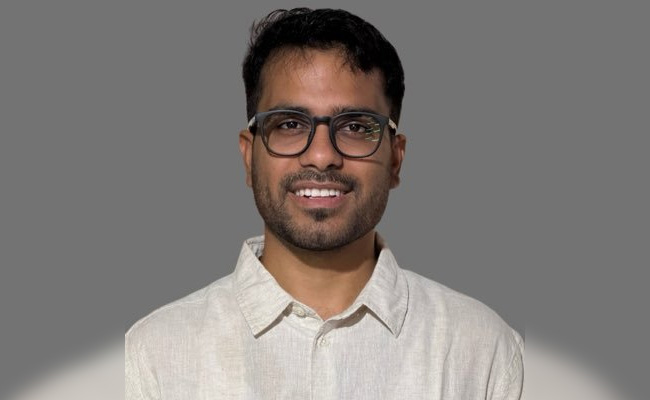
Panaji (PTI): A court in Goa on Saturday granted bail to right-wing speaker Gautam Khattar, who was arrested after he allegedly made derogatory comments against St Francis Xavier.
Judicial Magistrate First Class, Vasco, granted regular bail to Khattar, currently admitted to Goa Medical College and Hospital at Bambolim for treatment of chest pain after he was shifted from the District Hospital in Mapusa two days back.
A row erupted after a video of remarks by Khattar, the founder of Sanatan Mahasangh, at an event on April 18 in the presence of Swami Brahmeshanand, State Transport Minister Mauvin Godinho and BJP MLAs Sankulp Amonkar and Daji (Krishna) Salkar, went viral.
St Francis Xavier is revered as the patron saint of Goa.
The controversial remarks led to the Vasco Police registering an FIR against Khattar on charges of hurting religious sentiments and creating enmity between groups.
He was detained in Kullu, Himachal Pradesh, by local police. His custody was later handed over to the Goa Crime Branch, according to officials.