Under Australia’s under-16 social media ban major platforms block 47 lakh accounts

Sydney: Major technology companies have blocked around 47 lakh accounts following Australia’s landmark ban on social media use by children under the age of 16, the country’s online safety regulator said on Friday.
Australia’s eSafety Commissioner Julie Inman Grant said early data indicated that platforms were taking concrete steps to remove underage users since the law came into force on December 10 last year. She said regulatory guidance and engagement with companies had begun to show results, though a full assessment of compliance would take time.
Under the legislation, large platforms including Meta, TikTok and YouTube are required to prevent under-16s from holding accounts. Companies that fail to take what the law describes as reasonable steps to comply face penalties of up to Aus$ 49.5 million.
ALSO READ: Florida man rushes into traffic to rescue toddlers who wandered onto busy road
Reuters reported that Meta disclosed last week that it had removed hundreds of thousands of accounts across its services, including Instagram, Facebook and Threads, in the days following the introduction of the rules. The company, however, reiterated its position that app stores should be mandated to verify users’ ages and obtain parental consent before minors are allowed to download social media apps, arguing that this would prevent teenagers from shifting between platforms to evade restrictions.
The eSafety Commissioner acknowledged that accurate age verification remains complex but said platforms are expected to strengthen their systems and prevent circumvention. She noted that while it is too early to conclude whether companies are fully compliant, the initial response suggests progress in reducing potential harm and reshaping online norms.
Ahead of the ban’s implementation, downloads of smaller platforms such as BlueSky and Lemon8 increased, though both services have since acknowledged that they fall under the legislation and are cooperating with regulators. Inman Grant said the fast-changing digital landscape makes it impractical to name every service covered by the law, adding that enforcement efforts would focus on platforms with the largest Australian user bases.
She said some children may still find ways to remain online, but stressed that the measure’s success should be judged by its impact on safety and behaviour rather than complete elimination of underage use.
Let the Truth be known. If you read VB and like VB, please be a VB Supporter and Help us deliver the Truth to one and all.
Bengal: Over 55 pc turnout till 1 pm in repoll in 15 booths of 2 assembly seats
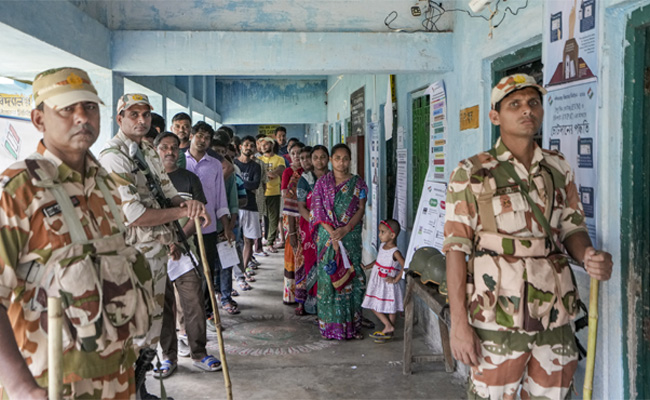
Kolkata (PTI): Over 55 per cent turnout was recorded till 1 pm in repoll in 15 booths of two assembly constituencies in West Bengal's South 24 Parganas district on Saturday, an official said.
Voting was underway more or less peacefully at 11 polling stations of Magrahat Paschim assembly constituency and four in Diamond Harbour, where the EC ordered repoll a day ago, following reports of electoral malpractices.
However, at booth number 179 at Chanda Primary School of Diamond Harbour seat, the Trinamool Congress alleged that a specially abled voter and his mother were harassed by central forces. The alleged incident sparked protests by party workers and locals.
The TMC claimed that the voter's mother, who had entered the booth to assist him, and her son were detained for a considerable time by central forces over alleged rule violations.
ALSO READ: Man arrested for duping Delhi resident of Rs 2 lakh in online car sale fraud
"TMC leaders Manmohini Biswas and Pratik Ur Rahman reached the spot and led the protests, with residents terming the action unwarranted harassment. The matter has been taken care of by our officials there," an official of the poll body said.
Polling was otherwise peaceful across 15 booths in the area, he added.
Voting began at 7 am and will continue till 6 pm, the official said, adding that till 1 pm, the turnout was 55.57 per cent.
Magrahat Paschim registered 56.33 per cent voter turnout, while in Diamond Harbour, it was 54.9 per cent, a poll official stated.
Voting in these two assembly constituencies was held in the second phase of the state elections on April 29.
The repoll order was based on reports received from returning officers and observers of the two constituencies and "material circumstances", the Election Commission official said.
In Magrahat Paschim, TMC's Md Samim Ahamed Molla is pitted against BJP nominee Goursundar Ghosh, while Abdul Majid Halder of the Congress and ISF candidate Abdul Aziz Al Hassan are also in the fray.
TMC candidate Panna Lal Halder is contesting against Dipak Kumar Halder of the BJP in the Diamond Harbour seat. Goutam Bhattacharya of the Congress and CPI(M)'s Samar Naiya are among other candidates.
The BJP had alleged rampant electoral malpractices in certain polling stations of both the assembly seats under the Diamond Harbour Lok Sabha constituency, which is represented by TMC national general secretary Abhishek Banerjee.
The EC had deputed its special observer, Subrata Gupta, to fact-check the allegations from the ground.
The poll panel will decide on repolling in the Falta assembly constituency on Saturday.
The West Bengal assembly elections were held in two phases -- April 23 and April 29 -- amid unprecedented security arrangements.
Counting of votes will take place on May 4.