US Ambassador to Estonia resigns in frustration over Trump
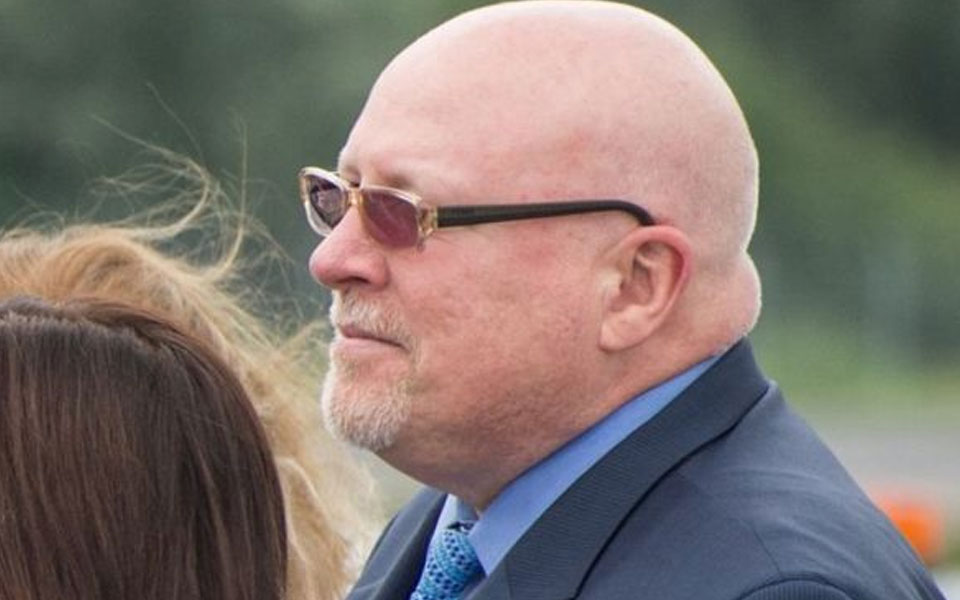
Washington, June 30 : The US Ambassador to Estonia has resigned in frustration with President Donald Trump's comments about, and the treatment of, European allies, a media report said.
James D. Melville Jr.'s resignation on Friday makes him the third ambassador in the last year to leave the State Department early, reports CNN.
"A Foreign Service Officer's DNA is programmed to support policy and we're schooled right from the start, that if there ever comes a point where one can no longer do so, particularly if one is in a position of leadership, the honourable course is to resign," Melville posted on Facebook.
"Having served under six presidents and 11 secretaries of state, I never really thought it would reach that point for me.
"For the President to say the EU was 'set up to take advantage of the US, to attack our piggy bank', or that 'NATO is as bad as NAFTA' is not only factually wrong, but proves to me that it's time to go," he added.
In a statement, a State Department spokesperson confirmed Melville's departure.
"Earlier today (Friday), the US' Ambassador to Estonia, Jim Melville, announced his intent to retire from the Foreign Service effective July 29 after 33 years of public service," the statement said.
The announcement of Melville's departure was followed by that of Susan Thornton, Trump's choice to be the nominee to be assistant secretary for East Asian affairs, later on Friday.
Melville and Thornton are the latest foreign service officer to leave in a department where the senior ranks have been deeply depleted and even rising stars have resigned rather than serve the President, reports CNN.
Last November, Elizabeth Shackelford, an award-winning US diplomat based in Nairobi, wrote to former Secretary of State Rex Tillerson a blistering resignation letter saying that the Trump administration had diminished the influence of State Department with its preference for military solutions.
This January, US Ambassador to Panama John Feeley resigned over differences with the Trump administration.
In March, US Ambassador to Mexico Roberta Jacobson, announced her decision to step down amid increased tensions between the US and Mexico.
Let the Truth be known. If you read VB and like VB, please be a VB Supporter and Help us deliver the Truth to one and all.
Two injuries, one DNF, a DQ as India end messy World Relays campaign
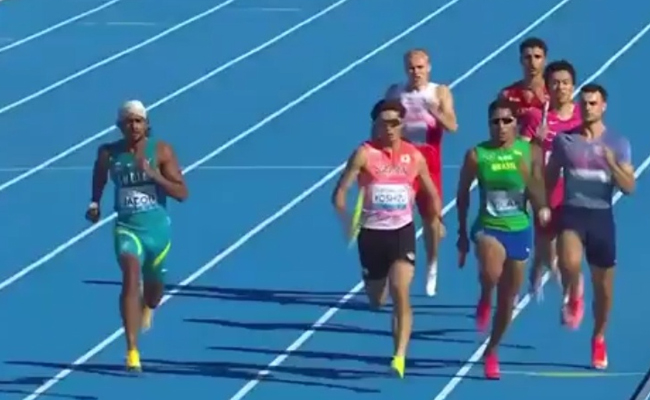
Gaborone (Botswana) (PTI): Amoj Jacob and Ragul Kumar got injured during the men's 4x400m and 4x100 races respectively as India ended their World Athletics Relays campaign in disappointment on the second day of competitions here on Sunday.
The Indian camp had high hopes of making the 2027 World Championships in the men's 4x400m relay but the team did not finish (DNF) the race as Jacob suffered cramps and pulled out of the race after taking the baton from the first leg runner Dharamveer Choudhary. Rajesh Ramesh and Vishal TK were to run in the third and fourth legs.
Those teams which could not qualify for the 2027 Beijing World Championships by reaching the final round of each of the six relay events on Saturday were given another chance in the second qualification round on Sunday.
The top two teams in each of the two heats (in all six relay events) booked the Beijing ticket on Sunday.
India will now have to try and qualify for the World Championships through the Top Lists of the World Athletics, which is a long and tedious process.
In the men's 4x100m race, third leg runner Ragul Kumar fell down the track after failing to hand over the baton inside the exchange zone to fourth leg runner Gurindervir Singh, which clearly showed the lack of coordination among the runners.
Harsh Santosh Raut and Animesh Kujur ran the first two legs.
The Indian quartet was disqualified and Kumar was seen being taken away from the Field of Play with the help of the volunteers.
It was a comedy of errors in the case of the women's 4x100m race, which saw the baton being dropped during an exchange between first leg runner Tamanna and second runner Nithya Gandhe, though the Indians finished the race in 53.09 seconds.
Gandhe started running quite a distance, but after realising that the baton was not in her hand, she turned and ran back to pick it up.
The only silver-lining for the Indian contingent was the national record time in the mixed 4x100m relay race, though the quartet of Ragul Kumar, Nithya Gandhe, Animesh Kujur and Sneha SS finished sixth in heat number two with a time of 41.35 seconds, bettering the previous national mark of 42.30 seconds set in March in Chandigarh.
The mixed 4x400m relay quartet of Theerthesh P Shetty, Kumari Saloni, Nihal William and Rashdeep Kaur ended at fifth in heat number one with a time of 3 minutes and 19.40 seconds.
On Saturday, all the five Indian relay teams had failed to make it to the respective final rounds and thus missed out on the 2027 World Championships berths.