US approves sale of 24 MH 60 Romeo Seahawk helicopters to India for USD 2.4 bn
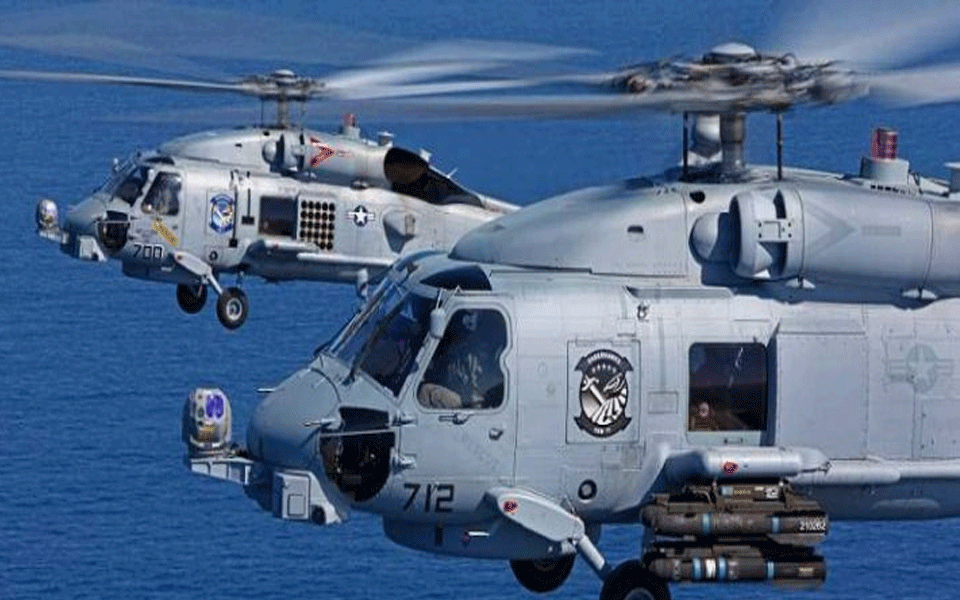
Washington: The US has approved the sale of 24 multi-role MH-60 'Romeo' Seahawk helicopters to India at an estimated cost of USD2.4 billion, the State Department has said.
India has been in need of these formidable anti-submarine hunter helicopters for more than a decade now.
Designed for hunting submarines as well as knocking out ships and conducting search-and-rescue operations at sea, the Lockheed Martin-built helicopters, would replenish India's aging fleet of British-made Sea King helicopters.
The Trump Administration on Tuesday notified the Congress that it has approve sale of 24 MH-60R multi-mission helicopters, which will provide the Indian defence forces the capability to perform anti-surface and anti-submarine warfare missions.
In its notification, the State Department told the Congress that this proposed sale will support the foreign policy and national security of the US by helping to strengthen the US-Indian strategic relationship.
The sale, at an estimated cost of USD2.4 billion, will improve the security of a major defensive partner which continues to be an important force for political stability, peace, and economic progress in the Indo-Pacific and South Asia region, it said.
"The proposed sale will provide India the capability to perform anti-surface and anti-submarine warfare missions along with the ability to perform secondary missions including vertical replenishment, search and rescue, and communications relay," said the Congressional notification.
India will use the enhanced capability as a deterrent to regional threats and to strengthen its homeland defense, the notification said, adding that India will have no difficulty absorbing these helicopters into its armed forces.
The proposed sale of this equipment and support will not alter the basic military balance in the region, it said.
Currently deployed with the US Navy as the primary anti-submarine warfare anti-surface weapon system for open ocean and littoral zones, the helicopters are considered the world's most advanced maritime helicopter.
According to industry experts, it is the most capable naval helicopter available today designed to operate from frigates, destroyers, cruisers and aircraft carriers.
MH-60 Romeo Seahawks would add lethal capabilities of the Indian Navy, which experts say is the need of the hour given the aggressive behaviour of China in the Indian Ocean region.
According to US Naval Air System Command, the MH-60R Seahawk missions are anti-submarine warfare, anti-surface warfare, surveillance, communications relay, combat search and rescue, naval gunfire support and logistics support.
As the Navy's next generation submarine hunter and anti-surface warfare helicopter, the MH-60R Seahawk is considered to be the cornerstone of the Navy's Helicopter Concept of Operations.
Let the Truth be known. If you read VB and like VB, please be a VB Supporter and Help us deliver the Truth to one and all.
Supreme Court grants anticipatory bail to Pawan Khera in Assam Police FIR

New Delhi: The Supreme Court of India on Friday granted anticipatory bail to Congress leader Pawan Khera in connection with an FIR registered by the Assam Police.
The case arose from a complaint filed by Riniki Bhuyan Sarma, wife of Assam Chief Minister Himanta Biswa Sarma, over allegations made by Khera that she possessed multiple passports.
A bench comprising Justice JK Maheshwari and Justice AS Chandurkar delivered the judgment after reserving orders on Khera’s petition challenging the dismissal of his anticipatory bail plea by the Gauhati High Court.
In its ruling, the Supreme Court observed that the High Court’s findings were not based on a proper appreciation of the material on record and appeared to be erroneous, particularly in shifting the burden onto the accused.
The bench further held that the High Court erred in making observations regarding an offence under Section 339 of the Bharatiya Nyaya Sanhita, noting that the FIR did not contain any such allegation. It stated that such conclusions could not have been drawn merely on the basis of submissions made by the Advocate General.