US court stays extradition on Rana pending his appeal

Washington (PTI): Overriding the Biden administration's appeal, a US court has ordered a stay on the extradition of Pakistani-origin Canadian businessman Tahawwur Rana, to India where he is facing a trial for his involvement in the 2008 Mumbai terror attack.
Rana, 62, has appealed before the Ninth Circuit Court against the order by a US District Court in the Central District of California that denied the writ of habeas corpus.
District Judge Dale S. Fischer of the US District Court in Central California in his latest order said that Rana's "ex parte application" seeking a stay on his extradition is granted.
"The extradition of Rana to India is stayed pending the conclusion of his appeal before the United States Court of Appeals for the Ninth Circuit," Judge Fischer said in the order issued on August 18.
In doing so the judge overrode the government's recommendations that there should be no stay on Rana's extradition.
Rana faces charges for his role in the Mumbai attacks and is known to be associated with Pakistani-American terrorist David Coleman Headley, one of the main conspirators of the 26/11 Mumbai attacks.
While the Court does not find that Rana "has made a strong showing that he is likely to succeed on the merits" otherwise the Court would have ruled in his favour in the first instance he has certainly raised serious legal questions going to the merits, the judge wrote.
"The proper meaning of "offence" in Article 6(1) of the extradition treaty is not clear and different jurists could come to different conclusions. Rana's position is certainly colourable and could very well be found to be correct on appeal," the judge noted.
"The final two factors "merge when the Government is the opposing party." There is value in compliance with India's extradition request, but Rana's extradition proceedings have been going on for more than three years, which suggests that the process has not been rushed so far. Otherwise, the public interest, if anything, favours Rana," the judge wrote.
"The public has a strong interest in the proper interpretation of extradition treaties, particularly in the interpretation of provisions that provide important individual protections like the one at issue here. Further, there is a strong public interest in definitive, binding interpretations of treaties. District courts cannot provide those rulings; courts of appeals can," the judge wrote, throwing the legal battle to the Ninth Circuit Court now.
The US Court of Appeals for the Ninth Circuit has asked Rana to submit his argument before October 10 and the US Government has been asked to submit its response by November 8.
Judge Fischer wrote that Rana has shown that he is likely to suffer significant irreparable harm absent a stay.
He will be extradited to India for a trial on serious crimes with no hope for a review of his arguments or hope for his return to the United States. The government admits this, but then argues that because "this claimed irreparable harm applies categorically to any fugitive who seeks a stay of extradition pending appeal," it does not count, the judge said.
Earlier the US attorney John J Lulejian appealed before the District Court to deny Rana's exparte application for a stay of extradition pending appeal and argued that the stay would cause "unwarranted delay" in the United States' fulfilment of its obligations to India and this will damage its credibility in the international arena and impair its ability to obtain the cooperation of foreign nations in bringing United States fugitives to justice.
Rana, he argued, cannot show a likelihood of success on the merits of his claims or otherwise meet his burden of justifying a stay. "Accordingly, the United States respectfully requests that the Court deny his ex parte application," the US attorney wrote.
Lulejian argued that the District Court should deny Rana's request for a stay for the threshold reason that he has failed to demonstrate that he is likely to obtain a reversal of this Court's decision in the Ninth Circuit.
In his ex parte application for a stay, Rana has made no showing whatsoever, let alone a strong showing, that he is likely to succeed on the merits of his appeal, he argued. Indeed, he simply states that he seeks a stay "to permit his non-bis in idem argument to be heard by the court of appeals."
India's National Investigation Agency (NIA) is probing Rana's role in the 26/11 attacks carried out by terrorists of the Pakistan-based Lashkar-e-Taiba group. The NIA has said that it is ready to initiate proceedings to bring him to India through diplomatic channels.
A total of 166 people, including six Americans, were killed in the 2008 Mumbai terror attacks in which 10 Pakistani terrorists laid a more than 60-hour siege, attacking and killing people at iconic and vital locations of Mumbai.
Let the Truth be known. If you read VB and like VB, please be a VB Supporter and Help us deliver the Truth to one and all.
Three private doctors arrested in illegal scanning case involving 31 minor pregnant girls in KR Pet
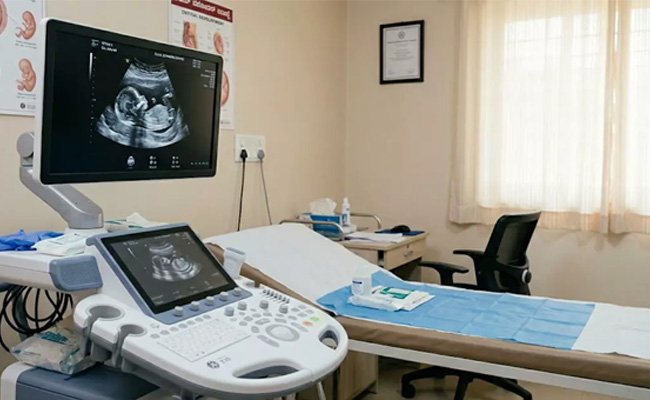
Mandya: Police on Tuesday arrested three private doctors in connection with a case involving alleged illegal scanning of 31 minor pregnant girls at a private diagnostic centre in KR Pet. The accused were later remanded to judicial custody.
The arrested doctors have been identified as Dr. Divyachetan of Chetana Maternity Centre, Dr. Harshit of Navi Diagnostic Centre, and Dr. Harish of Kushal Diagnostic Centre.
Police said Priyanka, a gynaecologist attached to a government hospital, is absconding and efforts are under way to trace her.
The case came to light after Karnataka Lokayukta Police recently conducted raids, during which illegal sex determination tests on minor pregnant girls were allegedly detected at two diagnostic centres in KR Pet town.
Following the raids, District Health and Family Welfare Officer Dr. Mohan, Deputy Director of the Women and Child Development Department P.S. Asha, and District Child Protection Officer Rashmi inspected several diagnostic centres and filed cases at KR Pet Town and Rural police stations.
According to the allegations, Navi Diagnostic Centre conducted scans on 24 minor pregnant girls, including 19 cases in 2024 and five in 2025. Kushal Diagnostic Centre is accused of conducting scans on seven minor pregnant girls.
Meanwhile, Deputy Commissioner Dr. Kumar has directed taluk vigilance committees to inspect all 63 ultrasound scanning centres in the district and submit reports within 10 days.
Officials said the Tahsildar of each taluk has been appointed chairperson of the respective committee.