US lawmakers urge Trump to seek lower Indian tariffs on pulse crops in trade talks
New York/Washington (PTI): Two US lawmakers have urged President Donald Trump to push for favourable provisions for pulse crop in any future trade deal with India, saying American producers face a "significant competitive disadvantage" due to what they described as "unfair” tariffs imposed by New Delhi.
In a letter dated Jan 16 addressed to Trump, Republican Senators Steve Daines of Montana and Kevin Cramer of North Dakota said their states are the top two producers of pulse crops, including peas, while India is the world's largest consumer, accounting for about 27 per cent of global consumption.
They noted that lentils, chickpeas, dried beans and peas are among the most commonly consumed pulse crops in India, but New Delhi has imposed substantial tariffs on American exports in these categories.
ALSO READ: FAA urges pilots to exercise caution over eastern Pacific, citing 'military activities'
The Senators pointed out that India announced on October 30 last year a 30 per cent tariff on yellow peas, which came into effect on November 1, 2025.
“As a result of the unfair Indian tariffs, US pulse crop producers face a significant competitive disadvantage when exporting their high-quality product to India,” the letter said.
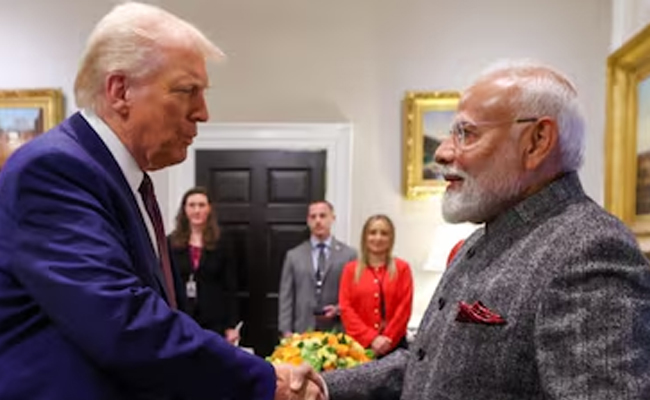
Daines and Cramer said engaging Prime Minister Narendra Modi on pulse crop tariffs to enhance the economic cooperation between the two countries would be “mutually beneficial” for both American producers and Indian consumers.
Thanking Trump for his efforts to secure a favourable economic environment for agricultural producers in North Dakota and Montana, the Senators said that as trade negotiations move forward, they encourage him to seek favourable pulse crop provisions in any agreement the US signs with India.
They recalled that during Trump’s first term, they had raised the issue ahead of the 2020 trade negotiations with India, and that the President had “hand-delivered” their letter to Modi, which they said helped bring US producers to the negotiating table.
“As the United States looks to rebalance trade disparities, American farmers are ready to help fill the gap. They have tremendous capacity to feed and fuel the world if trade opportunities are unleashed,” the lawmakers said in the letter.
In their 2020 letter, written ahead of Trump's visit to India that year, the Senators had said that “unfair” Indian tariffs on pulse crops had substantially harmed US pulse crop producers, particularly after India was removed from the Generalised System of Preferences in June 2019, following which additional duties were imposed on American exports.
Let the Truth be known. If you read VB and like VB, please be a VB Supporter and Help us deliver the Truth to one and all.
Bengal: Over 55 pc turnout till 1 pm in repoll in 15 booths of 2 assembly seats
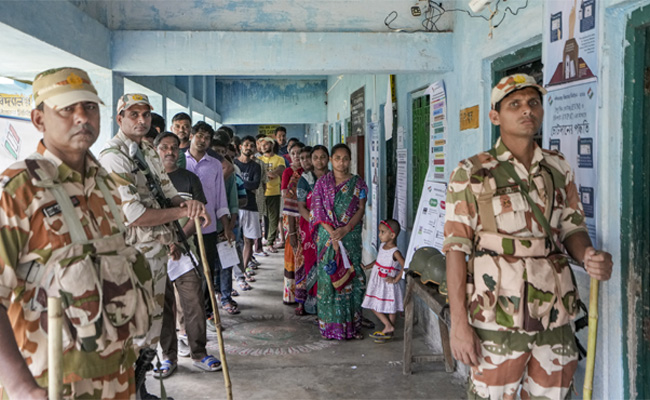
Kolkata (PTI): Over 55 per cent turnout was recorded till 1 pm in repoll in 15 booths of two assembly constituencies in West Bengal's South 24 Parganas district on Saturday, an official said.
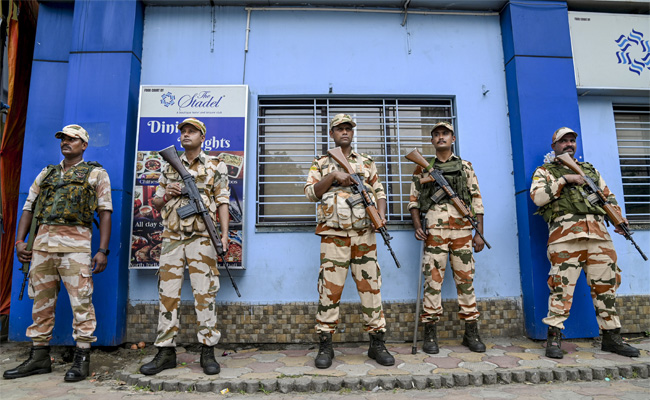
Voting was underway more or less peacefully at 11 polling stations of Magrahat Paschim assembly constituency and four in Diamond Harbour, where the EC ordered repoll a day ago, following reports of electoral malpractices.
However, at booth number 179 at Chanda Primary School of Diamond Harbour seat, the Trinamool Congress alleged that a specially abled voter and his mother were harassed by central forces. The alleged incident sparked protests by party workers and locals.
The TMC claimed that the voter's mother, who had entered the booth to assist him, and her son were detained for a considerable time by central forces over alleged rule violations.
ALSO READ: Man arrested for duping Delhi resident of Rs 2 lakh in online car sale fraud
"TMC leaders Manmohini Biswas and Pratik Ur Rahman reached the spot and led the protests, with residents terming the action unwarranted harassment. The matter has been taken care of by our officials there," an official of the poll body said.
Polling was otherwise peaceful across 15 booths in the area, he added.
Voting began at 7 am and will continue till 6 pm, the official said, adding that till 1 pm, the turnout was 55.57 per cent.
Magrahat Paschim registered 56.33 per cent voter turnout, while in Diamond Harbour, it was 54.9 per cent, a poll official stated.
Voting in these two assembly constituencies was held in the second phase of the state elections on April 29.
The repoll order was based on reports received from returning officers and observers of the two constituencies and "material circumstances", the Election Commission official said.
In Magrahat Paschim, TMC's Md Samim Ahamed Molla is pitted against BJP nominee Goursundar Ghosh, while Abdul Majid Halder of the Congress and ISF candidate Abdul Aziz Al Hassan are also in the fray.
TMC candidate Panna Lal Halder is contesting against Dipak Kumar Halder of the BJP in the Diamond Harbour seat. Goutam Bhattacharya of the Congress and CPI(M)'s Samar Naiya are among other candidates.
The BJP had alleged rampant electoral malpractices in certain polling stations of both the assembly seats under the Diamond Harbour Lok Sabha constituency, which is represented by TMC national general secretary Abhishek Banerjee.
The EC had deputed its special observer, Subrata Gupta, to fact-check the allegations from the ground.
The poll panel will decide on repolling in the Falta assembly constituency on Saturday.
The West Bengal assembly elections were held in two phases -- April 23 and April 29 -- amid unprecedented security arrangements.
Counting of votes will take place on May 4.