VC fund CEO dies after smartphone explodes while charging
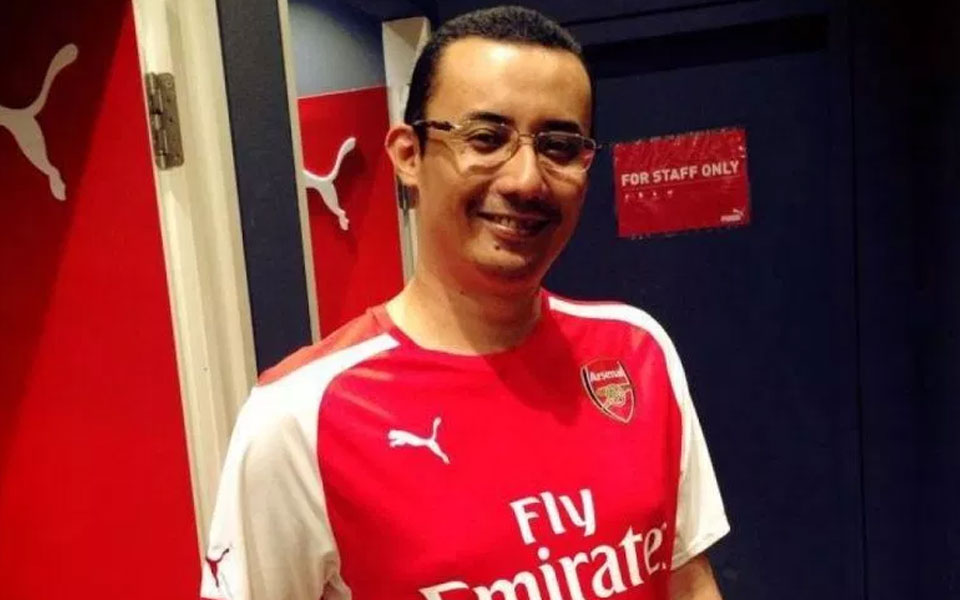
In another tragic incident caused by smartphones, Cradle Fund CEO Nazrin Hassan died after one of his phones exploded while charging. Cradle Fund is owned by the Malaysian Ministry of Finance. Hassan was using BlackBerry and Huawei smartphones. Both the smartphones were kept on charging in Hassan’s bedroom. The explosion led to a fire on the mattress in the room and the impact was so devastating that it was difficult to identify as to which of the two smartphones actually exploded due to overheating.
The family's version
Incidentally, according to Hassan’s brother-in-law the death was apparently not caused by the fire. The relative said on social media that when one of the smartphones exploded, the broken parts of it hit Hassan on the back of the head which likely caused “blunt trauma”. After this, the explosion led to a fire in the bedroom, but by then Hassan is said to have been already dead.
“He had two phones, one Blackberry and a Huawei. We don't know which one exploded. Who would have thought such an innocuous routine procedure is the reason three young kids will grow up without their father by their side,” Hsssan's brother-in-law told The Malaysian Insight.
The official version
However, according to officials the cause of the death is different. The police is claiming that the death was caused due to the smoke inhalation from the explosion and not the shrapnels from the smartphone.
Meanwhile, according to an official statement issued by Cradle Fund, “The post mortem report concluded the cause of death as being complication of blast injuries attributable to an exploding hand phone that was being charged next to him."
Who was Nazrin Hassan?
Nazrin was educated in the United Kingdom with a Bachelor of Laws (LL.B Hons) from the University of Buckingham in 1994. He was also an Executive Committee member of the United Kingdom Executive Council for Malaysian Students (UKEC).
Between 1997 to 2000, Nazrin was an Executive in Corporate Finance in Commerce International Merchant Bankers Berhad (CIMB) before pursuing his new venture in running his own start-up, Zarnet, in 2001.
He was the former Council Member of Technopreneurs Association of Malaysia(TeAM), an organisation that represents all technology entrepreneurs in Malaysia where he lobbied tirelessly for a development fund to narrow the funding gap in the early stage. This eventually led to the successful introduction of the Cradle Investment Programme (CIP) in June 2003 with a fund allocation of RM100 million from the Malaysian Government, as part of the economic stimulus package.
CIP was initially managed by Malaysia Venture Capital Management Berhad (MAVCAP) and Nazrin became the programme’s Head of Structuring in July 2003. In 2004, he was appointed as the programme’s Acting Head as well as its Strategy and Policy Advisor. He left the programme in 2005 to focus on his own technology start-up and continued to be an active member of TeAM.
Nazrin returned to Cradle in October 2007, after being appointed as its Chief Executive Officer by the Ministry of Finance, after it was spun out from under MAVCAP into Cradle.
courtesy : gadgetsnow.com
Let the Truth be known. If you read VB and like VB, please be a VB Supporter and Help us deliver the Truth to one and all.
Two injuries, one DNF, a DQ as India end messy World Relays campaign

Gaborone (Botswana) (PTI): Amoj Jacob and Ragul Kumar got injured during the men's 4x400m and 4x100 races respectively as India ended their World Athletics Relays campaign in disappointment on the second day of competitions here on Sunday.
The Indian camp had high hopes of making the 2027 World Championships in the men's 4x400m relay but the team did not finish (DNF) the race as Jacob suffered cramps and pulled out of the race after taking the baton from the first leg runner Dharamveer Choudhary. Rajesh Ramesh and Vishal TK were to run in the third and fourth legs.
Those teams which could not qualify for the 2027 Beijing World Championships by reaching the final round of each of the six relay events on Saturday were given another chance in the second qualification round on Sunday.
The top two teams in each of the two heats (in all six relay events) booked the Beijing ticket on Sunday.
India will now have to try and qualify for the World Championships through the Top Lists of the World Athletics, which is a long and tedious process.
In the men's 4x100m race, third leg runner Ragul Kumar fell down the track after failing to hand over the baton inside the exchange zone to fourth leg runner Gurindervir Singh, which clearly showed the lack of coordination among the runners.
Harsh Santosh Raut and Animesh Kujur ran the first two legs.
The Indian quartet was disqualified and Kumar was seen being taken away from the Field of Play with the help of the volunteers.
It was a comedy of errors in the case of the women's 4x100m race, which saw the baton being dropped during an exchange between first leg runner Tamanna and second runner Nithya Gandhe, though the Indians finished the race in 53.09 seconds.
Gandhe started running quite a distance, but after realising that the baton was not in her hand, she turned and ran back to pick it up.
The only silver-lining for the Indian contingent was the national record time in the mixed 4x100m relay race, though the quartet of Ragul Kumar, Nithya Gandhe, Animesh Kujur and Sneha SS finished sixth in heat number two with a time of 41.35 seconds, bettering the previous national mark of 42.30 seconds set in March in Chandigarh.
The mixed 4x400m relay quartet of Theerthesh P Shetty, Kumari Saloni, Nihal William and Rashdeep Kaur ended at fifth in heat number one with a time of 3 minutes and 19.40 seconds.
On Saturday, all the five Indian relay teams had failed to make it to the respective final rounds and thus missed out on the 2027 World Championships berths.