Venezuela bars self-declared president Guaido from leaving country
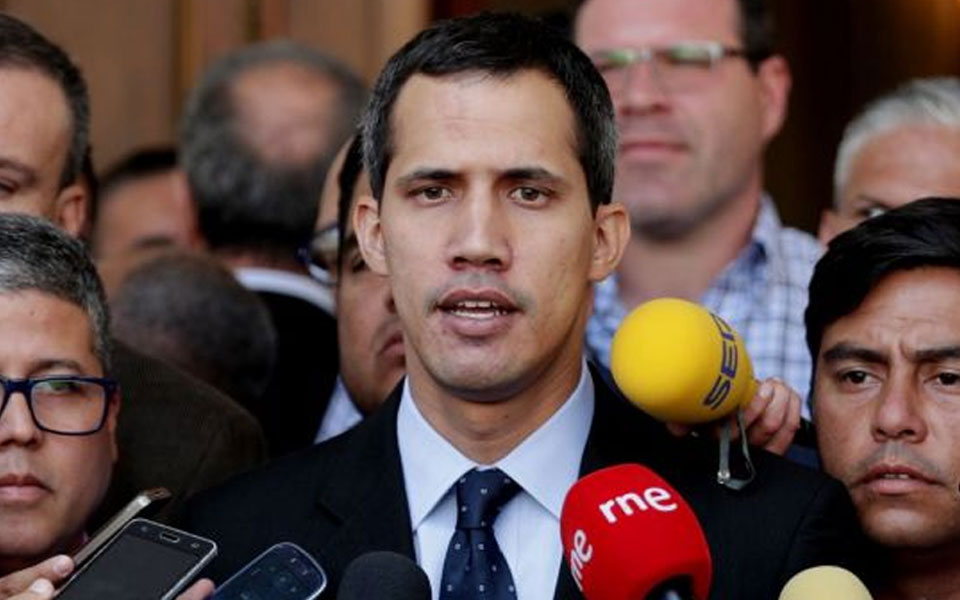
Caracas, Jan 30 : Venezuela's Supreme Tribunal of Justice barred self-declared president Juan Guaido from leaving the country and froze his bank accounts Tuesday, as leader Nicolas Maduro seeks to neutralize the American-backed opposition chief.
The 35-year-old head of the National Assembly legislature "is prohibited from leaving the country until the end of the (preliminary) investigation" for having "caused harm to peace in the republic," high court president Maikel Moreno said.
The court is stacked with Maduro loyalists.
The move came after the State Department revealed that Guaido -- the National Assembly head and self-proclaimed interim president -- has been handed control of Venezuela's US bank accounts.
US Secretary of State Mike Pompeo signed off on the order last week, which was then followed on Monday by US sanctions targeting Venezuela's state oil giant PDVSA, the cash-strapped government's main source of hard currency.
"This certification will help Venezuela's legitimate government safeguard those assets for the benefit of the Venezuelan people," State Department spokesman Robert Palladino said in a statement.
Guaido shrugged off Maduro's efforts to choke his progress as "nothing new."
"I'm not dismissing the threats, the persecution at this time, but we're here, we're continuing to do our jobs," he told reporters as he arrived at the National Assembly.
Guaido, who has been recognized as interim president by US President Donald Trump, sent a message to the country's top court on Twitter warning that "the regime is in its final stage."
"You shouldn't sacrifice yourselves for the usurper and his gang," he added.
In Washington, Trump's national security advisor warned of "serious consequences" if any harm comes to the Venezuelan opposition leader.
"Let me reiterate -- there will be serious consequences for those who attempt to subvert democracy and harm Guaido," Trump advisor John Bolton tweeted.
The opposition-controlled legislature, meanwhile, named "diplomatic representatives" to a dozen countries that, like the US, have recognized Guaido as the interim president.
At the White House, US Vice President Mike Pence met with Guaido's appointed charge d'affaires in the United States, Carlos Vecchio, to discuss the crisis.
The 35-year-old engineer stormed onto the political stage as a virtual unknown on January 3, when he was sworn in as the president of the National Assembly, a body that had been largely neutralized by the Supreme Court.
On January 23, he declared himself the country's acting president and vowed to lead a transitional government that would hold democratic elections.
To keep up the pressure, he has called two more mass demonstrations against the government this week, and has appealed to the powerful military to change sides, offering amnesty to those who do.
At least 40 people have been killed in clashes with security forces nationwide and at least 850 arrested since January 21 when a brief military rebellion was put down in Caracas, according to the UN human rights office in Geneva.
US Treasury Secretary Steven Mnuchin said the sanctions against PDVSA would prevent Maduro from diverting resources from the country until power could be transferred to an interim or democratically-elected government.
A furious Maduro, 56, said Trump would have "blood all over his hands" if violence breaks out in Venezuela.
In a tweet, he urged the opposition to "ignore the imperialist calls" and reiterated his offer of dialogue to Guaido. He has previously accused the US of trying to orchestrate a coup d'etat.
Gustavo Tarre, Venezuela's new pro-Guaido representative to the Organization of American States, rejected the coup accusation and cast doubt on the staying power of Maduro's regime, saying no one would defend him to the death.
Russia's Foreign Minister Sergei Lavrov said the new sanctions "violate all possible international norms" and said the US has "publicly taken a course toward illegal regime change."
Chinese foreign ministry spokesman Geng Shuang said his country opposes "unilateral sanctions" as they "will only complicate the situation and will not help solve practical problems."
The oil-rich country is already reeling from a deep economic crisis that has pushed millions into poverty and driven 2.3 million more to migrate.
Hyperinflation, shortages of food and medicine and failing public services has spread misery, undermining support for a leftist regime that has held power for two decades.
Trump's national security advisor Bolton called Monday for Venezuela's security forces "to accept the peaceful, democratic and constitutional transfer of power."
He also reiterated Trump's position that "all options are on the table." Acting Defense Secretary Patrick Shanahan did not rule out a US military deployment to Colombia.
But the Lima Group of Latin American countries and Canada is opposed to "military intervention" in the Venezuela, Peru's Foreign Minister Nestor Popolizio said.
Let the Truth be known. If you read VB and like VB, please be a VB Supporter and Help us deliver the Truth to one and all.
Iran reimposes restrictions on Strait of Hormuz, accusing US of violating deal to reopen it
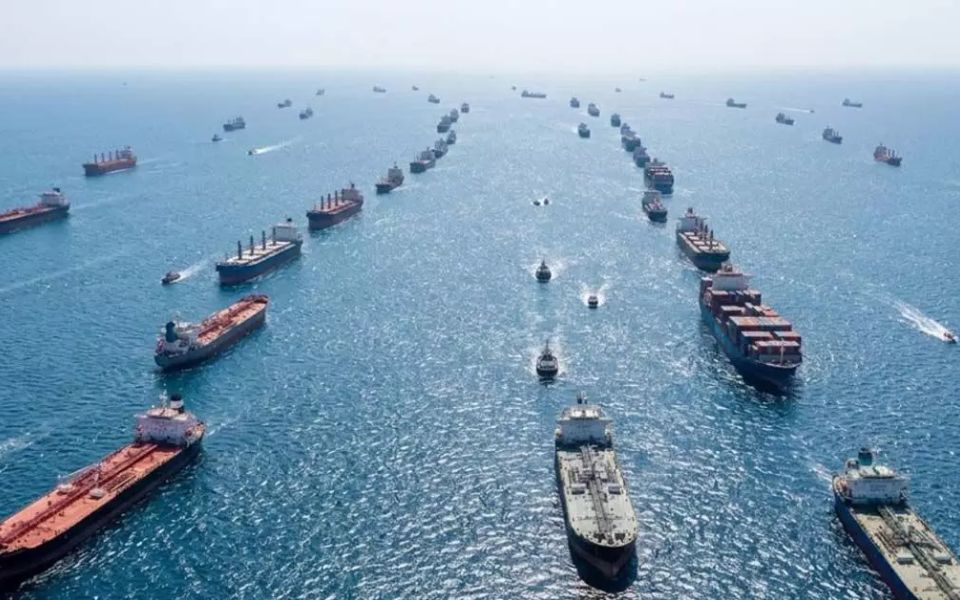
Cairo (AP): Iran swiftly reversed course on reopening the Strait of Hormuz, reimposing restrictions on the critical waterway on Saturday after the US said it would not end its blockade of Iran-linked shipping.
Iran's joint military command said on Saturday that “control of the Strait of Hormuz has returned to its previous state ... under strict management and control of the armed forces.” It warned that it would continue to block transit through the strait as long as the US blockade of Iranian ports remained in effect.
The announcement came the morning after US President Donald Trump said that even after Iran announced the strait's reopening on Friday, the American blockade “will remain in full force” until Tehran reaches a deal with the US, including on its nuclear programme.
The conflict over the chokepoint threatened to deepen the energy crisis roiling the global economy after oil prices began to fall again on Friday on hopes the US and Iran were drawing closer to an agreement. Roughly one-fifth of the world's oil passes through the strait, and further limits would squeeze already constrained supply, driving prices higher once again.
Control over the strait has proven to be one of Iran's main points of leverage and prompted the United States to deploy forces and initiate a blockade on Iranian ports as part of an effort to force Iran to accept a Pakistan-brokered ceasefire to end almost seven weeks of war that has raged between Israel, the US and Iran.
Iran said it fully reopened the Strait of Hormuz to commercial vessels after a 10-day truce was announced between Israel and the Iranian-backed Hezbollah militant group in Lebanon. But after Trump said the blockade would continue, top Iranian officials said his announcement violated last week's ceasefire agreement between Iran and the US and warned the strait would not stay open if the US blockade remained in effect.
A data firm, Kpler, said movement through the strait remained confined to corridors requiring Iran's approval.
US forces have sent 21 ships back to Iran since the blockade began on Monday, US Central Command said on X.
Truce in Lebanon could help US-Iran peace efforts
------------------------------------------------------------
The ceasefire in Lebanon could clear one major obstacle to an agreement. But it was unclear to what extent Hezbollah would abide by a deal it did not play a role in negotiating, and which will leave Israeli troops occupying a stretch of southern Lebanon.
Trump said in another post that Israel is “prohibited” by the US from further strikes on Lebanon and that “enough is enough” in the Israel-Hezbollah war.
The State Department said the prohibition applies only to offensive attacks and not to actions taken in self-defence.
Shortly before Trump's post, Israeli Prime Minister Benjamin Netanyahu said Israel agreed to the ceasefire in Lebanon “at the request of my friend President Trump,” but that the campaign against Hezbollah is not complete.
He claimed Israel had destroyed about 90 per cent of Hezbollah's missile and rocket stockpiles and added that Israeli forces “have not finished yet” with the dismantling of the group.
In Beirut, displaced families began moving toward southern Lebanon and Beirut's southern suburbs despite warnings by officials not to return to their homes until it became clear whether the ceasefire would hold.
The Lebanese army and UN peacekeepers in southern Lebanon reported sporadic artillery shelling in some parts of southern Lebanon in the hours after the ceasefire took effect.
An end to Israel's war with Hezbollah was a key demand of Iranian negotiators, who previously accused Israel of breaking last week's ceasefire with strikes on Lebanon. Israel had said that the deal did not cover Lebanon.
The fighting has killed at least 3,000 people in Iran, more than 2,290 in Lebanon, 23 in Israel and more than a dozen in Gulf Arab states. Thirteen US service members have also been killed.