White House retracts Trump’s claim of layoffs amid ongoing government shutdown
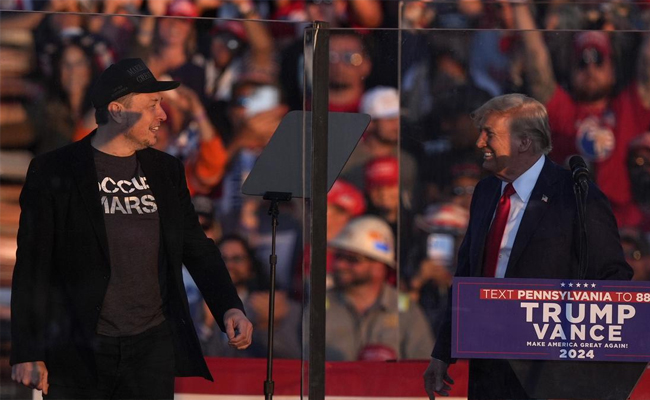
Washington: The White House clarified on Monday that no US government employees have been laid off “right now.” Stepping back from President Donald Trump’s earlier remarks suggesting that job losses were already underway due to the ongoing federal shutdown, officials, however, cautioned that layoffs could occur if Congress fails to restore government funding soon.
In its sixth day, the partial shutdown has halted operations across multiple agencies, while no permanent dismissals have been reported.
President Trump had stated on Sunday night that workers were being laid off “right now.” White House Press Secretary Karoline Leavitt clarified on Monday that the president was referring to federal employees who have been furloughed since funding expired on October 1, and claimed that the Office of Management and Budget was working with agencies to determine which employees would risk layoffs if the shutdown continued.
Labor unions representing federal workers have filed lawsuits to block any such dismissals. They argued that such actions would violate existing labor laws, which carry criminal penalties.
The Republican proposal seeks to extend funding through November 21, while the Democratic proposal includes an extension of healthcare subsidies set to expire at the end of the year. Trump has indicated openness to a deal on healthcare subsidies, which would assist about 24 million Americans in purchasing insurance under the Affordable Care Act.
Democratic Senator Patty Murray, on the Senate Appropriations Committee, said on social media, “We need a deal that reopens the government and stops premiums from doubling.” Speaker Mike Johnson said he had no plans to reconvene the chamber until a funding agreement was reached, while the House of Representatives was not in session.
The impasse has frozen an estimated $1.7 trillion in discretionary spending, which is one-quarter of the federal budget. The remainder of U.S. government expenditure goes toward entitlement programs and interest on the national debt, which currently stands at $37.88 trillion.
The administration has also placed a hold on at least $28 billion in infrastructure funding earmarked for New York, California, and Illinois, all states led by Democrats. Democratic leaders have refused to yield to the White House’s stance.
Essential personnel, including border security and airport staff, have continued working without pay, while non-critical government functions have largely come to a halt. The Federal Register, which typically publishes over 100 notices and proposed regulations daily, listed only four entries on Monday.
The impact may deepen next week when 1.3 million military personnel and associated workers are expected to miss their first paychecks. Transportation Secretary Sean Duffy also warned that rising sick calls among air traffic controllers could result in flight delays.
Senate Democrats have voted down the Republican funding bill four times, and GOP leaders need at least eight Democratic votes to advance their measure, while only two Democrats and one independent have crossed party lines so far.
Several Democrats are pressing for a healthcare subsidy deal before open enrollment begins on November 1, while Speaker Johnson suggested that negotiations could take time.
“We’ve got probably 100 ideas for reforms on the table, but I can’t snap my fingers this afternoon and make that happen,” Johnson said in an interview with the Hugh Hewitt Show.
Let the Truth be known. If you read VB and like VB, please be a VB Supporter and Help us deliver the Truth to one and all.
4 workers die after being buried under coal slurry in Jharkhand's Dhanbad
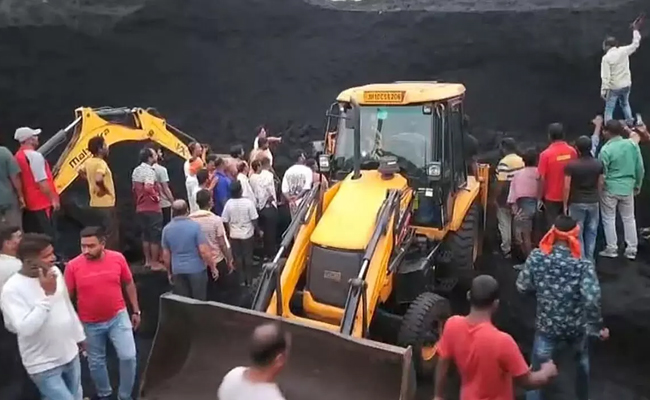
Dhanbad (Jharkhand) (PTI): At least four workers died after being buried under coal slurry in Jharkhand's Dhanbad district on Saturday, a police official said.
The incident took place at Moonidih coal washery in the command area of Bharat Coking Coal Limited (BCCL).
"Bodies of all four workers were dug out of debris during a rescue operation," Putki police station in-charge Waqar Hussain told PTI.
The incident took place when coal slurry was being loaded into trucks by workers, during which a large chunk of slurry fell and trapped several workers underneath, officials said.
The deceased have been identified as Manik Bauri, Dinesh Bauri, Deepak Bauri, and Hemlal Gope.
Meanwhile, the family members of the deceased and local villagers placed the bodies in front of the washery gate and began a protest.
They demanded compensation, jobs for dependents and action against those responsible for the incident.
Police and administration officials are trying to pacify the protesters, an official said.