Yunus to continue as Bangladesh’s interim govt chief: Adviser
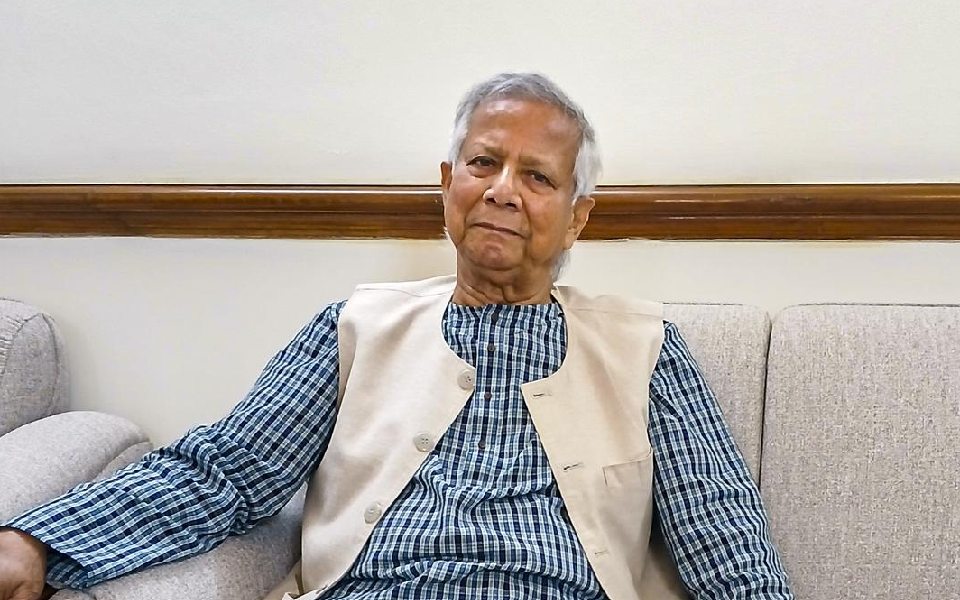
Dhaka, May 24 (PTI): Muhammad Yunus will remain as the head of Bangladesh’s interim government, an adviser in his cabinet said on Saturday, two days after a key ally said he had mulled resignation.
"He (Yunus) didn't say he will leave. He said that while we face many obstacles in carrying out the work and responsibilities assigned to us, we are overcoming them,” Planning Adviser Wahiduddin Mahmud told reporters after an unscheduled meeting of the advisory council.
“He (Yunus) is definitely staying," Mahmud said.
He said none of the advisers were going anywhere as “the responsibility entrusted to us is a significant one; we cannot abandon this duty".
The chief adviser’s decision to stay in office came two days after he told student-led National Citizen Party (NCP) leaders that he was mulling resignation as he felt “the situation is such that he cannot work", citing difficulties in working amid the failure of political parties to find common ground for change.
Yunus reportedly expressed an identical desire to quit in a cabinet meeting earlier on Thursday, where his colleagues persuaded him not to relinquish.
As many as 19 advisers, effectively ministers, joined the abruptly called closed-door meeting, which Yunus decided to convene following a scheduled meeting of the Executive Committee of National Economic Council (ECNEC) at the Sher-e-Bangla Nagar area in Dhaka.
The chief adviser’s press wing later issued a “statement from the advisory council”, saying the two-hour long meeting included detailed discussions on “three primary responsibilities entrusted to the interim government – elections, reforms, and justice”.
“The Council discussed how unreasonable demands, deliberately provocative and jurisdictionally overreaching statements, and disruptive programmes have been continuously obstructing the normal functioning environment and creating confusion and suspicion among the public,” it said.
The statement said despite all obstacles, the interim government continued to fulfil its responsibilities by putting national interests above group interests.
“However, if -- under the instigation of defeated forces or as part of a foreign conspiracy -- the performance of these responsibilities becomes impossible, the government will present all reasons to the public and then take the necessary steps with the people,” the council said.
It said the interim government upheld the “public expectations of the July Uprising” but “if the government’s autonomy, reform efforts, justice process, fair election plan, and normal operations are obstructed to the point of making its duties unmanageable, it will, with the people, take the necessary steps”.
The council said it believed that a broader unity was essential to maintain national stability, organise a free and fair elections, justice, and reform, and permanently prevent the return of authoritarianism in the country and the government would listen to the views of political parties and clarify its own position.
Midway through the meeting, adviser Syeda Rizwana Hasan told reporters that discussions were focused on the elections, Yunus’s reform agenda, and the belated July Proclamation - a manifesto to mark last year’s student-led uprising that led to the ouster of former Prime Minister Sheikh Hasina’s Awami League.
NCP convenor Nahid Islam emerged from the meeting with Yunus.
Islam had earlier said that he urged Yunus "to stay strong for the sake of the country's security, and future and to meet the expectations of the mass uprising, (and) I hope everyone will cooperate with him".
Analysts saw the chief adviser's resignation threat as a test of public backing and political support.
Yunus is expected to meet leaders of former Prime Minister Khaleda Zia’s Bangladesh Nationalist Party (BNP) and Jamaat-e-Islami later in the day, following his overnight call for talks amid the evolving political situation of recent days.
Several senior BNP leaders, including Abdul Moyeen Khan and Salahuddin Ahmed said earlier that the party hoped Yunus would oversee an early general election and step down with dignity, rather than resign abruptly.
The BNP has emerged as the key actor in the political arena after the ouster of the Awami League regime in August last year.
Jamaat, which had appeared to align with the NCP as the BNP distanced itself from its former ally, said a fair election was the only way to restore public trust.
"The government has said that elections will be held between December and June. Now, a specific roadmap needs to be announced within this period-not just elections, but also a roadmap for structural reforms in politics and state governance," said key Jamaat leader Syed Abdullah M Taher.
However, Syeda Rizwana Hasan, a key adviser in Yunus’s cabinet, said the interim government was not formed solely to hold elections but also to implement reforms and ensure justice.
The development of Yunus's resignation came amid reports of discord between the military and the interim government over the possible timeline for holding the parliamentary elections and a policy issue related to Bangladesh’s security affairs involving a proposed humanitarian corridor of aid channel to Myanmar’s rebel-held Rakhine state.
Army chief General Waker-Uz-Zaman along with the navy and air force chiefs met Yunus three days ago and reportedly reiterated their call for election by December this year to allow an elected government to take charge and conveyed their reservation about the corridor issue.
The next day, Zaman held a senior officers meeting at Dhaka Cantonment and said he was unaware of several strategic decisions despite the military’s active role.
The military also decided to be tough against rampant “mob justice” in discharging their law enforcement duties. Meanwhile, troops who were called out of their barracks with magistracy power to maintain law and order were seen intensifying their street patrols and security vigil.
Several analysts called the meeting crucial to consolidate the military strength.
During last year’s protests, the army avoided a crackdown, instead extended its hand for Hasina’s safe exit to India. It also supported Yunus’ appointment as chief adviser, as demanded by the SAD, much of which later formed the NCP.
Yunus’s administration recently disbanded Hasina's Awami League, sending many of its senior leaders, including former ministers, to jail to face trial for charges like crimes against humanity.
Yunus has been facing calls from the political parties, including the BNP, to announce a date for the next elections. His reported threat to resign came a day after the party rallied thousands of supporters to stage a large-scale protest demanding an election at the earliest.
This week, the party also demanded the removal of the remaining student representatives from the cabinet, while the NCP in response called for the ouster of two advisers, alleging that they were serving the BNP’s purpose by staying in the government.
The South Asian nation of some 170 million people has been in political turmoil since the ouster of the past regime but it escalated in the past several days with rival parties and trade unions or pressure groups protesting on the streets of the capital Dhaka with a string of competing demands.
Let the Truth be known. If you read VB and like VB, please be a VB Supporter and Help us deliver the Truth to one and all.
UDF’s A.K.M. Ashraf takes strong lead in Manjeshwar after 8 rounds
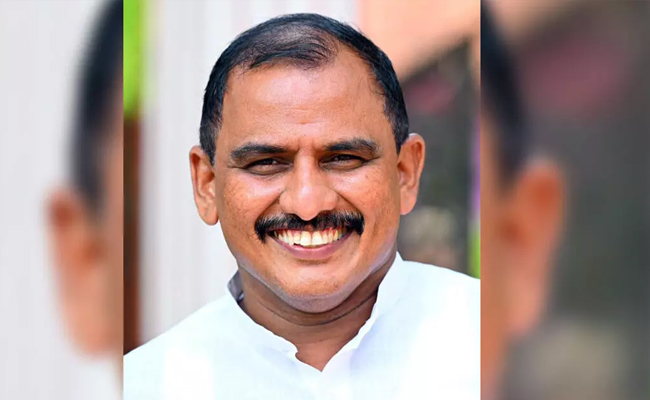
Kasaragod: The counting of votes in the Manjeshwar Assembly constituency has completed eight rounds, with UDF candidate A.K.M. Ashraf establishing a clear lead.
Ashraf is ahead by 20,703 votes. At the end of the eighth round, he had secured 52,298 votes.
His closest rival, NDA candidate K. Surendran, has polled 31,595 votes so far.
LDF candidate K.R. Jayanandan has secured 8,311 votes.
The counting process is still underway.