Petrol, diesel price hike and the Prime Minister’s lies
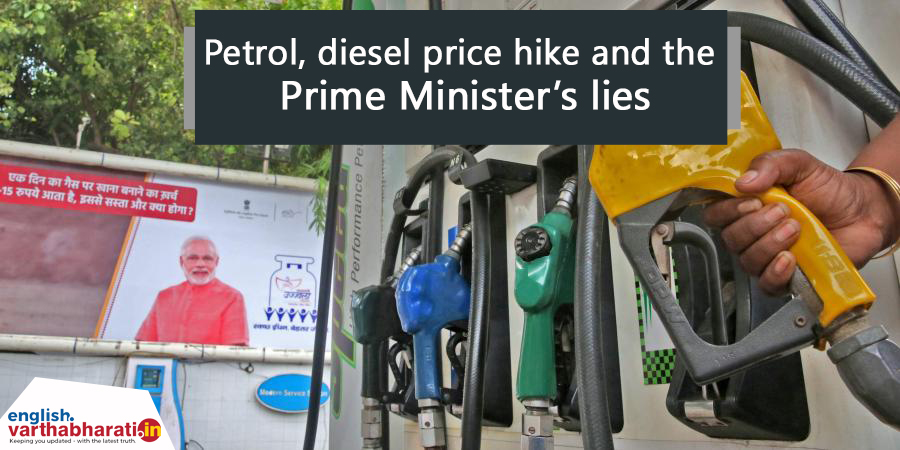
The hike in the price of petrol and diesel has triggered anxiety in the country. The middle class is ready to explode like a cylinder any time. Even as the price of petrol hit the century mark in Rajasthan on Thursday, Prime Minister Narendra Modi for the first time chose to open his lips and utter a few words. He said: “previous governments are responsible for the hike in prices. The previous governments did not pay any attention to reducing the dependency of India on imported fuel.”
This clarification from the Prime Minister has provoked the people. Modi made the statement forgetting that he had led the previous government. The Modi-led government took on the reins for the first time by pointing fingers at the hike in price in petrol and gas cylinders during the UPA regime.
But, after taking over office, the Modi government not only failed to regulate the petrol price but created a situation where even when the price of fuel in the international market has reduced, the cost of petrol in the country has skyrocketed. During the previous UPA government, even when the price of crude oil increased substantially, the prices in India had not increased to this extent.
What does reduction in the dependency on imported fuel mean? Have prices increased due to the excessive consumption of petrol? Maybe Modi issued such a clarification assuming people to be fools. The reason for the increase in fuel price is due to the interference of the government.
Otherwise, today people would have been the beneficiaries of the reduction in crude oil prices. Due to the Coronavirus and other global political developments, the price of crude oil came down by over Rs 50 in the international market since the first week of March 2020.
As a result, the price of petrol and diesel should have fallen by at least Rs 25 since the government had left it to the market to decide oil prices. Because of the policy that consumers must pay according to the rise or fall in prices of crude oil, the government initially saved itself from accusations of being responsible for price rise. In anticipation of benefiting from the reduction of crude oil price, the consumer tolerated price hikes every time.
Luckily for the consumer, in March 2020 due to the intensification of price war between Saudi Arabia and Russia, the price of crude oil in international market fell by about 31 per cent. Such a fall was the highest since the 1991 Gulf war. India imports more than 84 per cent of crude oil. Previously, when the price of crude oil increased internationally, Indians, who invested heavily, could reap the benefits of fall in prices.
Ironically, the government backstabbed the people. The government that so far defended the price hike by stating that it had no role to play in fixing prices started levying a heavy excise duty the moment the price of crude oil fell in the international market. The benefit of the fall in prices that had to reach the consumers is now reaching the pockets of the government. The economy has completely collapsed due to the government’s wrong economic policies and a situation has been created where the common man has to pay for this. As the price of crude oil has been slowly increasing since May 2020, the price of petrol is also increasing every day.
When the country’s economy had collapsed, a nationwide lockdown was imposed to face the Coronavirus. When the lockdown has now been relaxed, people who were economically destroyed are now in the process of reconstructing their livelihood. This is when the continuous rise in the fuel price is hitting them hard.
A general increase in transport cost has followed the lifting of the lockdown and the hike in petrol prices is cited as a justification. When the transportation cost increases, the cost of commodities also increases. The price of all commodities other than that of farm produce has been slowly increasing. When demand falls, the price of commodities should reduce. But here everything has turned upside down.
When people have lost their ability to purchase commodities, the price of commodities has shot up. When a situation has been created where there are no people to travel in cities, the cost of transport has increased. The government is taking the people for a ride. Previously, when the price of crude oil increased in the international market, people purchased petrol without blaming the government.
Now, when the price of crude oil has decreased internationally, people should benefit from this. The government should therefore withdraw the additional excise tax on crude oil. Similarly, if previous governments are to be blamed for everything, why is Modi in power? And if Modi fails to bring the situation under control, the NDA must obtain the resignation of the Prime Minister and replace him with a person suitable for the position.
Let the Truth be known. If you read VB and like VB, please be a VB Supporter and Help us deliver the Truth to one and all.
Lt Gen NS Raja Subramani to be India's next Chief of Defence Staff
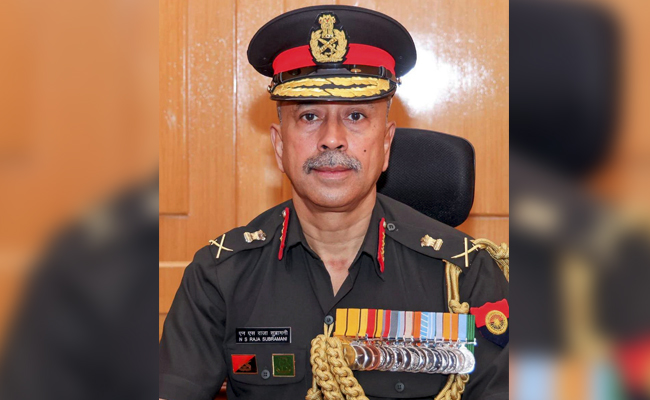
New Delhi (PTI): Lt Gen NS Raja Subramani will be India's new Chief of Defence Staff (CDS) and his key task is set to be to implement the ambitious theaterisation plan that seeks to ensure tri-services synergy.
He will succeed Gen Anil Chauhan whose tenure will come to an end on May 30.
Gen Chauhan, a former Eastern Army Commander, took charge as the country's senior-most military commander in September 2022, over nine months after the first CDS, General Bipin Rawat, died in a helicopter crash in Tamil Nadu.
The government has appointed Lt Gen NS Raja Subramani (Retd) as the Chief of Defence Staff, who will also function as the secretary of the Department of Military Affairs, the defence ministry said on Saturday.
Lt Gen Subramani is currently serving as the military adviser to the National Security Council Secretariat.
Prior to that, he was the Vice Chief of the Army Staff from July 1, 2024 to July 31, 2025, and was General Officer Commanding-in-Chief of the Central Command from March 2023 till June 2024.
As Chief of Defence Staff, Lt Gen Subramani's primary task will be to implement the theaterisation model to bring in tri-services synergy by rolling out integrated military commands.
The officer is a graduate of the National Defence Academy and the Indian Military Academy. He was commissioned into the eighth battalion of the Garhwal Rifles on December 14, 1985.
Lt Gen Subramani is an alumnus of Joint Services Command Staff College, Bracknell (UK), and the National Defence College, New Delhi. He holds a Master of Arts degree from King's College London and an MPhil in defence studies from Madras University.
In his illustrious career spanning over 40 years, Lt Gen Subramani has served across a wide spectrum of conflict and terrain profiles and tenanted a host of Command, Staff and Instructional appointments.
He commanded the 16 Garhwal Rifles in Counter-Insurgency operations in Assam as part of Operation Rhino, the 168 Infantry Brigade in Jammu and Kashmir, and the 17 Mountain Division in the Central Sector, all during a challenging operational environment.
He also has the distinction of commanding two Corps, including the Indian Army's premier strike Corps on the Western Front.