Banu Mushtaq to Hijab Row: BJP’s relentless targeting of Muslims

A few years ago, a clip from a TV debate between Congress and BJP spokespersons went viral. In that debate, Congress spokesperson Akhilesh Pratap Singh challenged BJP spokesperson Sudhanshu Trivedi, saying that without using six words, Hindu, Muslim, Pakistan, terrorism, Ram, and religion, BJP leaders would not be able to speak even for one minute. As Trivedi began responding, within just a few seconds he ended up saying “Pakistan.” Back then, and even now, Singh’s words remain true, not just for BJP spokespersons but also for their top leaders. Today, they sound even more accurate.
Without Muslim hatred, the BJP has no issue, no speech, no statement. Their identity has become synonymous with opening their mouths only to speak against Muslims. This is the clearest example of how bankrupt the politics of the so-called world’s largest party has become. Despite having a strong organisation, grassroots presence, abundant financial power, and massive manpower, BJP remains utterly poor when it comes to political ideas. Why has it reached a stage where it cannot do politics without deploying Muslim hatred? Why is it that whatever the issue may be, Muslim hatred is always pushed to the front? Because their goal is to cook their political meal only through that. Injecting Muslim hatred into every subject has become a habit.
During elections, Muslim hatred is whipped up. During festivals too, Muslim hatred is stirred. Their hatred stretches as far as snatching Muslim reservations. It grows to the level of boycotting Muslim businesses. Take a few recent examples: first, BJP’s stance against noted writer Banu Mushtaq. Now, during the Dasara festivities, BJP has sparked another controversy. The fact that Booker Prize-winning writer Banu Mushtaq will inaugurate Dasara has been turned into a political dispute. Dasara is supposed to be a cultural, state festival, but BJP has dragged religion into it.
Leaders like R. Ashoka, Vijayendra, MLA Basanagouda Patil Yatnal, and former MP Pratap Simha expressed displeasure over Mushtaq inaugurating the festivities. R. Ashoka wondered what would happen if Mushtaq was excommunicated from her religion for worshipping idols. Vijayendra demanded that Mushtaq clearly express her views about Goddess Bhuvaneshwari and Chamundeshwari. Yatnal argued that since the inauguration involves offering flowers and lighting a lamp to Goddess Chamundeshwari, it goes against Mushtaq’s personal faith. Pratap Simha asked: Islam says there is no god except Allah, so how can Banu Mushtaq accept Goddess Chamundi as divine? Would her religion allow that?
When Mysuru BJP MP and scion of the royal family Yaduveer spoke positively about Mushtaq, the party could not tolerate it and forced him to issue another tweet of objection. This shows that within the BJP, it is impossible to do politics without speaking the language of intolerance. The real problem here is that Banu Mushtaq is a progressive woman activist. That a woman like her would inaugurate Dasara itself is something their mindset cannot accept. Unable to tolerate that, they dragged in religion, questioning whether her faith would approve.
We saw the same behavior in the Dharmasthala case investigation. Suddenly, BJP tried to paint the case in Hindu-Muslim colours. Not wanting an investigation, they attempted to communalise it. It was absurd that they tried to turn this issue into Hindu versus Muslim. Senior leaders like Vijayendra, Ashoka, Sunil Kumar, and Suresh Kumar spoke recklessly, making baseless allegations. Even though the complainants, protestors, and those filing charges were all Hindus, BJP still attempted to forcibly inject a Muslim angle.
The DJ controversy too is an example. The state government banned the use of DJ systems during Ganesh festival and Eid-e-Milad celebrations, from August 27 to September 15. But BJP portrayed this restriction as a hurdle to Hindu festivals and began protesting against it. They never mentioned that the ban applied only to DJ systems, not to traditional loudspeakers used for rituals. The same people who object if Muslims use loudspeakers for five minutes now claim that banning DJs disrupts Hindu festivities, forgetting that this was a rule implemented earlier by their own government.
Even in law-making, BJP reflects its communal mindset. Only when the law backfires on them do they complain and try to shift blame. They were the ones who brought in laws restricting loudspeakers, citing azaan. Yet now they call the same restrictions an obstacle for Hindu festivals. Even in budget allocations, BJP flares up if Muslims receive even a tiny share. They dismissed Siddaramaiah’s budget as Muslim appeasement, even though Muslims did not get even one percent of the total allocations. Ignoring facts, they spread lies that the entire budget was for Muslims.
Suppressing truth and hiding reality to push their anti-Muslim narrative is nothing new. Instead of objectively analysing a budget that allocated fairly across all communities, BJP leaders reduced it to a communal attack. Calling it “Saabara budget,” “halal budget,” or “Pakistan’s budget” reflects a sick mentality, an inability to think beyond narrow hatred. The same happened when the Assembly passed a bill granting 4% reservation for Muslim contractors in government tenders. BJP opposed it, showing its deep prejudice and intolerance.
Their hatred does not even spare Muslim officers and women officers. When Kalaburagi DC Fouzia Tarannum was called “Pakistani” by BJP MLC N. Ravikumar, it created a storm. The Karnataka High Court even reprimanded him. For BJP, simply being Muslim is enough to question one’s patriotism and loyalty. Fouzia Tarannum, an IAS officer lauded for her performance, was labeled Pakistani merely for being Muslim. In public meetings, BJP leaders shamelessly call her that. This is not just one leader, many senior BJP leaders have displayed such vile behavior.
Even Colonel Sophia Qureshi, who gained fame through Operation Sindoor, was slandered by BJP minister Vijay Shah of Madhya Pradesh, who called her the sister of terrorists. Such is the irrational depth of their hatred. Another common trick is that if an accused is Muslim, their names are highlighted repeatedly and linked with national, international, or terrorism angles. Media too joins this effort unfailingly. If victims are Muslims, they are painted as villains, with false charges leveled to justify their deaths.
In Poonch and Rajouri, when Pakistani gunfire killed people, local mosque cleric Mohammed Iqbal was among those killed. Tragically, false news spread labeling him a terrorist. We have already seen BJP’s campaigns around hijab and halal. A piece of cloth on the head was opposed, and those who wore it were branded traitors. Students demanding their basic rights were called terrorists by BJP leaders. They pitted Hindu students against Muslim students in a deeply divisive manner.
After the hijab ban came a campaign against halal meat, demanding only jhatka meat and urging Hindus to buy meat only from Hindus. BJP supported this, even though it created a communal divide in trade. During temple fairs, Muslim traders were banned from setting up stalls. In many places, banners excluded them. Sometimes, this escalated to attacks on poor vendors. Even in the Pahalgam terror attack, Muslims who tried to save Hindu pilgrims lost their lives, but BJP ignored this and spread Muslim hatred.
In Bihar’s electoral rolls too, communal bias surfaced, with allegations that Muslim voters were branded Bangladeshis to polarise the electorate. Even after ten years in power, Modi still chants “Muslim, mutton, Mughal, machhli, mujra, mangalsutra.” Delhi’s jeans factories, mostly run by Muslims, were shut down by Industrial Minister Manjinder Singh Sirsa, who used his power to displace workers. All of this has been routine under BJP rule. There are no signs it will stop.
Over the past eleven years, hatred and communal polarisation have only intensified. Religious minorities are consistently targeted. Election campaigns are filled with hate speeches. Even in Parliament, Muslims are insulted in the worst possible way under BJP rule. Their hatred seeps into the laws they bring. When voter rolls are purged, minorities are the primary target. All wrongs are pinned on Muslims. They are blamed for everything.
BJP carries out perversions themselves and then spreads propaganda blaming Muslims. This has become a common strategy. Even food is not spared. Muslims are attacked, beaten, even killed. Social harmony is collapsing at an alarming rate. Hate speech almost always targets Muslims. The so-called champions of hate speech are none other than BJP leaders and Sangh affiliates. From BJP leaders, to religious figures, to VHP and Bajrang Dal activists, these are the largest producers of hate speech. Even Prime Minister Modi and Home Minister Amit Shah are not exceptions.
We have seen even in elections, Modi himself saying that Hindu wealth is being snatched to give to Muslims. This was not some fringe leader’s statement, it was from the Prime Minister himself, shocking everyone. It went as far as calling for Hindus to stockpile weapons in their homes and openly inciting violence in Delhi’s streets. Muslims are threatened to shut their shops, attacked, driven from villages, and forced into fear. Even their places of worship are made targets of provocation. The narrative is built that Muslims are responsible for every crime, every wrong.
False cases are deliberately associated with Muslim names to stoke further hatred. In BJP-ruled states, police have often failed to properly investigate crimes against minorities. That such a massive party as the BJP has abandoned welfare politics for nothing but hate and lies is deeply tragic.
Let the Truth be known. If you read VB and like VB, please be a VB Supporter and Help us deliver the Truth to one and all.
Real Madrid fines Valverde and Tchouaméni half a million euros each for altercation
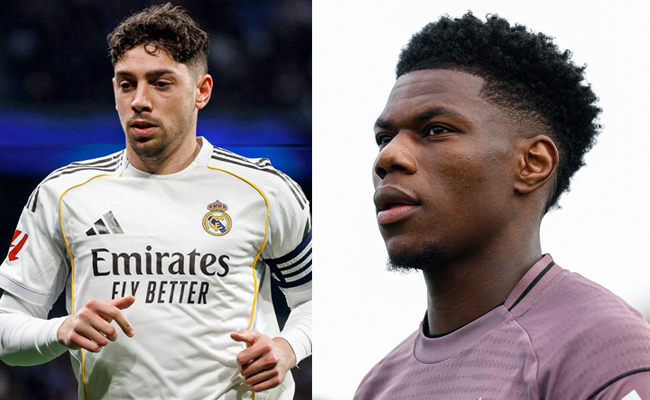
Barcelona (AP): Real Madrid slapped players Federico Valverde and Aurélien Tchouaméni with half-a-million-euro ($588,000) fines on Friday for their altercation during practice.
The massive fines came a day after the midfielders tussled when the team trained. Valverde said in a post on social media on Thursday that no punches were thrown. But Valverde knocked his head on a table and he suffered a small cut that required a brief hospital visit.
On social media, Valverde initially called it a “meaningless fight” with a teammate and said “everything has been blown out of proportion."
His employers, however, considered it a significant enough breach of team discipline to nail both Valverde and Tchouaméni with fines that bite even the bank account of a top soccer player. The half-a-million euro penalties reflect the reputational damage the club was enduring in a chaotic end to a disappointing season.
In a statement, the 15-time European champion said its disciplinary action was concluded after both players expressed to the club “their complete remorse for what happened and apologized to one another.”
Madrid added they also apologized to their teammates, the coaching staff and club supporters, as well as showing their willingness to accept whatever disciplinary action the club deemed “opportune.”
Tchouaméni was back training with Madrid on Friday, two days before they play at Barcelona in a clasico. Madrid has to win otherwise Barcelona will be crowned La Liga champion.
After being notified of the fine, he posted a public apology to the club and its fans on social media.
“What happened this week in training is unacceptable,” Tchouaméni wrote. "I say this while thinking about the example we are expected to set for young people, whether in football or at school.
“Above all, I am sorry for the image we projected of the club.”
Valverde was not at practice due to the head knock.
Both players are set to play in the World Cup next month, with Tchouaméni playing for France and Valverde for Uruguay.
Chaotic end to a poor season
===================
The run-in between the players, who for seasons have played side by side in Madrid's midfield, came after they argued this week in previous training sessions. But tempers boiled over on Thursday. Spanish media was rife with reports that the players previously disagreed over the club's decision to let coach Xabi Alonso go after just months on the job.
It was not the only altercation involving Madrid players during training this week. Álvaro Carreras confirmed he was in a “minor” incident with a teammate. Spanish media said he and fellow defender Antonio Rüdiger got into a scuffle.
Álvaro Arbeloa, the coach who was promoted from Madrid's reserve team when Alonso was fired in January, will face tough questions on what went wrong inside the changing room when he gives a press conference on Saturday ahead of the clasico at Camp Nou.
Madrid is facing a second consecutive campaign without a major trophy amid rumors in the Spanish media that club president Florentino Pérez is considering bringing back Jose Mourinho to straighten out his underperforming team.