Oman Foreign Min. says Israel drew US into Iran war, calls conflict a ‘grave miscalculation’
US has lost control of its own foreign policy: Badr Albusaidi
_vb_76.jpeg)
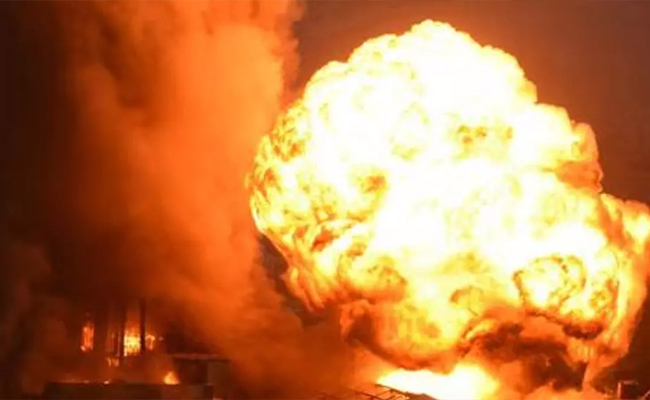
Muscat: Oman’s Foreign Minister Badr Albusaidi has said that Israel persuaded the United States to go to war with Iran, describing the ongoing conflict as a “grave miscalculation” and a “catastrophe”, according to a report by The Guardian.
Writing in the British news and current affairs Journal The Economist, Albusaidi said Washington had “lost control of its own foreign policy” and was drawn into the conflict despite the possibility of securing a nuclear agreement with Tehran.
He said Iran and the United States had been close to an understanding during nuclear talks held in Geneva in February.
“It was a shock but not a surprise” when the US and Israel launched strikes on Iran just hours after discussions that had made peace “really possible”, he wrote.
According to Albusaidi, Tehran had offered concessions, including limits on uranium enrichment, in exchange for sanctions relief, and further negotiations had been planned before military action began.
He alleged that Israel’s leadership convinced US President Donald Trump to join the war.
“The American administration’s greatest miscalculation… was allowing itself to be drawn into this war,” he wrote, adding that the conflict was “not America’s war” and that there was no clear outcome in which both the US and Israel would achieve their objectives.
Albusaidi described the broader confrontation as a “catastrophe”, particularly for Gulf nations. He said there was little indication that negotiations would resume soon and urged both sides to return to dialogue.
“For Israel to achieve its stated objective will require a long military campaign,” he cautioned, warning that such a course could draw the US deeper into the conflict.
The Omani minister also termed the military strikes by the US and Israel “illegal”, saying countries involved in the attacks were in breach of international law as long as hostilities continued.
Israeli Prime Minister Benjamin Netanyahu rejected claims that Israel had pushed Washington into the conflict. “Does anyone really think that someone can tell President Trump what to do?” he said in response.
Oman has been among Gulf countries advocating a diplomatic solution, while other regional states have expressed concern that the war could destabilise energy supplies and regional security.
Let the Truth be known. If you read VB and like VB, please be a VB Supporter and Help us deliver the Truth to one and all.
West Asia conflict: Six Indians lost their lives in 'various incidents', says MEA
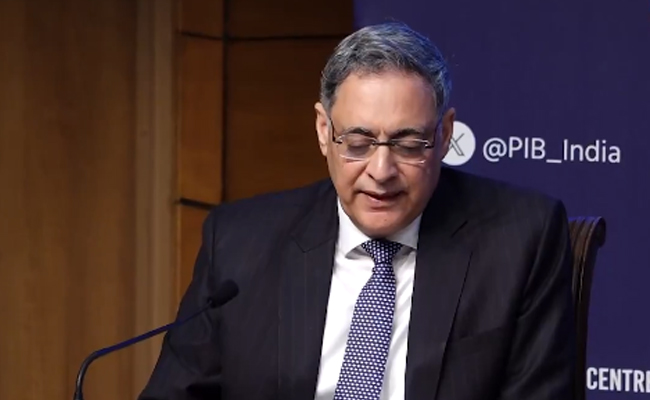
New Delhi (PTI): Amid the escalating West Asia conflict, the Ministry of External Affairs (MEA) on Friday said six Indian nationals have lost their lives while one remains missing in "various incidents".
At an inter-ministerial briefing here, Additional Secretary (Gulf), MEA, Aseem R Mahajan, also said, "Late yesterday night, we received information regarding the tragic demise of an Indian national, during an attack in Riyadh on March 18." He, however, did not elaborate upon the circumstances of this death.
"We express our deepest condolences to the family of the deceased. Our Mission in Riyadh is in touch with the family and closely co-ordinating with local authorities for the early return of the mortal remains to India," he said.
On Friday, the Indian Embassy in Riyadh also said that an Indian national was killed in Saudi Arabia due to the “recent events of March 18”.
In a social media post, the Indian Mission expressed its “deepest condolences on the tragic demise of an Indian national in Riyadh due to recent events on March 18".
A day earlier, the Indian embassy said alerts were received by residents in Riyadh and some other regions on Wednesday. “The Indian community is advised to remain calm and composed,” the embassy said.
Mahajan also told reporters in Delhi that "six Indian nationals have lost their lives and one is missing in various incidents".
"Our missions in Saudi Arabia, Oman, Iraq, and the UAE are in regular touch with the concerned authorities regarding the missing Indian national and for the early repatriation of mortal remains of the deceased Indian nationals to India," he said.
Less than a week ago, the MEA official had told reporters in an inter-ministerial briefing on the West Asia situation that five Indian nationals had lost their lives while one is missing in various incidents.
The West Asia conflict began on February 28 when the US-Israel combine launched military strikes on Iran. In retaliation, Tehran has targeted Gulf countries hosting US military bases.
Energy and other civilian infrastructure in the Gulf region have also come under attack during this conflict that has stretched into three weeks, with no end to it in sight.
Since February 28, around three lakh passengers have returned from the region to India, Mahajan said.