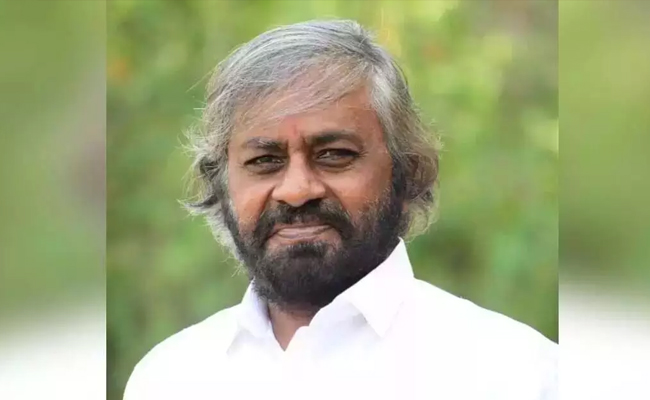
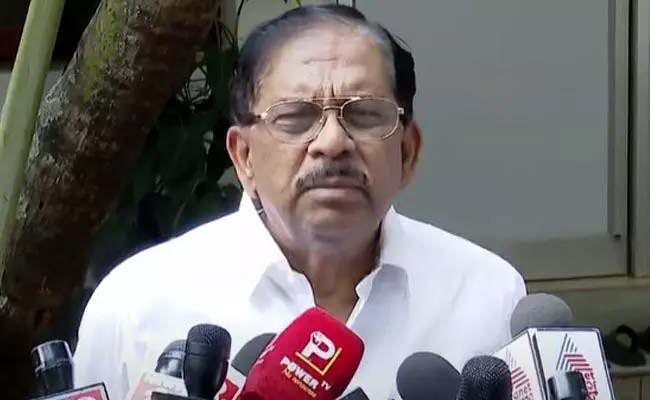
BJD walks out as LS begins debate on no trust motion against Modi government
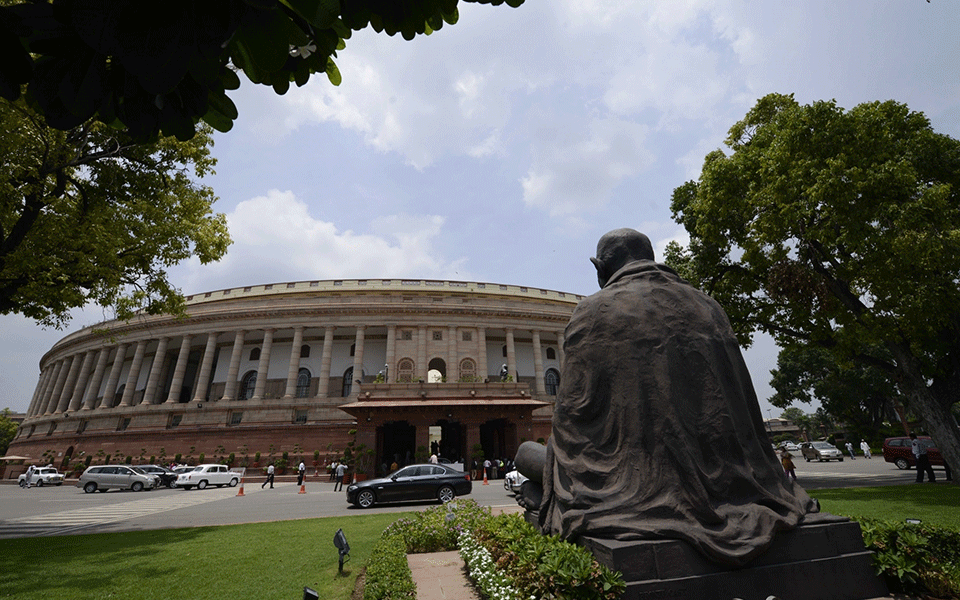
New Delhi, July 20 : The Biju Janata Dal (BJD) members walked out of the Lok Sabha on Friday as the House began a debate on a no-confidence motion moved by the opposition against Prime Minister Narendra Modis government.
Speaker Sumitra Mahajan said the discussion on the no trust motion would continue for the entire day and the vote would take place at 6 p.m.
She said the House would also skip lunch.
Congress leader Mallikarjun Kharge sought more time from the Speaker saying 38 minutes allotted for his party leaders to address the Lok Sabha was not enough.
He also sought more time for the members of Trinamool Congress, Left parties and the Rashtriya Janata Dal (RJD).
"This is a very important motion. The country is watching us to know what we have to say and how the government is going to respond. Don't limit the time. There are precedents when no-confidence motions have been debated for two, three or even five days. Therefore if you sum up in five hours, it is not justified," Kharge said.
Parliamentary Affairs Minister Ananth Kumar responded, saying Kharge is a senior leader but needed to understand that "in one-day cricket era, there was no need to play a test cricket match for five days".
The BJD, which has 19 members in the Lok Sabha after the resignation of Kendrapara MP Baijyant Jay Panda, then walked out.
Its leader Bhartruhari Mahtab said injustice had been done to Odisha in the last 14 years and the BJP government at the Centre has failed to safeguard the interests of the state.
"In the last 14 years, the BJD has witnessed that the United Progressive Alliance (UPA) for 10 years and the National Democratic Alliance (NDA) for four years have done injustice with Odisha. And this discussion is not going to help Odisha. So we are not going to participate," Mahtab said.
The Telugu Desam Party (TDP), an estranged ally of the Bharatiya Janata Party (BJP)-led NDA government, moved the no-confidence motion on Wednesday, which was admitted by Mahajan.
The no-confidence motion has the support of the Congress, Trinamool Congress, Nationalist Congress Party (NCP), Samajwadi Party (SP), and the Communist Party of India-Marxist (CPI-M).
The ruling NDA, however, enjoys a comfortable majority in the House. The BJP which leads the ruling combine has 273 members in the House that has an effective strength of 533, excluding the Speaker.
Let the Truth be known. If you read VB and like VB, please be a VB Supporter and Help us deliver the Truth to one and all.
Manipur: Mortal remains of children killed in bomb attack handed over to family
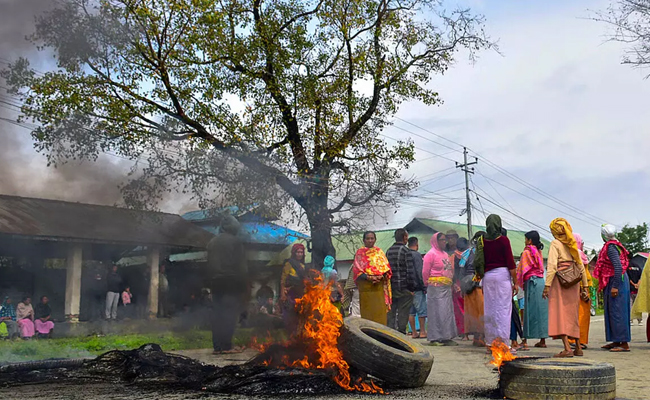
Imphal (PTI): The mortal remains of two children, who were killed in a bomb attack in Manipur's Bishnupur district in April, were handed over to family members on Saturday, officials said.
The bodies of the five-year-old boy and his six-month-old sister were kept in the morgue for 25 days, as the family members had refused to accept the mortal remains, demanding that the perpetrators be brought to book at the earliest.
On April 25, Chief Minister Y Khemchand Singh had appealed to the family members of the children to accept the bodies. Singh had also said that all efforts were underway to find the culprits.
The two children were killed in a bomb attack at Tronglaobi in Bishnupur district on April 7. Their bodies were kept in the morgue at the Regional Institute of Medical Sciences in Imphal.
The incident had triggered widespread violent protests in the five valley districts of Manipur, and the case was subsequently handed over to the NIA.
Hundreds of people lined up along the way to Tronglaobi to offer floral tributes, as the mortal remains were taken for the last rites in an open vehicle earlier in the day.