Clear message to Modi that People are unhappy and it is time for change: Rahul on poll results
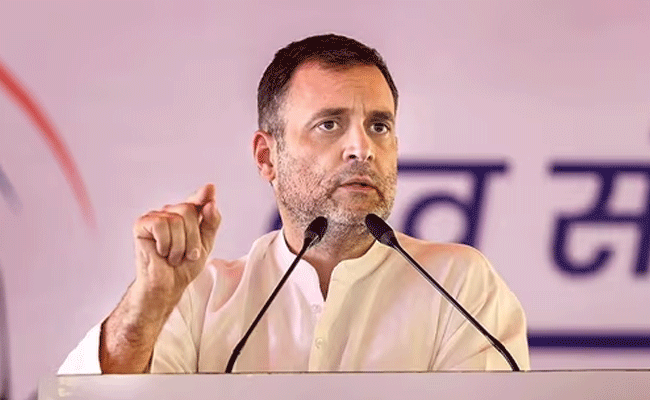
New Delhi, Dec 11: Buoyed by Congress' resurgence, party president Rahul Gandhi on Tuesday said the assembly poll outcome is a "clear message" to the Modi government that people are not happy with it and time has come for a change while asserting that his party will also win in 2019.
Prime Minister Narender Modi got a massive mandate but refused to listen to "heartbeat of the country", Gandhi noted, and said there are serious questions being asked about the future of country's youngsters as there was a sense of discontentment and inability to see the future.
Thanking people and party workers for party's good performance in three states of Rajasthan, Chhatisgarh and Madhya Pradesh, he said, "It's now time for change. We are going to provide these three states with a vision for overall development". However, he added that they would have liked to do better in Telangana.
Hitting at the BJP for its often-stated remark of Congress-mukt (Congress-free) Bharat, Gandhi said,"the BJP has a certain ideology and we will fight against it. We have won this elections, we will also win in 2019. However, we do not want to get rid of anyone, 'hum kisi ko mukt nahi karna chahtein'."
Asked about the selection of chief ministers in Rajasthan, Madhya Pradesh and Chhattisgarh, he said there will not be any issue and it will be done smoothly.
There is a clear message to Prime Minister Modi that people are not happy with his decisions, including demonetisation and those pertaining to farmers and youth, he said, adding the BJP has failed to provide a vision for the country going forward.
Asserting that the process of loan waiver for farmers will start as soon as Congress governments are formed, he, however, said the loan waiver is a measure, not a solution to farmers' distress.
Gandhi was named to lead the Congress exactly a year ago and took over the charge from his mother Sonia Gandhi a few days later.
Rahul Gandhi also praised Congress workers and likened them to 'babbar sher' (lions).
Let the Truth be known. If you read VB and like VB, please be a VB Supporter and Help us deliver the Truth to one and all.
Commercial LPG hike: Delhi restaurant owners warn of higher menu rates, job losses
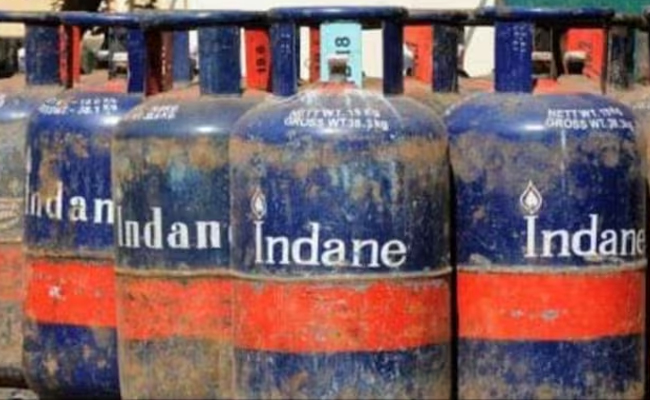
New Delhi (PTI) A day after a 50 per cent rise in commercial LPG cylinder prices, Delhi's food business, with restaurant owners and street vendors have warned of higher menu rates, financial strain and potential job losses if the trend persists.
The price of commercial LPG was hiked by a steep Rs 993 per 19 kg cylinder, marking the third consecutive monthly hike amid rising global energy prices linked to the West Asia conflict.
For many in the restaurant industry, the spike has been both sudden and steep.
Manpreet Singh, honorary treasurer of the National Restaurant Association of India, said that eateries are already grappling with supply challenges alongside rising costs.
"There is a huge difficulty in getting these cylinders, and black marketing is also increasing in many unregulated sectors," he said, noting that prices that were once around Rs 1,600, often dropping to nearly Rs 1,300 with discounts, have now surged to between Rs 3,000 and Rs 4,000 per cylinder.
He further added that a medium-sized restaurant typically uses between two and five cylinders daily, making the increase particularly burdensome as costs mount.
Singh further said that as costs mount, smaller establishments could struggle to stay afloat. Instead, the association has advised restaurants to shift towards piped natural gas connections through Indraprastha Gas Limited as a more sustainable alternative.
"If this problem continues, PNG is the only long-term solution," he said, adding that temporary measures like coal offer limited relief due to slower cooking times and that it can largely be used only for tandoors.
Echoing similar concerns, Kabir Suri, owner of Mamagoto in Khan Market, said the impact is already visible across the industry. "There has been almost a threefold increase in cylinder prices for restaurants," he said, adding that rising fuel and logistics costs are compounding the pressure.
"If this continues, it will become a significant financial burden, and food prices will inevitably go up. Adding to this burden, higher fuel costs are also affecting logistics and transportation, making a price rise unavoidable. The extent of the impact will vary between small eateries and large chains depending on their scale," he said.
Global oil prices have surged nearly 50 per cent following disruptions in energy supply chains due to the West Asia conflict, pushing up commercial fuel costs and transport expenses.
A West Delhi-based restaurateur said they are trying to manage rising costs while keeping their staff secure. "We are trying to ensure that our staff, from kitchen workers to waiters, are paid on time and do not face immediate hardship," the owner said.
"We are a small restaurant with seating for about 20 to 25 people at a time. But if this continues for long, we will have to take difficult calls. There is only so much we can absorb, and menu prices will have to go up. We hope this does not continue for a longer period," he said.
Another restaurant owner in North Delhi, who did not wish to be named, said operational adjustments alone may not be enough. "We are checking our costs very carefully and trying to cut wherever possible, but if fuel prices remain high, it will eventually affect how we run the business," the owner said.
"Coal helps in tandoor cooking, but it takes more time," the owner further added.
The strain is even more acute among street vendors, many of whom operate on thin margins. A vendor in Saket said he had recently expanded his business, moving from a mobile cart to a rented outlet.
"I have a family to feed and more responsibilities now. Earlier, I managed with a moving cart, but after renting the place, expenses increased," he said. "Whenever cylinders were unavailable, I had to buy them at higher rates in the black market. Now even regular supply is too expensive, and if this continues, we may have to shut down," he added.
In Laxmi Nagar, another vendor said they are struggling to keep the business running. "Sometimes we even used domestic cylinders from home when supply ran out because we had to keep the stall running," he said, adding that rising costs leave little choice but to increase prices or bear losses.
On April 1, the rates of commercial LPG cylinders were hiked by Rs 195.50 per cylinder, followed by a Rs 114.5 hike on March 1, taking the total increase over the past three months to Rs 1,303. With the latest revision, a 19 kg commercial LPG cylinder now costs Rs 3,371.5 in Delhi, up from Rs 2,078.5 earlier.
The prices of domestic LPG cylinders used for household cooking have remained unchanged. They were last increased by Rs 60 per 14.2 kg cylinder on March 7 and currently cost Rs 913 in Delhi.