Demolition of MGNREGA to have catastrophic consequences: Sonia Gandhi
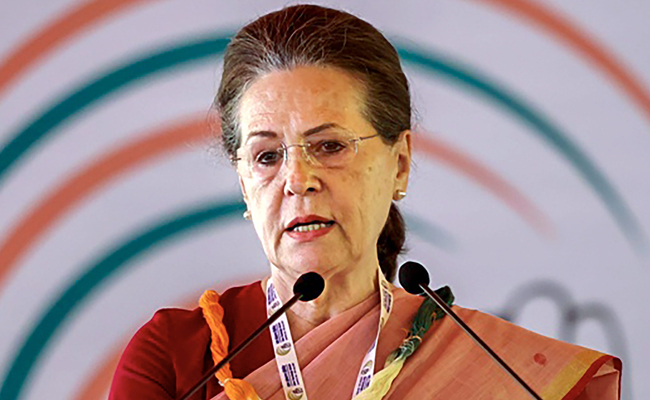
New Delhi, Dec 22 (PTI): Congress Parliamentary Party chairperson Sonia Gandhi on Monday said the "demolition" of the historic Mahatma Gandhi National Rural Employment Guarantee Act (MGNREGA) will have catastrophic consequences for crores of people across rural India and called upon all to unite and safeguard the rights that protect everyone.
In an editorial in 'The Hindu' titled "The bulldozed demolition of MGNREGA", the former Congress chief said the "death" of MGNREGA is a collective failure.
This comes a day after President Droupadi Murmu gave her assent to the Viksit Bharat Guarantee for Rozgar and Ajeevika Mission (Gramin) (VB-G RAM G) Bill, which replaces the MGNREGA and has a provision for 125 days of wage employment for rural workers.
ALSO READ: Delhi polluted owing to Aravalli, says anchor Rajat Sharma; netizens troll him
"MGNREGA realised the Mahatma's vision of Sarvodaya (welfare of all) and enacted the constitutional right to work," Gandhi said.
"It is imperative, now more than ever, to unite and safeguard the rights that protect us all," she added.
Gandhi said the employment guarantee scheme to deal with rural distress has now been "bulldozed and demolished".
MGNREGA was a rights-based legislation inspired by Article 41 of the Constitution of India, which calls upon the government to secure citizens' right to work, she said.
"Over the past few days, the Narendra Modi government worked to bulldoze MGNREGA's abolition without any discussion, consultation, or respect for parliamentary processes or Centre-State relations. The removal of the Mahatma's name was only the tip of the iceberg. The very structure of MGNREGA, so integral to its impact, has been annihilated," she said.
She described VB-G RAM G as "nothing but a set of bureaucratic provisions".
ALSO READ: Hindu outfit urges Karnataka governor to withhold assent to anti-hate speech bill
The Modi government's new Bill has restricted the ambit of the scheme to rural areas as notified by the Union at its discretion, Gandhi said.
Against uncapped central allocation, there is now a pre-determined budgetary allocation that caps the number of days of employment provided in each state. The number of workdays provided are, therefore, left to the Centre's priorities rather than the people's needs, she said, adding that the all-year guarantee of employment has been finished off.
Gandhi said one of the greatest impacts of MGNREGA was increased bargaining power of the landless poor in rural India, which elevated agricultural wages.
"This bargaining power will definitely be eroded under the new law. The Modi government is attempting to suppress wage growth and that too at a time when the proportion of employment in agriculture has risen for the first time since Independence, contrary to what should have been the case," she noted.
She also said by transferring a significant portion of the expense onto the states, the Modi government is discouraging them from providing work under the scheme. The finances of states, already under severe stress and strain, will be further devastated, the Congress leader said.
Under the VB-G RAM G Bill, the cost-sharing pattern is 60:40 between the Centre and states, 90:10 for northeastern and Himalayan states, and 100 per cent central funding for Union territories without legislatures.
Gandhi further said that aside from demolishing the demand-based nature of the programme, the Modi government has ended the decentralised nature of the scheme.
"The Modi government is resorting to fraudulent claims that it has enhanced the employment guarantee from 100 days (under MGNREGA) to 125 days. For all the reasons outlined above, that will certainly not be the case. Indeed, the real nature of the Modi government's intentions can be understood from its decade-long track record of throttling MGNREGA.
"It began with the Prime Minister's (in)famous mocking of the scheme on the floor of the House and proceeded apace through a 'death by a thousand cuts' strategy through, for instance, stagnant budgets, the use of disenfranchising technology and delayed payments to workers," she said in the article.
Gandhi said the demolition of the right to work must not be seen in isolation but as part of the long assault by the ruling establishment on the Constitution and its right-based vision for the country.
"The most fundamental right to vote is under unprecedented assault. The Right to Information has been desecrated with legislative changes that weaken the autonomy of Information Commissioners, and by wholesale exemptions from the Act for ill-defined 'personal information data," she said.
The Right to Education has been undermined and The Forest Rights Act, 2006, was markedly weakened by the Forest (Conservation) Rules (2022), which removed the gram sabha from any role in permitting the diversion of forest land, the Congress leader said, adding that The Right to Fair Compensation and Transparency in Land Acquisition, Rehabilitation and Resettlement Act, 2013 has been significantly diluted.
"Through the three black farm laws, the government attempted to deny farmers the right to a minimum support price. The National Food Security Act, 2013, may very well be next on the chopping block," Gandhi said.
Let the Truth be known. If you read VB and like VB, please be a VB Supporter and Help us deliver the Truth to one and all.
Heavy rain, hailstorms likely to lash Uttarakhand on Tuesday; IMD issues warning
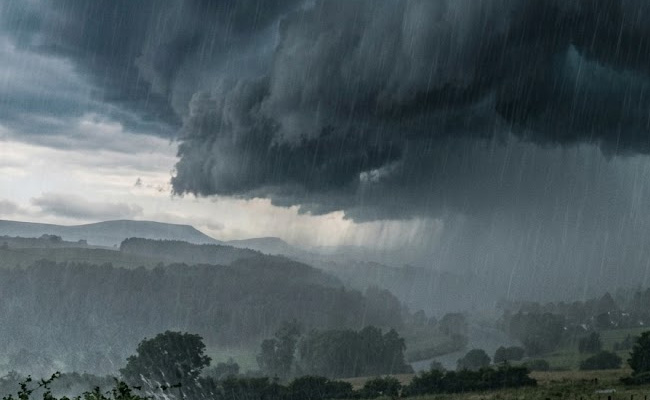
Dehradun/Pithoragarh (PTI): The India Meteorological Department (IMD) has issued a warning for heavy rain and hailstorms across several districts of Uttarakhand on Tuesday, as temperatures remained markedly below normal in the region.
Heavy rainfall is likely at isolated places in Dehradun, Haridwar, Tehri, Pauri, Nainital, Champawat, and Udham Singh Nagar districts. Most places across all districts are expected to receive light to moderate rain or thunderstorms, while higher reaches are likely to witness snowfall, officials said on Monday.
The weather department warned of thunderstorms accompanied by lightning, hail and intense spells of rain in six districts, including Dehradun and Nainital. Gusty winds with speeds reaching 40-50 kmph are also expected at isolated locations in these areas and other hilly districts.
In the state capital, Dehradun, the sky is forecast to remain partly cloudy with light rain and thunderstorms accompanied by gusty winds of 30-40 kmph.
The maximum and minimum temperatures in the city are expected to hover around 31 degrees Celsius and 19 degrees Celsius, respectively.
Maximum temperatures during the past 24 hours remained markedly below normal in the hills and appreciably below normal in the plains. While no significant change in temperature is expected over the next 2-3 days, the IMD predicts a rise of 3-5 degrees Celsius during the subsequent 3-4 days.
Rainfall was recorded in several areas after 8.30 am today, with Ramnagar receiving 31.5 mm and Nainital recording 26.5 mm. Other areas, including Pithoragarh, Khatima and Champawat, also reported moderate precipitation.
Authorities have stopped a batch of 36 Adi Kailash pilgrims at the Dharchula base camp and placed the high-altitude yatra route on high alert following heavy rains and hailstorms in the district on Monday.
Dharchula SDM Ashish Joshi said the pilgrimage was halted due to adverse weather conditions. The issuance of new inner-line passes has been suspended until the weather normalises.
With 1,700 passes issued so far, pilgrims already at higher camps are being monitored for safety, the official added.