EC sets seven-day deadline for voter list mapping in Bengal ahead of SIR rollout
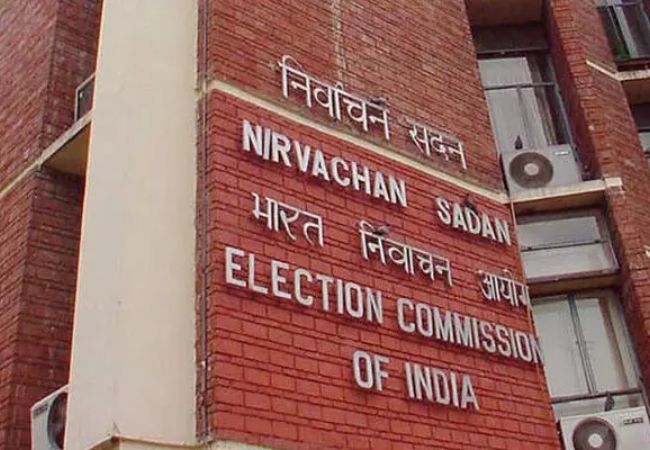
Kolkata (PTI): The Election Commission of India (ECI) on Wednesday directed officials in West Bengal to expedite the voter list mapping process as part of preparations for the Special Intensive Revision (SIR), setting a deadline of seven days to complete the process, an official said.
Nearly 40 per cent of the task remains unfinished, with progress reportedly sluggish in several districts, the official said, elaborating that the mapping exercise involves verifying existing voters against the 2002 electoral roll to ensure accuracy in the 2025 list.
At a review meeting held at the office of the Chief Electoral Officer (CEO) in Kolkata during the day, senior Deputy Election Commissioner Gyanesh Bharti issued clear instructions in this regard to district magistrates, electoral registration officers (EROs), and assistant EROs, excluding officials from the disaster-affected districts of North Bengal, the official told PTI.
Commission officials expressed concern over the pace of work and questioned delays, despite the Puja holidays being cited by some districts. Bharti rejected the justification, stressing the importance of keeping up with the national timeline, he said.
"SIR is being conducted across the country, not just in Bengal. Other states have completed the task or are near completion. If West Bengal lags, it will create problems at the national level. Therefore, we cannot allow more than seven days," Bharti told officials at the meeting.
Reports of alleged irregularities in the voter list also surfaced during the meeting. Bharti warned that any malpractice during the SIR process would invite strict action.
"No one will be spared if complaints of malpractices are received. In Bihar, we have already taken tough measures," he said.
The quality of work by Booth Level Officers (BLOs), who were tasked with ground-level verification, also came under scrutiny.
Director General of the Commission's IT division, Seema Khanna, pointed out that BLOs' tech proficiency remains unsatisfactory and called for immediate completion of training programmes.
She suggested a cluster-based training approach, allowing experienced BLOs to guide others on the use of digital tools.
At the meeting, the officials discussed the functioning of the 'ERONET' app in detail during the meeting, the source said.
"As per the Commission's directive, the BLOs must upload voter data directly from the field using the app, enabling real-time monitoring by the Commission," he said.
After the main meeting at the CEO's office, the Commission's team visited the North 24 Parganas Zilla Parishad Bhawan and held discussions with election workers from the Rajarhat-Gopalpur and Rajarhat-New Town assembly constituencies. Separate meetings were also held with EROs and AEROs at the district magistrate's office.
Although North Bengal districts were exempted from Wednesday's in-person meeting due to the recent natural disaster, officials from Uttar Dinajpur, Dakshin Dinajpur, and Malda joined via video conference, the official stated.
The ECI also clarified that the Aadhaar card will not be treated as proof of citizenship during the Special Intensive Revision, an official said.
The clarification came during the meeting, where senior state officials directly asked the visiting ECI delegation whether Aadhaar could be accepted as a valid document for establishing citizenship in the ongoing SIR exercise.
Both Senior Deputy Election Commissioner Gyanesh Bharti and West Bengal Chief Electoral Officer Manoj Kumar Agarwal responded at the meeting by citing the Supreme Court's position that Aadhaar serves only as a proof of identity and not of citizenship.
Officials also raised concerns over those whose parents' names are missing from the 2002 electoral roll, which is being used as the base year for the verification process. In such cases, the Commission has mandated formal inquiries or hearings to establish eligibility.
Let the Truth be known. If you read VB and like VB, please be a VB Supporter and Help us deliver the Truth to one and all.
KKR defeat LSG via Super Over
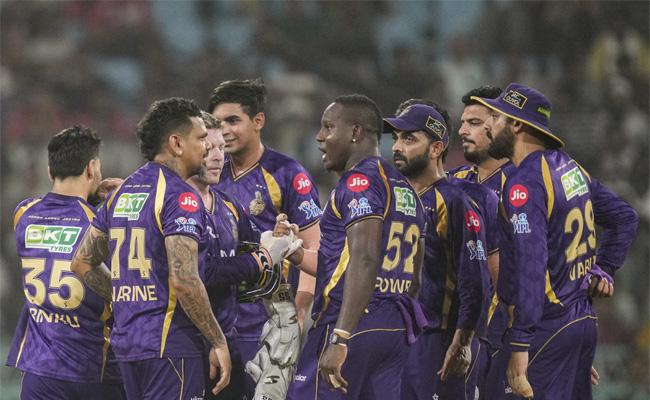
Lucknow (PTI): Kolkata Knight Riders edged Lucknow Super Giants via Super Overs in a battle between two bottom-placed teams in the IPL, here on Sunday.
Chasing a modest 156, LSG suffered a batting collapse and managed to tie the contest and take it to Super Over with No. 9 Mohammed Shami striking a last-ball six against a wayward Kartik Tyagi, who leaked 16 runs in the final over.
But Sunil Narine bowled a stunning Super Over conceding just one run and taking two wickets to give KKR an easy target.
Rinku Singh then finished the chase with a boundary off first ball from Prince Yadav.
Earlier the KKR were in deep trouble with 93/7 in 15 overs but Rinku smashed a sensational 83 not out from 51 balls including four sixes in a row in the final over to lift them to 155/7.
Cameron Green (34) was the only other batter to reach double-digit scores as KKR suffered a familiar batting meltdown with Mohsin taking his maiden fifer.
In reply, LSG continued their dismal show with the bat to succumb to their fifth loss in a row.
Brief Scores:
Kolkata Knight Riders 155/7; 20 overs (Rinku Singh 83 not out, Cameron Green 34; Mohsin Khan 5/23). Lucknow Super Giants 155/8; 20 overs (Rishabh Pant 42). KKR won via Super Over.