Indian public sector banks had "worst phase" under Manmohan Singh, Raghuram Rajan: Sitharaman
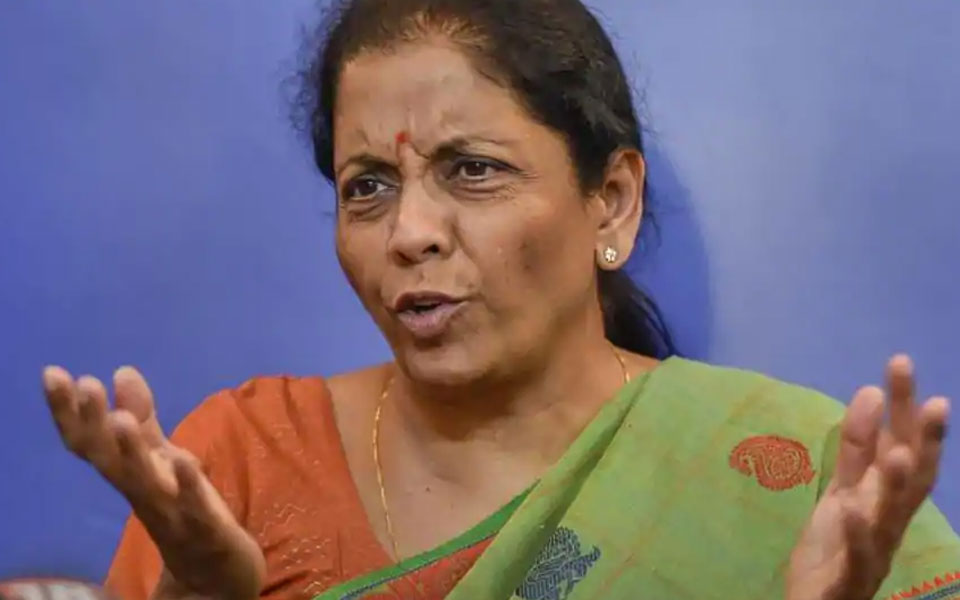
New York: India's public sector banks had the "worst phase" under the "combination" of former prime minister Manmohan Singh and ex-RBI governor Raghuram Rajan, and giving the ailing banks a "lifeline" was her primary duty now, Finance Minister Nirmala Sitharaman has said.
The public sector banks have been grappling with bad loans and the government has been taking measures to address the issue. In August, the government announced upfront capital infusion to the tune of Rs 70,000 crore into the public sector banks. Besides, 10 public sector banks are being consolidated into four.
Delivering a lecture at the prestigious Columbia University's School of International and Public Affairs here on Tuesday, Sitharaman said: "While economists can take a view of what prevails today or prevailed years ago, but I will also want answers for the time when Rajan was in the Governor's post speaking about the Indian banks, for which today to give a lifeline is the primary duty of the Finance Minister of India. And the lifeline-kind of an emergency has not come overnight .
"I do respect Raghuram Rajan as a great scholar who chose to be in the central bank in India at a time when the Indian economy was all buoyant, she said during the lecture organised by the Deepak and Neera Raj Centre on Indian Economic Policies of the Columbia University.
Asked about the ex-RBI governor's comments during a recent lecture at Brown University in which he had apparently mentioned that in its first term, the Narendra Modi government had not done better on the economy because the government was extremely centralised and the leadership does not appear to have a consistent articulated vision on how to achieve economic growth, the minister said instead there were major issues with bank loans during Rajan's tenure as the central bank head.
Responding to the question, Sitharaman further pointed out that if there is a feeling that there's been a centralised leadership now, "I'd like to say that very democratised leadership led to a whole lot of corruption. Very democratised leadership. The Prime Minister, after all is the first among equals in any cabinet".
"You need to have a country as diverse as India with an effective leadership. A rather too democratic leadership, which probably will have the approval of quite a lot of liberals, I'm afraid, left behind such a nasty stink of corruption, which we are cleaning up even today," she said.
"It was in Rajan's time as Governor of the RBI that loans were given just based on phone calls from crony leaders and public sector banks in India till today are depending on the government's equity infusion to get out of that mire," she said.
"Dr Singh was the Prime Minister and I'm sure Dr Rajan will agree that Dr Singh would have had a 'consistent articulated vision' for India, the minister said amid laughter from the audience.
"With due respect, I'm not making fun of anybody but I certainly want to put this forward for a comment which has come like this.
"I have no reason to doubt that Rajan feels for every word of what he is saying. And I'm here today, giving him his due respect, but also placing the fact before you that Indian public sector banks did not have a worst phase than when the combination of Singh and Rajan, as Prime Minister and the Governor of the Reserve Bank, had. At that time, none of us knew about it, she said.
Sitharaman said while she is grateful that Rajan did an asset quality review, but people should know what makes the banks ailing today.
"I am grateful that Rajan did an asset quality review but I'm sorry, can all of us put together also think of asking what ails our banks today. Where has it been inherited from, she said.
According to RBI data in June on global operations (provisional data for the financial year ending March 2019), Gross Non-Performing Assets (NPAs) of Public Sector Banks have declined by Rs. 89,189 crore from the peak of Rs. 8,95,601 crore in March 2018 to Rs. 8,06,412 crore in March 2019 (provisional data).
The event was also attended by former NITI Aayog Vice Chairman Arvind Panagariya, professor and eminent economist Jagdish Bhagwati and India's Consul General in New York, Sandeep Chakravorty.
Let the Truth be known. If you read VB and like VB, please be a VB Supporter and Help us deliver the Truth to one and all.
44 peacocks die of H5N1 in Karnataka’s Tumakuru; minister orders precautions
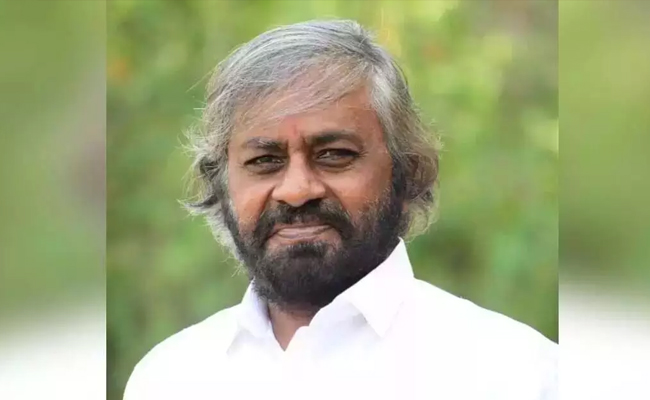
Bengaluru (PTI): After 44 peacocks died of the H5N1 virus in Tumakuru district, Karnataka Minister Eshwar Khandre on Saturday directed officials to implement strict precautionary measures to prevent its spread across forest areas, including zoos and bird sanctuaries.
The directive comes after laboratory reports from the ICAR–National Institute of High Security Animal Diseases in Bhopal recently confirmed H5N1 avian influenza as the cause of the deaths.
According to the state forest minister, the peacocks died between April 16 and 21 in and around Bommanahalli and Kolihalli villages in Urdigere hobli, and Bairasandra and Hullenahalli villages in Gulur hobli of Tumakuru district.
“In this context, instructions have been issued in line with the revised H5N1 Action Plan of the Central Government to prevent the spread of infection across all forest areas, including zoos, bird sanctuaries, Magadi Lake, and the community reserve at Kokkare Bellur,” Khandre said in a note addressed to the principal chief conservator of forests (wildlife) and chief wildlife warden.
He also directed that any deaths of birds, whether migratory or local, must be reported immediately, and that samples from carcasses should be collected and sent for testing.
If required, a nodal officer may be appointed to monitor the situation across the state, he added.
Authorities have established an infected zone within a 0–3 km radius and a surveillance zone extending from 3 to 10 km.
According to the Health Department, surveillance for fever, Influenza-Like Illness (ILI), and Severe Acute Respiratory Infection (SARI) will be carried out over the next 10 days, covering a population of 20,432 across 38 villages.
In light of the situation, the department has advised the public to follow precautionary measures to minimise the risk of infection by avoiding contact with sick or dead birds and maintaining hand hygiene by washing hands frequently with soap and water.
It has also suggested the use of personal protective equipment (PPE) while handling birds or their droppings, and advised ensuring that poultry and eggs are thoroughly cooked (above 80 degrees celcius) before consumption.
The health department has also recommended avoiding close contact with individuals exhibiting symptoms of respiratory illness.
The department said it is closely monitoring the situation and has put necessary precautionary measures in place.
The public has been advised to remain vigilant and report any unusual bird deaths or symptoms promptly, officials added.
Avian influenza (H5N1) is a subtype of the influenza virus that infects birds and mammals, including humans in rare instances, according to the World Health Organisation. Human cases reported so far have been mostly linked to close contact with infected birds or other animals, or with contaminated environments.