India's aim of being a USD 5 trillion economy 'challenging' but 'realisable': Nirmala Sitharaman
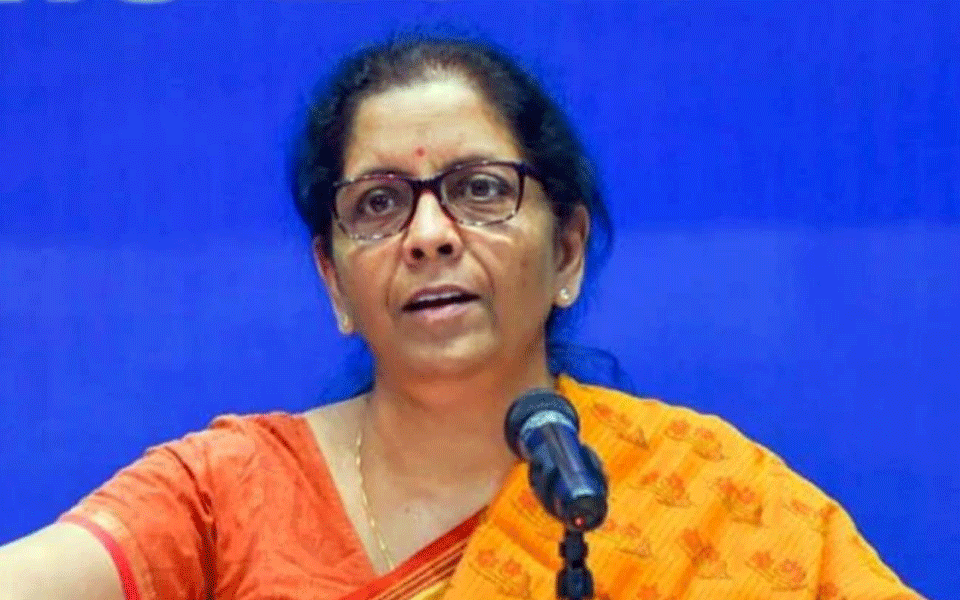
New York: Prime Minister Narendra Modi's vision of making India a USD 5 trillion economy and a global economic powerhouse by 2024-25 is "challenging" but "realisable", Finance Minister Nirmala Sitharaman has said, underlining that more reforms are on the anvil before the close of the fiscal year.
Delivering a lecture on Indian Economy : Challenges and Prospects at prestigious Columbia University's School of International and Public Affairs on Tuesday, Sitharaman indicated that Indian economy has been on growth tragectory even since the Modi government came to power in 2014.
"In 2014, when the National Democratic Alliance (NDA) was voted to power by the world's largest democracy, India was a USD 1.7 trillion economy. In 2019, India has become a USD 2.7 trillion economy, having added one trillion US dollars in the last five years. Our vision to become a 5 trillion dollar economy by 2024-25 is challenging, but it is realisable, Sitharaman said.
The lecture was organised by the University's Deepak and Neera Raj Center of Indian Economic Policies.
She also emphasised that a USD 5 trillion economy will make India a global economic powerhouse moving it from the 7th to 3rd position in terms of current dollar exchange rate.
The Modi government has underlined its priorities in the first 50 days of its second term, setting sights on making India a USD 5 trillion economy and hitting the ground running on spurring growth.
She said that the realisation of the government's goal is not fraught in uncertainty but is connected to a single-minded dedication to reforms, the evidence of which is there for the world to see.
"To become a USD 5 trillion economy, India's GDP needs to go faster than what we grew at an average of 7.5 per cent in the last five years. That's a matter of fact statement. Inflation needs to be at 4 per cent to ensure commensurate increase in purchasing power, she said, adding that inflation in the last five years was 4.5 per cent and has been on a declining path to reach 3.4 per cent in 2018-19.
She stressed that fixed investment rate needs to increase from 29 per cent to 36 per cent in the course of the next five years, with some depreciation of the rupee.
"We are well and truly on our way to becoming a USD 5 trillion economy by 2024-25. A five trillion dollar economy will make India a global economic powerhouse moving us from the 7th to 3rd position in terms of current dollar exchange rate.
"However our ambition to become economically strong has been driven more by our desire to become a less poorer nation, she said.
Sitharaman said that in July 2019 when she presented the first budget of the second term of the Modi government, India's GDP had decelerated in four consecutive quarters.
"Yet we projected the GDP to grow at 7 per cent in 2019-20, slightly higher than the 6.8 per cent realised in 2018-19. Even when our GDP decelerated in the fifth successive quarter, we did not revise downwards our projections as some institutions around the world have already done," she said.
She said India has just entered the second half of Fiscal Year 2019-20 and already implemented a series of reforms, with more on the anvil before the close of the year.
In September this year, government slashed the income tax rate for companies by almost 10 percentage points to 25.17 per cent and offered a lower rate to 17.01 per cent for new manufacturing firms to boost economic growth rate.
The reforms were and will be guided by close scrutiny of growth evidence in the economy. Our mission to become a USD 5 trillion dollar economy in 2024-25 remains unchanged and further strengthened by our resolve to deliver on the resounding mandate given to us by the largest electorate in the world, she said.
A critical component of our mission is high levels of investment, driven by the private sector, a larger presence in the global markets, and a lower level of public debt, she said.
Citing figures by the International Monetary Fund, she said it has projected a growth for India at 6.1 per cent for the year 2019-20 with the world growth revised downwards at 3.2 per cent.
"We continue to remain one of the fastest growing economies in the world, she said.
She stressed that in an emerging economy, poised for higher growth, some increase in income inequality is inevitable. India is no exception to this trend .
The poverty headcount ratio in 2011 measured 21.2 per cent of India's population, earning less than USD 1.90 per day.
The World Bank has estimated the level in 2019-20 at 7 per cent and will further decline to 4.6 per cent of the population by the year 2022.
"This means that in a decade, we have lifted 168 million people out of actual poverty which I think is a fitting tribute to Mahatma Gandhi, who dreamt of ridding the country of this scourge, she said.
She underlined that India's growth story is not hostage to performance in some quarters alone.
"As a big member of the G-20 group of countries, India has already entered the big league on the strength of its economic performance and vibrant democracy.
Sitharaman further said that the growth impulses in the economy have been buffeted by the winds of trade wars, protectionism and volatility in crude prices, as well as improved supplies that the world is witnessing.
Let the Truth be known. If you read VB and like VB, please be a VB Supporter and Help us deliver the Truth to one and all.
44 peacocks die of H5N1 in Karnataka’s Tumakuru; minister orders precautions
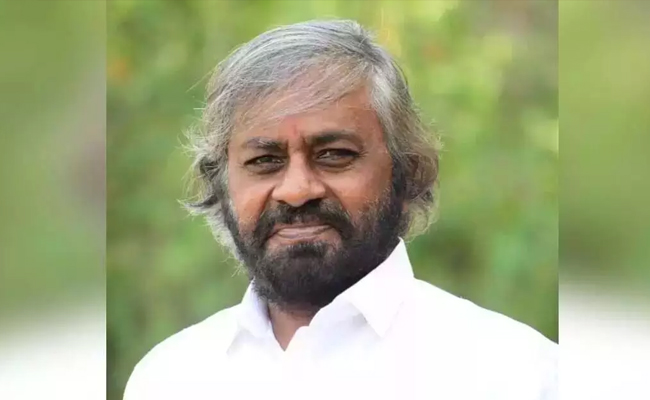
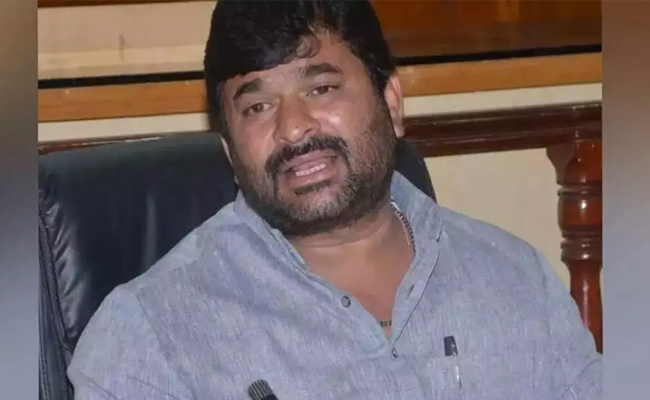
Bengaluru (PTI): After 44 peacocks died of the H5N1 virus in Tumakuru district, Karnataka Minister Eshwar Khandre on Saturday directed officials to implement strict precautionary measures to prevent its spread across forest areas, including zoos and bird sanctuaries.
The directive comes after laboratory reports from the ICAR–National Institute of High Security Animal Diseases in Bhopal recently confirmed H5N1 avian influenza as the cause of the deaths.
According to the state forest minister, the peacocks died between April 16 and 21 in and around Bommanahalli and Kolihalli villages in Urdigere hobli, and Bairasandra and Hullenahalli villages in Gulur hobli of Tumakuru district.
“In this context, instructions have been issued in line with the revised H5N1 Action Plan of the Central Government to prevent the spread of infection across all forest areas, including zoos, bird sanctuaries, Magadi Lake, and the community reserve at Kokkare Bellur,” Khandre said in a note addressed to the principal chief conservator of forests (wildlife) and chief wildlife warden.
He also directed that any deaths of birds, whether migratory or local, must be reported immediately, and that samples from carcasses should be collected and sent for testing.
If required, a nodal officer may be appointed to monitor the situation across the state, he added.
Authorities have established an infected zone within a 0–3 km radius and a surveillance zone extending from 3 to 10 km.
According to the Health Department, surveillance for fever, Influenza-Like Illness (ILI), and Severe Acute Respiratory Infection (SARI) will be carried out over the next 10 days, covering a population of 20,432 across 38 villages.
In light of the situation, the department has advised the public to follow precautionary measures to minimise the risk of infection by avoiding contact with sick or dead birds and maintaining hand hygiene by washing hands frequently with soap and water.
It has also suggested the use of personal protective equipment (PPE) while handling birds or their droppings, and advised ensuring that poultry and eggs are thoroughly cooked (above 80 degrees celcius) before consumption.
The health department has also recommended avoiding close contact with individuals exhibiting symptoms of respiratory illness.
The department said it is closely monitoring the situation and has put necessary precautionary measures in place.
The public has been advised to remain vigilant and report any unusual bird deaths or symptoms promptly, officials added.
Avian influenza (H5N1) is a subtype of the influenza virus that infects birds and mammals, including humans in rare instances, according to the World Health Organisation. Human cases reported so far have been mostly linked to close contact with infected birds or other animals, or with contaminated environments.