Madras High Court quashes police notice to journalist, says summons without FIR is illegal
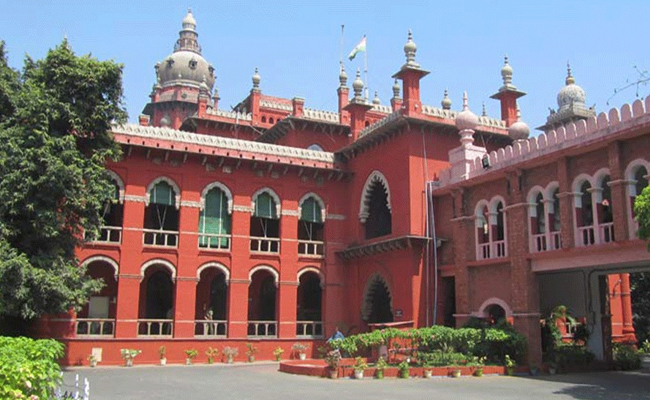
Chennai: The Madras High Court’s Madurai Bench has set aside a police notice issued to journalist Vimal Chinnappan, ruling that the police had no authority to summon or question him in the absence of a registered criminal case. The court held that the action violated established legal procedure and amounted to an abuse of power.
While allowing a petition filed under Section 482 of the Code of Criminal Procedure, Justice Sunder Mohan, quashed the notice dated October 26, 2025. It had been issued by the Deputy Superintendent of Police of the Srivilliputhur Sub Division in Virudhunagar district under Section 35(3) of the Bharatiya Nagarik Suraksha Sanhita, 2023. The judge also observed that Section 35 of the BNSS only outlines the circumstances under which a police officer may arrest a person without a warrant. He also noted that it does not empower the police to summon or question an individual when no case has been registered against them.
According to a Maktoob Media report, the police had claimed that the notice was connected to an investigation in a criminal case registered in 2023 involving offences under various provisions of the Indian Penal Code and the Scheduled Castes and Scheduled Tribes (Prevention of Atrocities) Act. However, during the proceedings, it was acknowledged by the State that the investigation in that case had already been completed and a final report had been filed before the Special Court for SC/ST cases in Virudhunagar.
According to the police, while examining the 2023 case, they came across an article written by the petitioner and published in a journal, which they alleged contained defamatory remarks against the police. Based on this, the Deputy Superintendent of Police issued a notice to the journalist, listing twelve questions and seeking an explanation for his writing.
The petitioner opposed the notice, claiming that it failed to describe the criminal number to which it referred. The petitioner also noted that it did not specify whether he was being summoned as an accused, witness, or suspect. He further stated that even if the article was believed to be defamatory, the police could not interview him without first filing a separate case, especially as defamation actions against the police may only be commenced through a private complaint to a competent court.
The High Court noted that most of the questions in the notice were centred on the contents of the article and were unrelated to the concluded 2023 investigation. Justice Sunder Mohan observed that if the police sought to question the petitioner in connection with any other matter, they were legally bound to clearly mention the details of a registered case. In the absence of any such case, the notice lacked legal foundation.
Setting aside the notice, the court clarified that its order would not prevent the police from taking action in accordance with the law in the future and stated that if a valid criminal case is registered and the petitioner’s presence is required for investigation, the police would be free to proceed as permitted by law.
The petitioner was represented by advocate R. Karunanidhi, while the State was represented by Government Advocate K. Sanjai Gandhi.
Let the Truth be known. If you read VB and like VB, please be a VB Supporter and Help us deliver the Truth to one and all.
Manipur: Mortal remains of children killed in bomb attack handed over to family
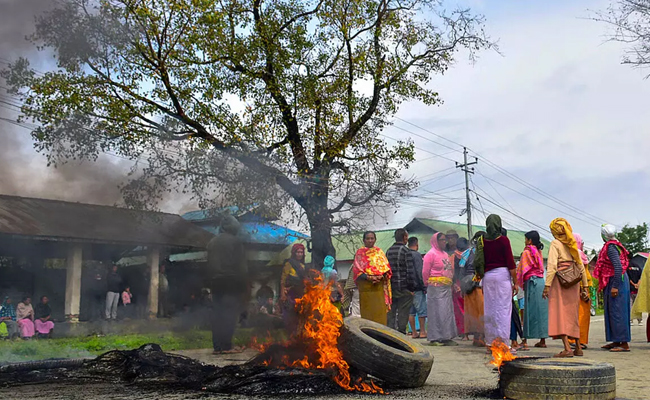
Imphal (PTI): The mortal remains of two children, who were killed in a bomb attack in Manipur's Bishnupur district in April, were handed over to family members on Saturday, officials said.
The bodies of the five-year-old boy and his six-month-old sister were kept in the morgue for 25 days, as the family members had refused to accept the mortal remains, demanding that the perpetrators be brought to book at the earliest.
On April 25, Chief Minister Y Khemchand Singh had appealed to the family members of the children to accept the bodies. Singh had also said that all efforts were underway to find the culprits.
The two children were killed in a bomb attack at Tronglaobi in Bishnupur district on April 7. Their bodies were kept in the morgue at the Regional Institute of Medical Sciences in Imphal.
The incident had triggered widespread violent protests in the five valley districts of Manipur, and the case was subsequently handed over to the NIA.
Hundreds of people lined up along the way to Tronglaobi to offer floral tributes, as the mortal remains were taken for the last rites in an open vehicle earlier in the day.