NDA overcomes stiff challenge to retain power in Bihar
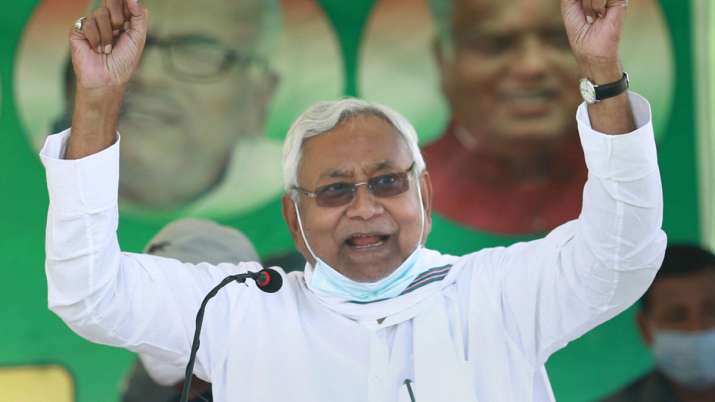
Patna: Surmounting anti-incumbency of 15 years, a mutinous former ally, and a spirited challenge from a resurgent opposition that rose from its ashes like a proverbial phoenix after the 2019 Lok Sabha poll debacle, Nitish Kumar- led NDA was back in power in Bihar on Wednesday with a slender majority.
The ruling coalition won 125 seats in the 243-member state assembly against 110 clinched by the opposition Grand Alliance to pave the way for a fourth successive term for Kumar in office but with diminished clout following a debilitating slide in the number of JD(U) lawmakers that came down to 43 from 71 in 2015.
Kumar was then a partner in the Grand Alliance which included Lalu Prasad's RJD and Congress.
Its defeat notwithstanding, the RJD, whose campaign Tejashwi Yadav, the younger son and heir to party supremo Lalu Prasad helmed, emerged as the single largest party with 75 seats. The BJP, which led the table for several hours during the counting that dragged on for over 16 hours, finished second with a tally of 74 seats.
Despite the slump in numbers, Kumar, who was declared the NDA's chief ministerial candidate by the BJP brass, including Prime Minister Narendra Modi and party chief J P Nadda, is set to take over the reins of the government.
Much of Kumar's plight can be blamed on the damage Chirag Paswan's LJP inflicted on his JD(U). Down in the dumps with just one MLA, the party spoiled the JD(U)'s chances in at least 30 seats.
JD(U) spokesperson KC Tyagi told PTI in New Delhi that a "sinister" campaign was run against Nitish Kumar as part of a "conspiracy".
"Apne Bhi Shamil the aur begane bhi (Our own also harmed us along with the outsiders)," he said, without taking any names.
He, however, expressed confidence that Kumar will become the chief minister again, noting that top BJP leaders including Prime Minister Narendra Modi and Home Minister Amit Shah have made it clear that he will head the government if the ruling NDA retains power.
Bihar BJP president Sanjay Jaiswal voiced similar views in Patna when he said in Patna "the issue has been cleared by Prime Minister Narendra Modi and party chief J P Nadda much before the elections".
Apart from BJP's 74 seats and JD(U)'s 43, the ruling alliance partners HAM and Vikassheel Insaan Party (VIP) won four seats each.
The drastic fall in the number of JD(U) MLAs, however, will likely make the BJP, which hitherto played a second fiddle to Kumar, more assertive, and it may insist on a larger share in the ministerial pie and greater say in governance.
Apart from Kumar's creditable performance as an administrator, the multiple claimants to Muslim votes, including the Grand Democratic Secular Front (GDSF) comprising Asaduddin Owaisi's AIMIM, BSP, and Upendra Kushwaha's RLSP worked in NDA's favor and scuppered the Mahagathbandhan's chances. Muslim and Yadav voters have for long formed the bedrock of the RJD's support base.
Owaisi's AIMIM emerged as a surprise package of the election, winning five seats. The party had gained a foothold winning a seat in a by-election in Bihar earlier but made significant inroads into the Seemanchanchal region which has a large presence of Muslim voters. Its ally BSP also clinched one seat.
Kumar, who has a clean image and is considered incorruptible, has been credited with ridding the state of the "jungle raj", as the Lalu-Rabri government of 15 years preceding 2005 is often described by its critics.
The JD(U) leader also earned praise for his impetus on infrastructure development and improving the health care system and education.
Besides, Modi's enduring charisma not only powered the alliance's victory but also helped the BJP to a pre-eminent position in the NDA in Bihar for the first time and cut his former bete noire Nitish Kumar, once considered a secular alternative to him, to size.
The election also saw the coming of age of Tejashwi Yadav, who came across as an indefatigable leader after RJD's unprecedented drubbing in the Lok Sabha polls last year when it failed to open its account.
The NDA had clinched all but one of the 40 seats in the state, leaving the young leader in torpor and his party demoralized. Tejashwi's ability to lead the party in the absence of his charismatic father and party supremo Lalu Prasad, who had landed in jail after conviction in fodder scam cases, was called into question.
However, after the assembly elections were announced, he steeled himself for the struggle ahead and almost single-handedly brought the five-party Grand Alliance surprisingly close to power in a fight where an army of battle-hardened veterans was arrayed against him.
A major upshot of the grueling electoral tussle between the two alliances was the resurgence of Left, which aligned with the RJD-Congress combine after being pushed to the margins in the post-Mandal era politics of Bihar.
The biggest gainer was the CPI-ML, which clinched 12 seats, followed by the CPI and CPI-M (two each). Barring the CPI-ML, which had three seats in the outgoing assembly, none of the Left parties had a presence in the House.
Brothers Tejashwi Yadav and Tej Pratap won the Raghopur and Hasanpur seats with impressive margins of 38,174 and 21,139 votes respectively.
Prominent losers from the RJD included Abdul Bari Siddiqui, a former state party chief, and Lalu Prasad's Man Friday Bhola Yadav who lost from Keoti and Hayaghat seats in Darbhanga respectively.
Senior Bihar minister Vijendra Prasad Yadav of JD(U) won from Supual, and Niraj Singh Babloo of the BJP, a cousin of actor Sushant Singh Rajput, whose mysterious death became an election issue, retained the Chhatapur seat.
State assembly speaker Vijay Kumar Chaudhary of the JD(U) was among the victors.
Ace former shooter and Commonwealth gold medalist Shreyasi Singh of BJP won the Jamui seat by over 41,000 votes, but veteran socialist leader Sharad Yadav's daughter Subhashini lost in Bihariganj.
HAM president Jitan Ram Manjhi defeated former state assembly speaker Uday Narayan Chaudhary in Imamganj of Gaya district.
Let the Truth be known. If you read VB and like VB, please be a VB Supporter and Help us deliver the Truth to one and all.
Commercial LPG hike: Delhi restaurant owners warn of higher menu rates, job losses
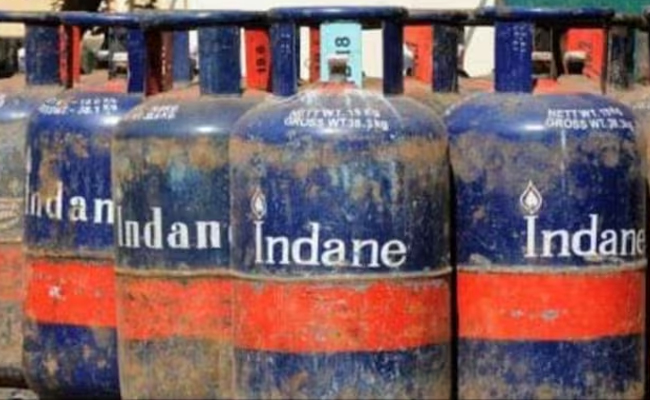
New Delhi (PTI) A day after a 50 per cent rise in commercial LPG cylinder prices, Delhi's food business, with restaurant owners and street vendors have warned of higher menu rates, financial strain and potential job losses if the trend persists.
The price of commercial LPG was hiked by a steep Rs 993 per 19 kg cylinder, marking the third consecutive monthly hike amid rising global energy prices linked to the West Asia conflict.
For many in the restaurant industry, the spike has been both sudden and steep.
Manpreet Singh, honorary treasurer of the National Restaurant Association of India, said that eateries are already grappling with supply challenges alongside rising costs.
"There is a huge difficulty in getting these cylinders, and black marketing is also increasing in many unregulated sectors," he said, noting that prices that were once around Rs 1,600, often dropping to nearly Rs 1,300 with discounts, have now surged to between Rs 3,000 and Rs 4,000 per cylinder.
He further added that a medium-sized restaurant typically uses between two and five cylinders daily, making the increase particularly burdensome as costs mount.
Singh further said that as costs mount, smaller establishments could struggle to stay afloat. Instead, the association has advised restaurants to shift towards piped natural gas connections through Indraprastha Gas Limited as a more sustainable alternative.
"If this problem continues, PNG is the only long-term solution," he said, adding that temporary measures like coal offer limited relief due to slower cooking times and that it can largely be used only for tandoors.
Echoing similar concerns, Kabir Suri, owner of Mamagoto in Khan Market, said the impact is already visible across the industry. "There has been almost a threefold increase in cylinder prices for restaurants," he said, adding that rising fuel and logistics costs are compounding the pressure.
"If this continues, it will become a significant financial burden, and food prices will inevitably go up. Adding to this burden, higher fuel costs are also affecting logistics and transportation, making a price rise unavoidable. The extent of the impact will vary between small eateries and large chains depending on their scale," he said.
Global oil prices have surged nearly 50 per cent following disruptions in energy supply chains due to the West Asia conflict, pushing up commercial fuel costs and transport expenses.
A West Delhi-based restaurateur said they are trying to manage rising costs while keeping their staff secure. "We are trying to ensure that our staff, from kitchen workers to waiters, are paid on time and do not face immediate hardship," the owner said.
"We are a small restaurant with seating for about 20 to 25 people at a time. But if this continues for long, we will have to take difficult calls. There is only so much we can absorb, and menu prices will have to go up. We hope this does not continue for a longer period," he said.
Another restaurant owner in North Delhi, who did not wish to be named, said operational adjustments alone may not be enough. "We are checking our costs very carefully and trying to cut wherever possible, but if fuel prices remain high, it will eventually affect how we run the business," the owner said.
"Coal helps in tandoor cooking, but it takes more time," the owner further added.
The strain is even more acute among street vendors, many of whom operate on thin margins. A vendor in Saket said he had recently expanded his business, moving from a mobile cart to a rented outlet.
"I have a family to feed and more responsibilities now. Earlier, I managed with a moving cart, but after renting the place, expenses increased," he said. "Whenever cylinders were unavailable, I had to buy them at higher rates in the black market. Now even regular supply is too expensive, and if this continues, we may have to shut down," he added.
In Laxmi Nagar, another vendor said they are struggling to keep the business running. "Sometimes we even used domestic cylinders from home when supply ran out because we had to keep the stall running," he said, adding that rising costs leave little choice but to increase prices or bear losses.
On April 1, the rates of commercial LPG cylinders were hiked by Rs 195.50 per cylinder, followed by a Rs 114.5 hike on March 1, taking the total increase over the past three months to Rs 1,303. With the latest revision, a 19 kg commercial LPG cylinder now costs Rs 3,371.5 in Delhi, up from Rs 2,078.5 earlier.
The prices of domestic LPG cylinders used for household cooking have remained unchanged. They were last increased by Rs 60 per 14.2 kg cylinder on March 7 and currently cost Rs 913 in Delhi.