Operation Sindoor a defining demonstration of India's resolve, restraint: Army chief
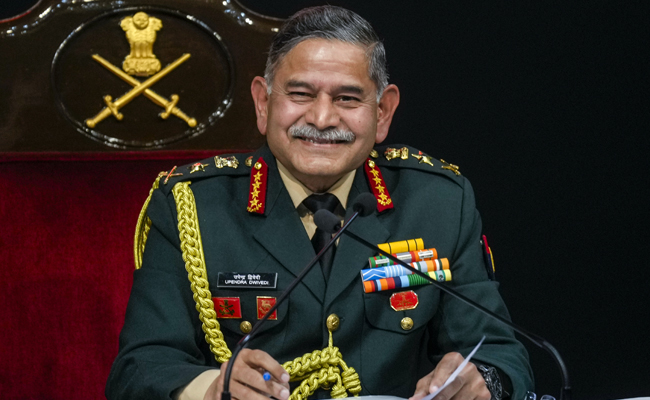
New Delhi (PTI): Army Chief General Upendra Dwivedi on Wednesday said Operation Sindoor was a "defining demonstration" of India's resolve and restraint, and a reflection of the moral strength and professional excellence of the country's armed forces and the youth alike.
The operation was carried out by the Indian armed forces in the early hours of May 7 last year, eliminating at least 100 terrorists in response to the horrific Pahalgam terror attack of April that killed 26 innocent civilians.
Addressing a gathering of cadets at the National Cadet Corps' (NCC) Republic Day Camp here, General Dwivedi said, "Operation Sindoor was a defining demonstration of India's resolve and restraint, a reflection of the moral strength and professional excellence of our armed forces, and our youth alike."
ALSO READ: Ex-servicemen's unwavering courage continues to inspire every Indian: Prez on Veterans' Day
A day earlier, he sent a firm message to Pakistan, saying Operation Sindoor "remains ongoing and any misadventure by the adversary will be resolutely responded to," Gen Dwivedi said on Tuesday.
On January 13, the Indian Army held its annual press conference, where the Army chief said the decisive operation helped in resetting strategic assumptions as the Indian military struck deep to dismantle terror infrastructure, puncturing Islamabad's "longstanding nuclear rhetoric".
At the event on Wednesday, the Army chief recalled the contribution of the NCC during the decisive military action last May.
During the operation, over 75,000 NCC cadets volunteered across the country, working tirelessly in civil defence, hospital management, disaster relief and community services, the Army chief said.
"Recent events have shown what Indian youths are capable of. You are the most powerful and maximum population of Generation Z. Our youths are a reservoir of strength that must be channelised with discipline, purpose and national commitment," he said.
The Corps remains a sought-after pathway for youths to join the armed forces, the general asserted. The future demands "civilisational atmanirbharta", self-reliance in thought, technology, innovation and character, he said.
Initiatives such as Army cells at IITs, technology clusters and the Army internship programme 2025 and 2026 are to foster that spirit, the Army chief said. "We invite you to actively participate in national security, innovation and development initiatives."
In his address, General Dwivedi also told the gathering that the vision of Viksit Bharat at 2047 -- a developed, secure, self-reliant India -- will not be achieved by the government alone.
"It will be achieved by young leaders, NCC cadets, innovators, teachers, engineers, doctors, soldiers, and responsible citizens like you," the Army chief said.
"So, let's ride with confidence, march with discipline, innovate with integrity, and serve with India, and be the future leaders we are looking for. Together we shall build a strong, self-reliant, united and developed India," he added.
Let the Truth be known. If you read VB and like VB, please be a VB Supporter and Help us deliver the Truth to one and all.
Manipur: Mortal remains of children killed in bomb attack handed over to family
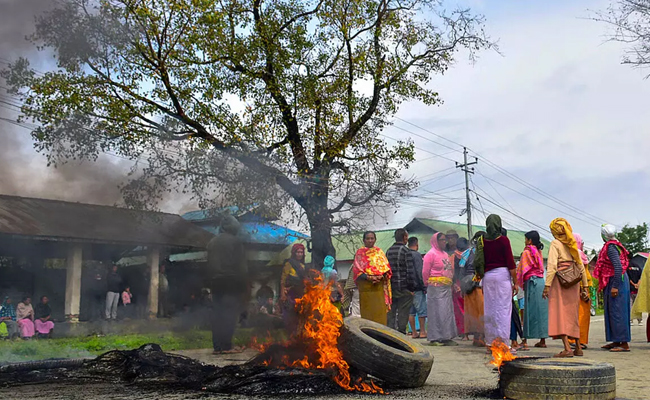
Imphal (PTI): The mortal remains of two children, who were killed in a bomb attack in Manipur's Bishnupur district in April, were handed over to family members on Saturday, officials said.
The bodies of the five-year-old boy and his six-month-old sister were kept in the morgue for 25 days, as the family members had refused to accept the mortal remains, demanding that the perpetrators be brought to book at the earliest.
On April 25, Chief Minister Y Khemchand Singh had appealed to the family members of the children to accept the bodies. Singh had also said that all efforts were underway to find the culprits.
The two children were killed in a bomb attack at Tronglaobi in Bishnupur district on April 7. Their bodies were kept in the morgue at the Regional Institute of Medical Sciences in Imphal.
The incident had triggered widespread violent protests in the five valley districts of Manipur, and the case was subsequently handed over to the NIA.
Hundreds of people lined up along the way to Tronglaobi to offer floral tributes, as the mortal remains were taken for the last rites in an open vehicle earlier in the day.