Remittance-based economy cannot benefit Kerala: Union Minister Amit Shah
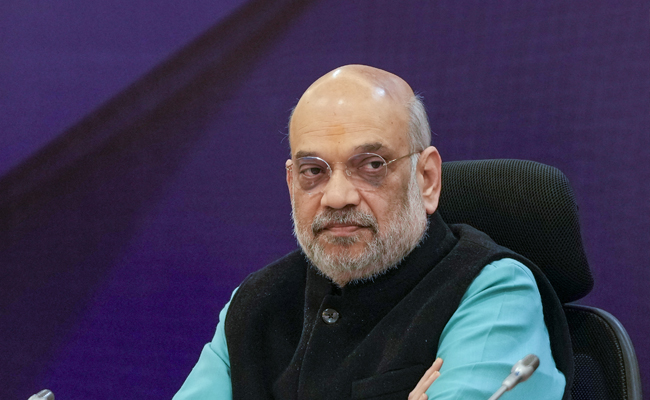
Thiruvananthapuram (PTI): Union Minister Amit Shah on Sunday said that a remittance-based economy alone cannot benefit Kerala and called for a more inclusive development model for the state.
Addressing a conclave organised by Kerala Kaumudi, a leading Malayalam daily here, Shah said Kerala needed an economic model that ensured development for all citizens.
"If we truly care about the development of every citizen of Kerala, then a remittance-based economy cannot benefit the state. We welcome remittances, and they should continue to come, but the development of every citizen cannot be achieved through remittances alone," he said.
Raising the issue of inclusivity, Shah asked what would happen to those whose family members were not working abroad.
"We need to build an economic model that develops everyone, instead of relying solely on remittances. Remittances can be a part of it, but not the only pillar," he said.
He added that while remittances should not be reduced, more opportunities must be created within the state.
"The potential of tourism must be fully explored, and the education sector in Kerala also needs to be expanded," he said.
Shah said Kerala should fully tap its potential in maritime trade. He also pointed out that the state’s Ayurveda sector, medicinal products, and spices had global appeal and needed to be promoted.
He said the state had scope to develop industries such as data storage, IT, and semiconductors, which do not require large tracts of land but demand high intellectual capability.
"By strengthening the remittance-based economy, Kerala must also adopt a comprehensive and inclusive development model that takes the state forward. This will bring development opportunities to every citizen," he said.
Shah said the BJP had envisioned a developed Kerala and that the state was endowed with immense potential.
"Kerala’s culture, literature, and passion for education make it one of the top states in the country. From Ayurveda to IT, from sports to startups, and from backwaters to intellectual discourse, Kerala has excelled in many fields," he said.
He alleged that the alternating cycle of power between the two political alliances in Kerala had resulted in "political stagnation."
"I have come to appeal to the people of Kerala for a new idea, new blood, and a new kind of politics," he said.
Shah said Prime Minister Narendra Modi was the only leader in Indian history to envision diverse development spanning renewable energy, power generation, and environmental protection.
"In 2014, India was the 11th largest economy in the world. In just 11 years, we have risen to the fourth position, and before December 2027, we will become the world’s third-largest economy," he said.
He said infrastructure growth in the country had increased by around 610 per cent and that India now accounted for 50 per cent of the world’s digital transactions.
"In the past 11 years, we have provided houses, gas connections, drinking water, electricity, free ration, and health insurance to 60 crore poor people, fulfilling basic needs that had remained unmet for two generations," he said.
Shah added that 27 crore people had moved above the poverty line in the last 10 years.
"Along with infrastructure development, manufacturing growth, record foreign investment, export expansion, and the Production Linked Incentive (PLI) scheme, lifting 27 crore people out of poverty reflects India’s model of holistic development," he said.
Let the Truth be known. If you read VB and like VB, please be a VB Supporter and Help us deliver the Truth to one and all.
4 workers die after being buried under coal slurry in Jharkhand's Dhanbad
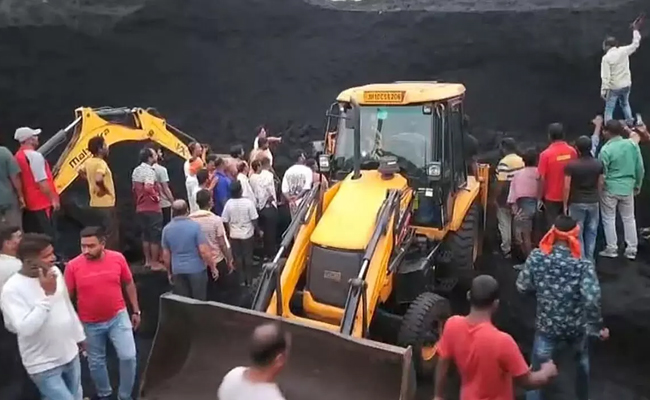
Dhanbad (Jharkhand) (PTI): At least four workers died after being buried under coal slurry in Jharkhand's Dhanbad district on Saturday, a police official said.
The incident took place at Moonidih coal washery in the command area of Bharat Coking Coal Limited (BCCL).
"Bodies of all four workers were dug out of debris during a rescue operation," Putki police station in-charge Waqar Hussain told PTI.
The incident took place when coal slurry was being loaded into trucks by workers, during which a large chunk of slurry fell and trapped several workers underneath, officials said.
The deceased have been identified as Manik Bauri, Dinesh Bauri, Deepak Bauri, and Hemlal Gope.
Meanwhile, the family members of the deceased and local villagers placed the bodies in front of the washery gate and began a protest.
They demanded compensation, jobs for dependents and action against those responsible for the incident.
Police and administration officials are trying to pacify the protesters, an official said.