Sardar Patel statue not built to spite Nehru: PM Modi
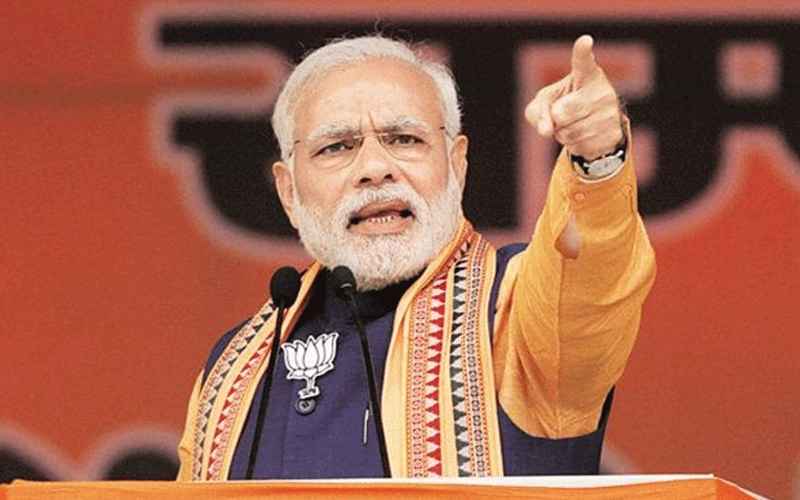
Amreli: Prime Minister Narendra Modi Thursday said Sardar Vallabhbhai Patel's imposing statue in Gujarat has not been built to "belittle" former prime minister Jawaharlal Nehru.
Speaking at an election rally here, Modi said though the Congress says Patel was their leader, no leader of that party has visited the statue so far.
"Don't you feel proud when the Statue of Unity and Gujarat's name appear when you search for the world's tallest statue on Google?
"I have not built Sardar Patel's statue to belittle Pandit Nehru. Patel's stature is so tall that you don't have to try too hard to make others look smaller," Modi said in his speech, most of which was in Gujarati.
The 'Statue of Unity', dedicated to Sardar Patel, was unveiled by Modi on October 31 last year at Sadhu Bet island on Narmada river. The 182-metre tall statue was built at a cost of Rs 2,389 crore.
Modi also said his government has managed to contain terrorism to only "two and a half" districts in Jammu and Kashmir and that no bomb blast took place elsewhere in the country in the last five years.
Modi said what he learnt in Gujarat helped him during the Doklam standoff with China in 2017.
Troops of India and China were locked in the 73-day- long standoff after the Indian side stopped construction of a road in the disputed tri-junction by the Chinese Army.
"This is not an election rally for me, but a rally to say thanks to people of Gujarat for the grooming I received here," Modi said.
Referring to various incidents of bomb blasts in the country previously, he said, "In the last five years no bomb blast took place in any other part of the country. We managed to contain terrorism to just two and a half districts in Jammu and Kashmir."
On Pakistan Prime Minister Imran Khan's statement of trying to approach India after the Balakot air strike, Modi said the leader "had to make a public plea to us to pick up the phone".
Hitting out at the previous Congress-led governments in the country, he said the Sardar Sarovar project should have been completed 40 years ago.
In 2014, the Congress came to its lowest tally after Independence and in 2019, it is fighting on the lowest number of Lok Sabha seats but still "dreaming" of becoming the ruling party, he said.
Let the Truth be known. If you read VB and like VB, please be a VB Supporter and Help us deliver the Truth to one and all.
Min. Priyank Kharge to expresses concern over implementation of VB-G Ram G
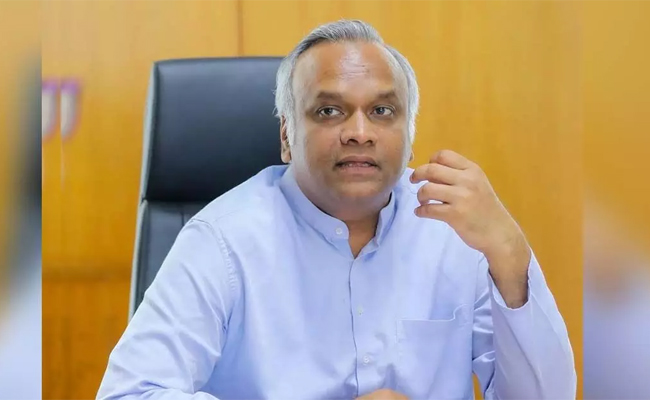
Bengaluru: Rural Development and Panchayati Raj Minister Priyank Kharge has expressed concern over the uncertainty surrounding the implementation of the proposed VB-G Ram G scheme, stating that the MNREGA programme, which has been a lifeline for rural India for nearly two decades, appears to be facing an uncertain future.
Speaking to media, Kharge said that as March 31 draws to a close, there is no clarity on the rollout of the new scheme from April 1. He pointed out that the central government has not yet issued the necessary guidelines for implementing the scheme for rural workers and villages.
He criticised the Centre for its lack of preparedness, stating that there is no clarity on fund allocation, no final parameters for classifying gram panchayats, and key processes such as social audits have not been defined.
Kharge said the situation comes at a critical time, as summer marks a peak period for rural employment demand, when many people depend heavily on wage employment for their livelihood.
He added that reports have emerged of delays in approvals and families not receiving work despite demand.
He further alleged that the Centre’s move to shift from a statutory employment guarantee to a rule-based allocation system is already showing negative consequences.
Kharge also raised concerns over provisions such as a mandatory 60-day halt during agricultural seasons, which he said would further limit employment opportunities for rural workers.
The BJP-led central government had claimed that the new scheme would transform rural India, but in reality it is turning out to be detrimental to people’s livelihoods, he said.
“The crisis in rural India due to the stalling of MNREGA is beginning to unfold. Given the Centre’s past record in handling such situations, there is growing concern over the impact on rural livelihoods,” Kharge said.