"Someone is complicit", says SC on Atiq Ahmad's killing
seeks status report from UP on 183 'police encounters'
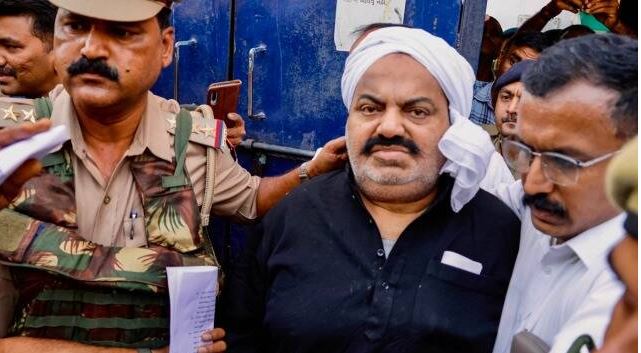
New Delhi, Aug 12: The Supreme Court has pulled up the Uttar Pradesh government over the killing of former Lok Sabha member Atiq Ahmad and his brother Ashraf in police custody in Prayagraj on April 15, observing "someone is complicit".
It has also sought a status report from the state government on 183 "police encounters" that have taken place since 2017.
According to the state police, 183 people have been killed in numerous police encounters since the Yogi Adityanath government assumed office in March 2017. Yogi's detractors have often claimed many of them were staged.
A bench of Justices S Ravindra Bhat and Aravind Kumar directed the UP government on Friday to file an affidavit within six weeks giving the details of these encounters, the status of investigation, charge sheets filed and the status of trial.
"There were 5 to 10 people guarding him (Atiq) How can someone just come and shoot? How does this happen? Someone is complicit," the bench observed.
It also issued notice to the UP government on a plea by Aisha Noori, sister of gangster-politician Ahmad, seeking a direction for a comprehensive probe into the killing of her brothers.
The top court, however, rejected the request of PIL petitioner Vishal Tiwari for institution of an independent judicial commission of enquiry to go into the police encounters and the role of the men in uniform in these, saying the state government has already formed such a commission.
The apex court had earlier agreed to hear the pleas, including the one filed by Aisha Noori, seeking constitution of a commission of enquiry chaired by a retired apex court judge into the "extra-judicial" killing of her brothers.
Ahmad (60) and Ashraf were shot dead at point-blank range by three men posing as journalists in the middle of a media interaction while police personnel were escorting them to a medical college for examination on April 15. The entire shooting was captured live on national television.
In an affidavit filed in the top court, the Uttar Pradesh government said the state is "leaving no stone unturned in ensuring a thorough, impartial and timely investigation" into the deaths of Ahmad and Ashraf.
It said the status report contained in the affidavit deals with enquiry into the April 15 incident, steps taken in relation to the deaths of Mohd Asad Khan, son of Ahmad, and Mohd Ghulam on April 13, and also the measures initiated to implement the recommendations of the Justice B S Chauhan Commission.
Former apex court judge Justice Chauhan headed the commission that probed the encounter killing of gangster Vikas Dubey in 2020.
Dubey and his men had ambushed and killed eight policemen at his native Bikru village in Kanpur district in July 2020. He was arrested in Ujjain in Madhya Pradesh and was being brought back in Uttar Pradesh police's custody when he allegedly tried to escape and was shot dead. Doubts were raised about the genuineness of the police encounter.
The status report gave the details about the steps taken to implement the recommendations of the Justice Chauhan commission, which had concluded that the police version of the deaths of Dubey and his associates in retaliatory firing incidents in the days following his encounter killing could not be doubted.
It said there has been an overhaul of manpower reform and a total of 10,877 posts at various levels have been created in the police department from April 11, 2021 till date.
"Further, action on requisitioning of 1,12,177 posts of various cadres is also under progress," it said.
The status report said the police department has also undergone a modernisation, following purchase of prison vans, drones, postmortem kits and various other vehicles.
It said the number of forensic science laboratories has increased from eight to 12 with new facilities having been established in Kannauj, Aligarh, Gonda and Bareilly. The process of setting up FSLs in six more cities -- Basti, Mirzapur, Azamgarh, Banda, Ayodhya and Saharanpur -- is also underway.
While hearing Tiwari's plea on April 28, the top court had questioned the Uttar Pradesh government why Ahmad and Ashraf, a former MLA, were paraded before media while being taken to a hospital for a medical checkup in police custody.
The counsel appearing for Uttar Pradesh had told the court the state has constituted a three-member commission of inquiry to probe the incident.
A special investigation team (SIT) of Uttar Pradesh Police is also investigating the case, the counsel had said.
Let the Truth be known. If you read VB and like VB, please be a VB Supporter and Help us deliver the Truth to one and all.
Supreme Court declines fresh curbs on hate speech, says existing laws are enough
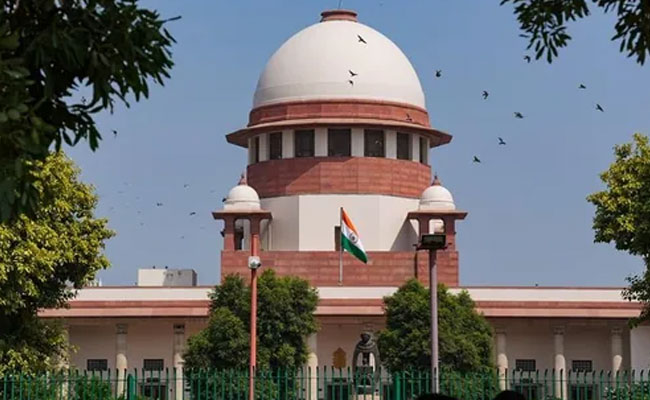
New Delhi: The Supreme Court of India on Wednesday refused to issue additional directions to curb hate speech across the country, holding that the existing legal framework is sufficient and that the real issue lies in implementation rather than absence of law.
A Bench comprising Justice Vikram Nath and Justice Sandeep Mehta said creation of criminal offences falls within the legislative domain and courts cannot legislate or compel Parliament and state legislatures to enact laws.
The Bench observed that constitutional courts can interpret the law and issue directions for enforcement of fundamental rights, but cannot step into the law-making role.
“At the highest, the court may draw attention to the need for reform. The decision whether and in what manner to legislate remains within the exclusive domain of Parliament and the state legislatures,” the court said.
The court held that the field of hate speech is not legally vacant and said concerns arise mainly from poor enforcement of existing provisions.
It also noted that the Bharatiya Nagarik Suraksha Sanhita (BNSS), 2023, provides a comprehensive mechanism to set criminal law in motion, meaning there is no legislative vacuum.
Referring to remedies already available under the earlier Code of Criminal Procedure (CrPC) and the BNSS, the court said police are duty-bound to register an FIR when a cognisable offence is disclosed, as laid down in the Lalita Kumari judgment.
It said if police fail to register an FIR, an aggrieved person can approach the Superintendent of Police under Section 154(3) of CrPC or Section 173(4) of BNSS, and thereafter move the magistrate under Section 156(3) CrPC or Section 175 BNSS, or file a private complaint under Section 200 CrPC or Section 223 BNSS.
The Bench further held that an order directing investigation under Section 156(3) CrPC does not amount to taking cognisance under Section 190 CrPC or the corresponding Section 210 of BNSS.
Even while declining fresh directions, the court acknowledged the seriousness of the issue.
It observed that hate speech and rumour-mongering directly affect fraternity, dignity and constitutional order.
The Bench urged legislative authorities to consider whether further policy or legal measures are needed in view of changing social challenges, including suggestions made in the 267th Report of the Law Commission in 2017.
The judgment came in a batch of petitions arising from events dating back to 2020, when multiple pleas were filed over alleged communal narratives spread through television channels and social media.
Among the earliest cases were challenges relating to content described as the “Corona Jihad” campaign and a programme aired by Sudarshan TV titled “UPSC Jihad”. During those proceedings, the court had restrained further telecast of the programme.
Later, more petitions were filed over speeches made at religious gatherings described as “Dharam Sansad” events.
These included pleas moved by journalist Qurban Ali and Major General S.G. Vombatkere seeking action against alleged hate speeches made at such forums.
During the pendency of the matter, the Supreme Court in 2023 had issued major directions asking all states and Union Territories to act proactively in cases involving communal hate speeches or remarks hurting religious sentiments.
It had directed police to register FIRs suo motu, without waiting for formal complaints.
Later, contempt petitions were also filed alleging poor implementation of those earlier directions.