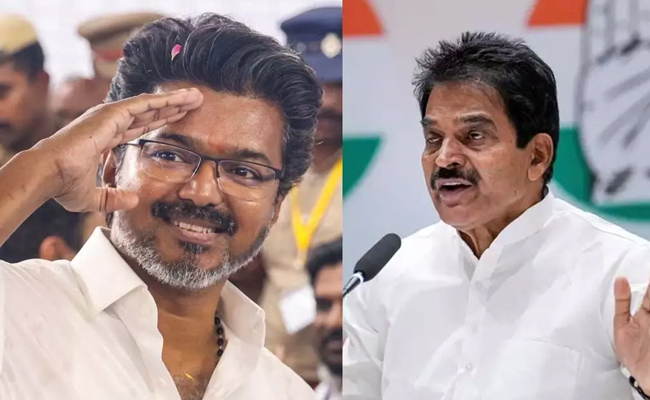
Supreme Court suggests mandatory vote threshold in unopposed elections
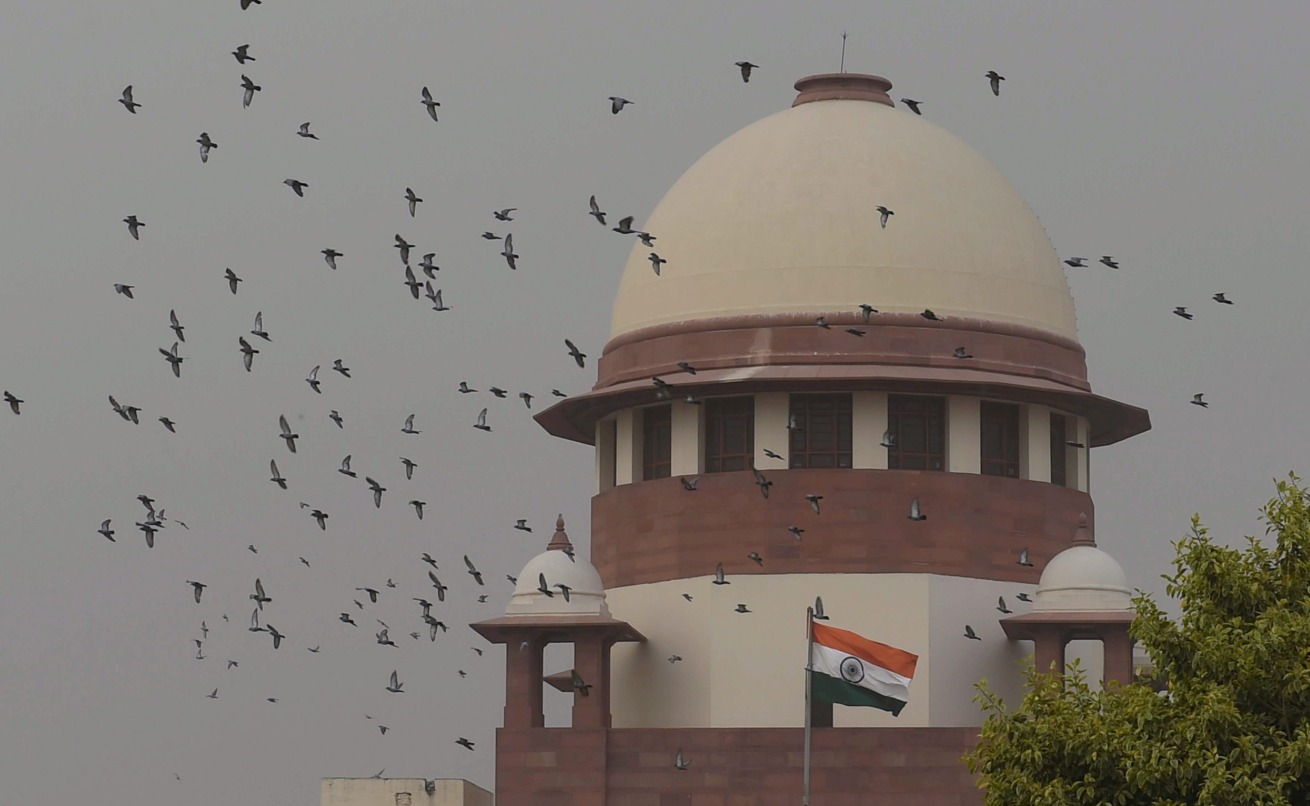
New Delhi: The Supreme Court on Thursday proposed that a minimum percentage of votes should be mandated even in cases where a candidate is elected unopposed. The two-judge bench, comprising Justice Surya Kant and Justice N.K. Singh, raised this suggestion while hearing a petition filed by the Vidhi Centre for Legal Policy.
The Court questioned whether it would be appropriate to amend election laws to ensure that even unopposed candidates must secure a minimum percentage, 10%, 15% or more, of total votes cast in order to be declared elected.
"Will it not be a very welcome and progressive step where only one candidate is left in the fray, and still you say that you will be declared elected only when you get at least 10%, 15% votes, whatever the number may be," observed Justice Surya Kant, according to a report by The Indian Express.
The petition challenges Section 53(2) of the Representation of the People Act, 1951, which currently allows a candidate to be declared elected unopposed in case all other candidates withdraw. The petitioner has urged the Court to either read down or strike down this provision as unconstitutional, at least in its application to direct elections to the Lok Sabha and state legislative assemblies.
During the hearing, Senior Advocate Arvind Datar, representing the petitioner, illustrated a hypothetical scenario where four candidates file nominations, but all except one withdraw at the last minute. In such a situation, he argued, voters who may prefer to vote for ‘NOTA’ (None of the Above) are rendered powerless.
Datar emphasized that in a constituency with one lakh voters, even if only 10,000 support the remaining candidate while 25,000 prefer NOTA, the current law denies voters a meaningful choice.
Justice Kant responded by highlighting the spirit of the Constitution, which upholds majority-based democracy. "Our Constitution, and we salute it, is one of the most dynamic… It says that democracy is by majority… So why not, in furtherance of achieving that very goal, we prescribe that even in a default direction, there should be at least some voters who are liking you," he said.
The Court directed the Centre and the Election Commission of India to examine whether such a reform could be incorporated into electoral law, ensuring greater voter engagement and legitimacy even in uncontested elections.
Let the Truth be known. If you read VB and like VB, please be a VB Supporter and Help us deliver the Truth to one and all.
Samson's unbeaten 87 powers CSK to eight-wicket win over DC
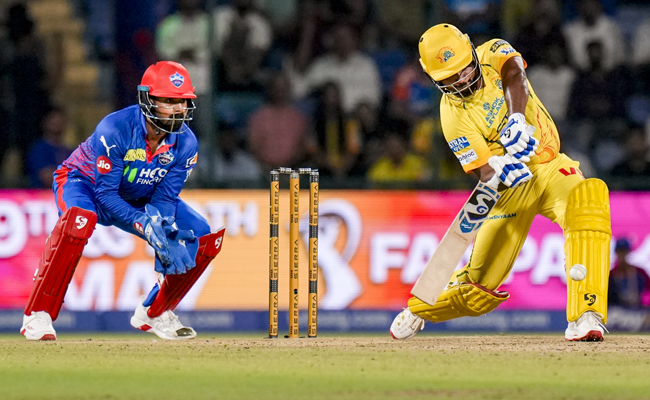
New Delhi (PTI): Sanju Samson bossed the chase with authority, anchoring a modest 156-run target with a fluent 87 not out as Chennai Super Kings outclassed Delhi Capitals by eight wickets in the IPL here on Tuesday.
Samson's knock came off just 52 balls with seven fours and six sixes, batting through the innings as CSK completed the chase in just 17.3 overs giving a huge boost to their net run-rate.
Electing to bat on a tricky surface, Delhi Capitals were restricted to 155/7.
West Indies left-arm spinner Akeal Hosein set the tone with the new ball, returning tidy figures of 1/19, including 14 dot balls.
Reduced to 69/5 in 11 overs, Delhi found some late impetus through Tristan Stubbs (38; 31 balls) and Sameer Rizvi (40 not out; 24 balls), who stitched together a crucial 65-run (off 47 balls) stand to give the innings a respectable total.
Brief Scores:
Delhi Capitals: 155 for 7 in 20 overs (Tristan Stubbs 38, Sameer Rizvi 40 not out; Noor Ahmed 2/22)
Chennai Super Kings 159 for two in 17.3 overs (Sanju Samson 87 not out, Kartik Sharma 41 not out). CSK win by eight wickets.