Travel information personal, cannot be disclosed to third party under RTI: Delhi HC
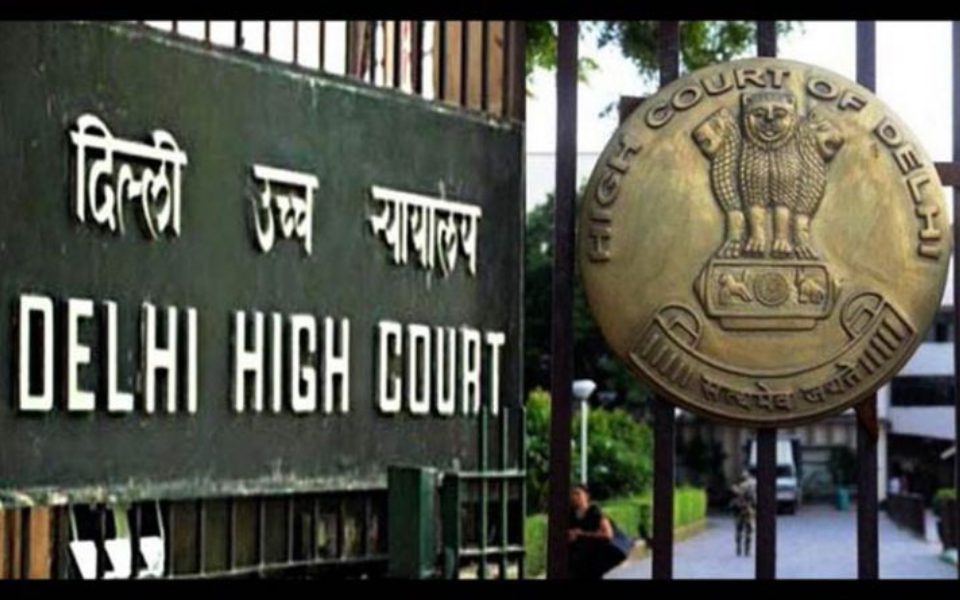
New Delhi, Apr 12: Information related to travel is personal in nature and such details cannot be divulged to a third party under the Right to Information (RTI) Act unless it is in the larger public interest, the Delhi High Court has said.
The court has refused to interfere with an order of the Central Information Commission (CIC) that dismissed a plea moved by Ehtesham Qutubuddin Siddiqui, a death row convict in the 2006 Mumbai train blasts case.
Siddiqui had sought information under the RTI Act regarding the travel entries (departure and arrival) of Mohammad Alam Gulam Sabir Quraishi from the Mumbai airport to Hong Kong or China between January 1, 2006 and June 30, 2006 made with the Foreigners' Regional Registration Office (FRRO) or Immigration Office.
He had challenged the CIC's January 2022 order that denied the information to him.
"The travel information of any person is personal information and such details cannot be divulged to a third party unless the same is in the larger public interest, which justifies the disclosure of the said information. This court is of the opinion that the view taken by the CIC is not so perverse which warrants interference under Article 227 of the Constitution of India," Justice Subramonium Prasad said.
The petitioner had filed an RTI application with the central public information officer (CPIO) of the Bureau of Immigration, which dismissed the plea on the ground that the department was exempted from providing any information under section 24(1) and the Second Schedule of the RTI Act.
Thereafter, he appealed before the CIC, which also rejected it on the ground that Siddiqui was seeking third-party information that was exempted under section 8(1)(j) of the Act.
The petitioner's lawyer had submitted that the information was relevant for Siddiqui in pursuing his pending appeal before the Bombay High Court.
He had said the person whose travel details were sought was a witness and claimed that the petitioner was arrested after he was falsely implicated in the case and denying the information to him was a violation of human rights.
The high court dismissed the petition and said it was always open for the petitioner to approach the court concerned under section 391 of the Code of Criminal Procedure (CrPC) to seek this information if it does not form a part of the record of the criminal court.
The petitioner, presently lodged in a prison, had claimed in his plea that he was falsely implicated in the Mumbai train blasts case by the Anti-Terrorism Squad (ATS), Mumbai.
Earlier, the court had dismissed another petition filed by the petitioner challenging a CIC order denying the disclosure of certain information pertaining to the sanction granted for his prosecution for offences under the Unlawful Activities (Prevention) Act (UAPA) by the Maharashtra government.
It had also rejected his plea seeking the reports submitted by the Maharashtra and Andhra Pradesh governments regarding the investigation into the train bombings.
Two petitions of the petitioner seeking certain information in relation to the officers involved in the investigation and the granting of sanction for his prosecution were dismissed by the high court.
It had dismissed his petition seeking the disclosure of certain information pertaining to the ban imposed on the Indian Mujahideen.
Let the Truth be known. If you read VB and like VB, please be a VB Supporter and Help us deliver the Truth to one and all.
AI, IndiGo, SpiceJet seek ATF price relief; say airline industry on verge of 'stopping operations'

Mumbai (PTI): Air India, IndiGo and SpiceJet have told the government that the country's airline industry is under extreme stress and on the verge of "stopping operations", as they sought revision in ATF pricing and financial support.
The West Asia turmoil has pushed up oil prices, and airspace restrictions have increased airlines' operating costs, especially on long-haul routes. Aviation Turbine Fuel (ATF) accounts for around 40 per cent of a carrier's operational expenses.
Against this backdrop, the Federation of Indian Airlines (FIA) has written to the civil aviation ministry, seeking steps to extend the same fuel pricing mechanism uniformly across both domestic and international operations as was done in the past with the establishment of the crack band.
ALSO READ: Tharoor junks Rijiju's claim that he agreed Cong is 'anti-women'; hails his party
With an unprecedented rise in jet fuel prices and exorbitant crack/differential between crude and ATF, the federation said the operation of airlines is being challenged in totality.
"... any ad hoc pricing (domestic vs international) and/or irrational increase in the price of ATF will result in unsurmountable losses for airlines and will lead to grounding of aircraft, resulting in cancellation of flights," the federation, which represents Air India, IndiGo and SpiceJet, said.
"In order to survive, sustain and continue operation, we request your urgent intervention for immediate and meaningful financial support to tide over the current situation," it said in a letter on April 26.
Also, the airlines have sought temporary deferment of excise duty on ATF, which is at 11 per cent.
"With the abnormal increase in ATF prices from the pre-crisis period, adding rupee depreciation to the increased prices, the 11 per cent excise duty also increases manifold for the airlines and adds to the ATF price as a big impact on airlines," they said.
Last month, the government limited the hike in ATF price to Rs 15 per litre for domestic operations, but for international operations, the price rose by Rs 73 per litre.
The airlines said the situation has practically made international operations, along with domestic operations, completely unviable and resulted in significant losses for the aviation sector in April.
Seeking urgent intervention on the current ATF ad hoc pricing, FIA said the current situation is creating a severe imbalance in domestic and international operations and rendering airline networks unviable and unsustainable.
"The airline industry in India is under extreme stress and is on the verge of closing down or of stopping its operations."
The federation has pitched for a transparent pricing framework under the crack band mechanism (USD 12–22/BBL) that was implemented in October 2022, saying there was a fair and reasonable margin for Oil Marketing Companies (OMCs).
According to FIA, the country's largest aviation hub Delhi has the second-highest value-added tax (VAT) of 25 per cent on jet fuel, while the highest rate is 29 per cent levied in Tamil Nadu.
"The other major aviation cities, viz. Mumbai, Bangalore, Hyderabad, and Kolkata range between 16 per cent and 20 per cent. These 6 cities cover more than 50 per cent of airlines' operations within India," the federation said.