Centre wants to put CM Siddaramaiah behind bars, Health Minister Dinesh Gundu Rao alleges
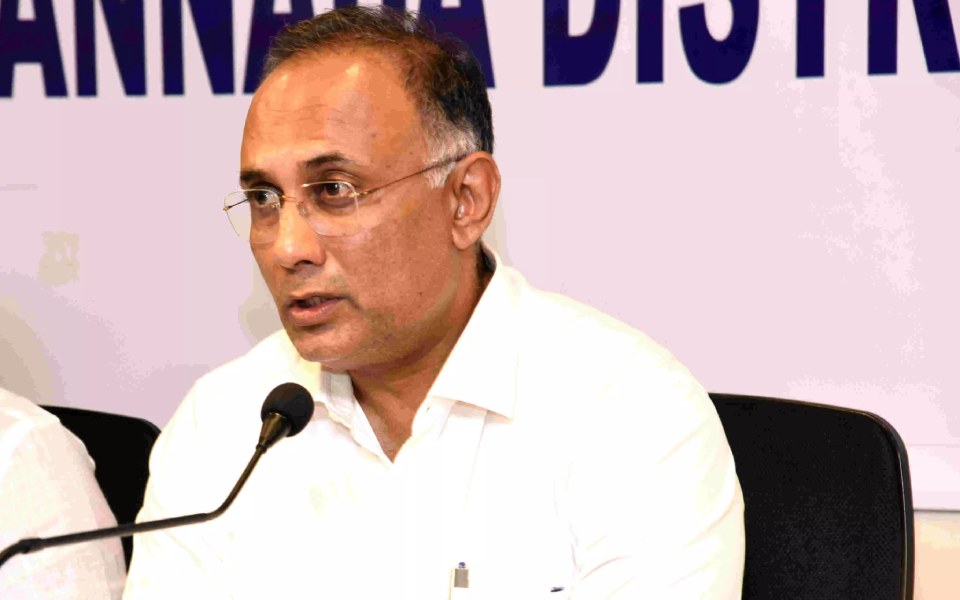
Mangaluru (Karnataka), Aug 2: Karnataka Health Minister Dinesh Gundu Rao on Friday alleged that the Centre wants to put Chief Minister Siddaramaiah behind bars and is therefore "digging out small things" against the opposition but protecting its own people who indulge in "big crimes".
“They (BJP leaders) are misusing the governor, Income Tax (dept), Directorate of Enforcement only to topple the government. You know what they tried to do in Tamil Nadu, Maharashtra, Jharkhand, Delhi, West Bengal and Kerala,” Rao told reporters in Dakshina Kannada district.
He was reacting to Governor Thaawarchand Gehlot's show cause notice issued to Siddaramaiah on the MUDA site allotment 'scam' in which the CM's wife Parvathi is allegedly a beneficiary.
Rao said that on a visit to any state ruled by a non-BJP government, one can see how the Centre misuses government machinery across India to topple and destabilise state governments and create confusion within the government there, by making false accusations, putting pressure on opposition leaders and getting them into trouble.
ALSO READ: Minister Dinesh Gundu Rao visits flood-affected Adyapadi, orders survey of River Phalguni
"There is an undeclared emergency in the country," Rao said, pointing out that the BJP-led Centre had jailed Jharkhand Chief Minister Hemant Soren, Karnataka Deputy Chief Minister D K Shivakumar and former union minister P Chidambaram.
“These Central agencies do not touch the BJP leaders. Instead they (BJP leaders) are protected. If others make a small mistake, the BJP goes after them. In Siddaramaiah’s case, they want him to be jailed,” he charged.
He highlighted that the governor served the show cause notice to Chief Minister Siddaramaiah within hours of getting a complaint from advocate-activist T J Abraham.
Rao said the governor should have verified whether the chief minister is involved in the MUDA allotments or not before issuing the notice.
Let the Truth be known. If you read VB and like VB, please be a VB Supporter and Help us deliver the Truth to one and all.
Ordinance issued to increase number of Supreme Court judges from 34 to 38
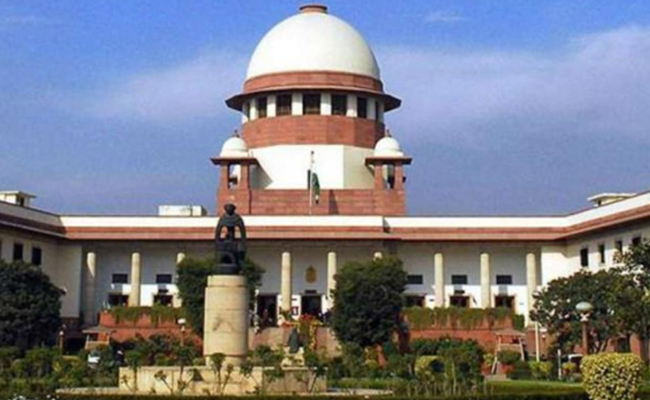
New Delhi (PTI): The government has promulgated an ordinance to increase the strength of the Supreme Court from the present 34 judges to 38, including the Chief Justice of India.
The law ministry notified the ordinance on Saturday, which amended the Supreme Court (Number of Judges) Act, 1956, to increase the sanctioned strength of the top court.
So far, the sanctioned strength of the top court was 34, including the Chief Justice of India (CJI). Now, the number of judges has been increased by four, taking the sanctioned strength to 38.
The top court will now have 37 judges, other than the CJI.
With the apex court having two vacancies at present, and the ordinance coming into force immediately, the Supreme Court Collegium will now have to recommend six names for appointment as judges in the top court.
A bill will be brought in the Monsoon Session of Parliament to convert the ordinance – an executive order – into a law passed by Parliament.
The Union Cabinet had cleared a draft bill on May 5 to increase the number of apex court judges.
The strength of the Supreme Court was last increased from 30 to 33 (excluding the CJI) in 2019.
The Supreme Court (Number of Judges) Act, as originally enacted in 1956, put the maximum number of judges (excluding the CJI) at 10.
This number was increased to 13 by the Supreme Court (Number of Judges), Amendment Act, 1960, and to 17 by another amendment to the law.
The Supreme Court (Number of Judges) Amendment Act, 1986, augmented the strength of judges from 17 to 25, excluding the CJI.
A fresh amendment in 2009 further increased the strength from 25 to 30.
Article 124(3) of the Constitution lists the qualifications required to become a Supreme Court judge.
An Indian citizen who has either served as a high court judge for at least five years, or as an advocate for 10 years, or is a distinguished jurist, can be appointed to the top court.
The strength of the Supreme Court is increased based on the recommendations of the CJI, who writes to the Union law minister. After consulting the finance ministry, the Department of Justice under the law ministry moves the Cabinet with a draft bill.