Pace Wisdom Solutions' "Ignite" new talent orientation event held in Mangaluru
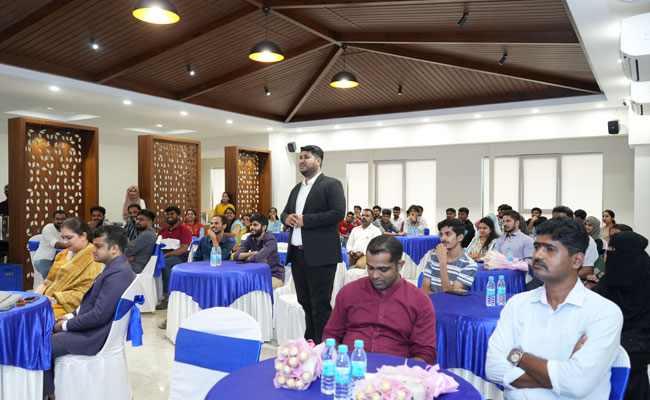
Mangaluru: Pace Wisdom Solutions, a prominent IT company headquartered in Bangalore, continues to expand its presence in the tech industry. In March 2023, the company inaugurated a new branch office in Mangalore, aligning with its mission to provide employment opportunities to the local talent pool in the Dakshina Kannada region. In a recent move, Pace Wisdom has onboarded over 40 fresh graduates, further contributing to the 'Beyond Bengaluru' vision promoted by the Government of Karnataka.
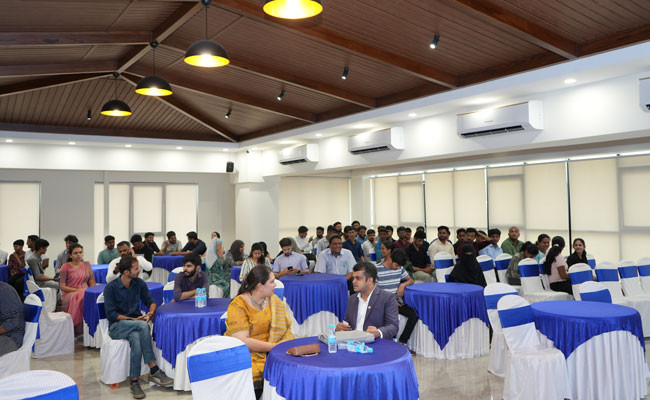
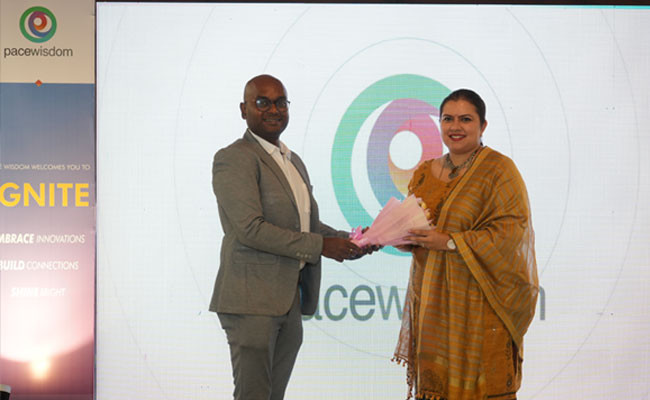
On Wednesday, September 6, 2023, Pace Wisdom Solutions organized a New Talent Orientation event named 'Ignite' at its Mangalore office, located in the Ajanta business center. The primary objective of the event was to embrace innovation, foster meaningful connections, and welcome the new hires to the company.
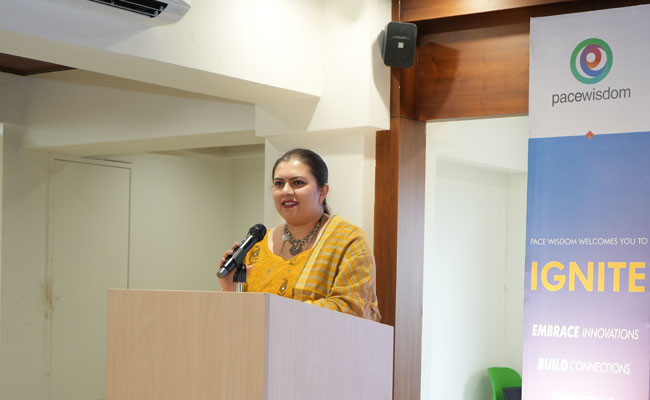
During the event, Vatika Pai, an accomplished entrepreneur who leads the operations at Nirmala Travels, delivered a keynote address emphasizing the importance of dedication, honesty, and integrity in one's professional journey. She praised the entire Pace Wisdom team for their remarkable achievements.
The event witnessed participation from esteemed placement officers representing various engineering colleges in the region. This included Raj from Yenepoya, Rashmi Bhandary from Sahyadri College of Engineering and Management, Sushant and Tanvi Rai from Alva’s Institute of Engineering and Technology, Ashwini from Bearys Institute of Technology, Keerthan Kini and Panchami Nayak from Canara Engineering College, and Deepak and Narendra from Mangalore Institute of Technology and Engineering. Narendra offered valuable advice to the fresh graduates, encouraging them to make the most of the employment opportunities offered by Pace Wisdom and to uphold professionalism with strong ethical values.
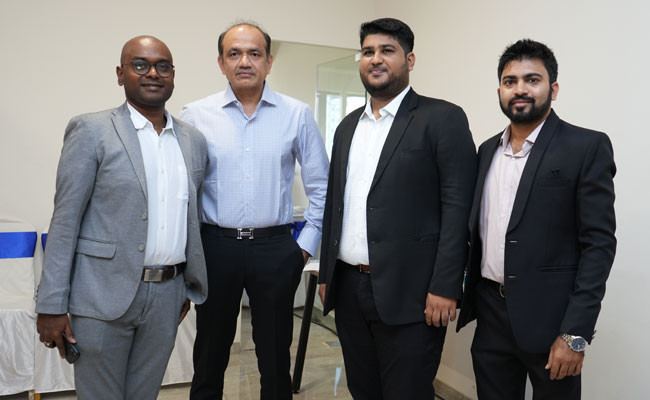
Gurudath Shenoy, the managing partner and co-founder at Mukund MGM Realty, and the proud builder of the Ajanta business center, graced the event, further strengthening the ties between Pace Wisdom Solutions and the local community.
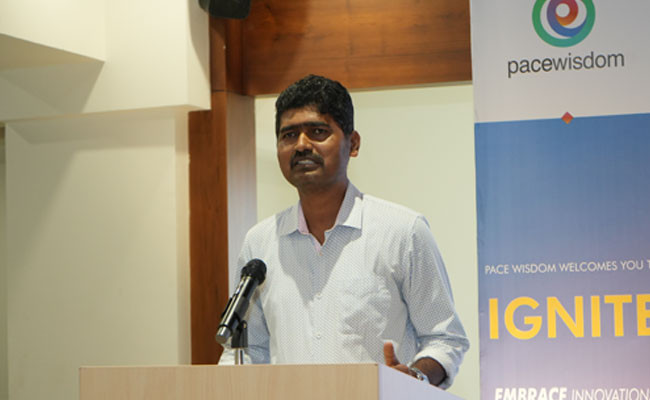
In his closing remarks, Bharath Jatangi, the Chief Operating Officer of Pace Wisdom Solutions, expressed the company's honor in creating opportunities in the Dakshina Kannada region. He urged the newcomers to develop essential skills such as effective communication, adaptability, problem-solving, critical thinking, emotional intelligence, and collaboration. The 'Ignite' event proved to be a resounding success, solidifying the bond between Pace Wisdom Solutions and the regional engineering colleges.
Pace Wisdom Solutions is a deep-tech product engineering and consulting firm renowned for its expertise in custom software development, mobile application development, and web application development. The company serves a diversified global clientele, including Startups, SMEs, and Enterprises, by providing customized digital solutions that enhance business efficiency and innovation. Pace Wisdom is a trusted partner in driving digital transformation across multiple industries, with a focus on cutting-edge technology and a commitment to excellence.
Let the Truth be known. If you read VB and like VB, please be a VB Supporter and Help us deliver the Truth to one and all.
Mamata alleges BJP disrupted her Bhabanipur rally, Suvendu claims 'she's nervous'
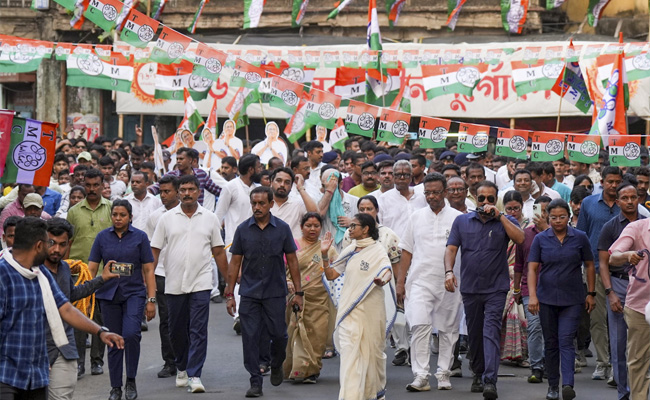
Kolkata (PTI): Chief Minister Mamata Banerjee cut short her speech at a rally in her Bhabanipur constituency, alleging that the BJP was deliberately playing loud music from a nearby public meeting.
A peeved Banerjee said despite having the required permission of the Election Commission, her rally in Chakraberia was disrupted by the BJP, "who want to capture Bengal by intimidation and threat".
"It is not possible for me to go ahead with this meeting. If they can do such a thing in my constituency, imagine how undemocratic the BJP is. If they behave like this, I have to take legal action," she said.
"This is an insult, humiliation. BJP is stepping on our toes to instigate trouble. Not possible to address the gathering in this situation. I am leaving the stage. Please vote for me in your protest," she added.
Banerjee was then seen calling someone over and venting her grievances.
Before leaving the stage, she said, "I will hold a rally tomorrow at the same spot."
TMC supporters then rushed towards the BJP rally, which was later addressed by Leader of the Opposition Suvendu Adhikari, but security personnel intervened and prevented the situation from escalating.
TMC workers later staged a demonstration outside the local police station and filed a complaint, alleging that the BJP violated the model code of conduct.
A senior TMC leader said another complaint will also be lodged with the Election Commission.
Asked about Banerjee's allegations, Adhikari told reporters after the rally he held nearby, "Her reaction shows she is nervous about the imminent loss."
"There was no violence, no obstruction in her meeting and her behaviour shows her nervousness. On May 4, people of Bhabanipur will celebrate the victory of the BJP," he claimed, alleging that the TMC also tried to disrupt his meeting by playing loud music.
South Kolkata's Bhabanipur, one of the battleground seats in the West Bengal elections, will vote in the second phase on April 29.