BJP MLA distances himself from Tejasvi Surya’s stance on Hanuman Chalisa row
Says issue was blown out of proportions to gain electoral gains
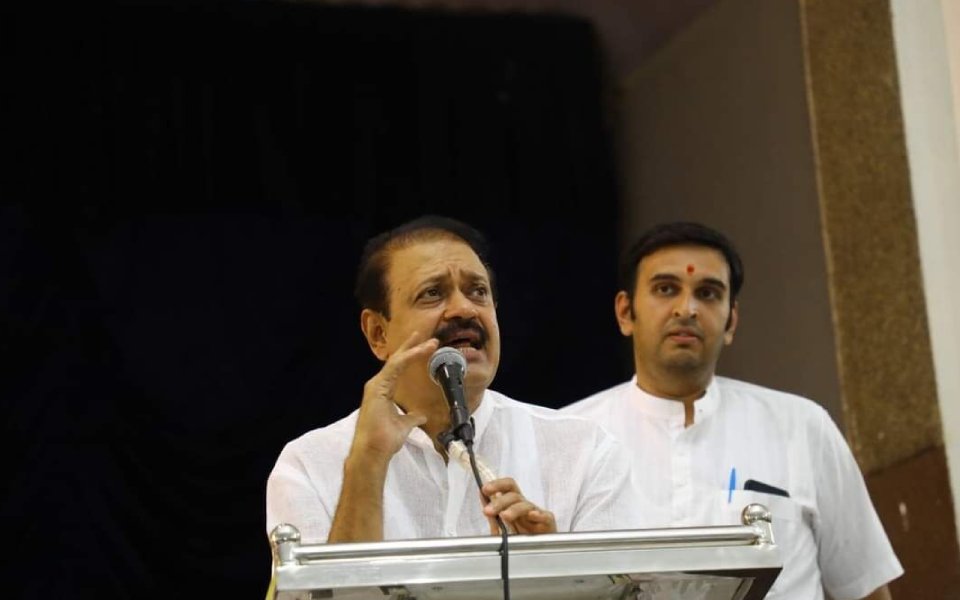
Bengaluru: On Wednesday, BJP MLA Uday Garudachar addressed the recent incident involving an attack on a shop owner in Nagarathpete, clarifying that it was not related to the playing of Hanuman Chalisa or azan. Garudachar emphasized that the issue had been blown out of proportion as the elections approached.
In an interview with a private news channel, Garudachar stated, "It's untrue that the telecom shop owner in Nagarathpet was attacked for playing Hanuman Chalisa. I have reliable information as it falls within my constituency. There was no need to exaggerate the issue." He stressed that it was unfortunate that the incident had been politicized during the election season.
Asserting his commitment to secularism and communal harmony, Garudachar affirmed, "I will never attribute the attack to individuals of another faith. I believe in the coexistence of all communities in peace." He mentioned that he had communicated this stance to Tejasvi Surya when the latter reached out to him earlier in the day. Garudachar advised Surya to allow the authorities to handle the situation within the framework of the law.
ALSO READ: Union Minister Shobha Karandlaje says people from TN plant bombs in Karnataka, Stalin fumes
The Congress party took to social media platform X to highlight Garudachar's statement and condemn Tejasvi Surya's involvement in the incident. The party accused Surya of attempting to fuel communal tensions for electoral gain and criticized his lack of substantial achievements. Referring to Surya as a 'foolish baby,' the tweet denounced his actions as mere theatrics to sway voters.
Earlier, BJP MP P C Mohan, along with Tejasvi Surya, Shobha Karandlaje, and MLA Suresh Kumar, along with supporters of the sangh parivar, staged a protest in Nagarathapete, alleging an attack on Mukesh for playing Hanuman Chalisa in his mobile shop. The demonstration included slogans such as 'Jai Sri Ram, Jai Hanuman,' and criticized what they perceived as the government's anti-Hindu stance. However, the situation escalated, leading to the arrest of several leaders and protesters by the police, including Tejasvi Surya, Shobha Karandlaje, and Suresh Kumar, who were later released.
ಚಿಕ್ಕಪೇಟೆ ವಿಧಾನಸಭಾ ಕ್ಷೇತ್ರದ ನಗರ್ತಪೇಟೆಯ ಶಾಸಕರು ಬಿಜೆಪಿಯವರೇ,
— Karnataka Congress (@INCKarnataka) March 20, 2024
ಬಿಜೆಪಿ ಶಾಸಕ ಉದಯ್ ಗರುಡಾಚಾರ್ ಅವರು @BJP4Karnataka ಪ್ರಾಪಗಾಂಡಾಗಳಿಗೆ ತಪರಾಕಿ ನೀಡಿದ್ದಾರೆ,
ಇದು ಬಿಜೆಪಿಯವರು ಚುನಾವಣೆಗಾಗಿ ಹಚ್ಚಿದ ಕೋಮು ಬೆಂಕಿ ಎನ್ನುವುದಕ್ಕೆ ಪುಷ್ಟಿ ನೀಡಿದ್ದಾರೆ.@Tejasvi_Surya ಎಂಬ ಅವಿವೇಕಿ ಶಿಶುವಿಗೆ ಈ ಗಲಾಟೆಯ ವಿಷಯದಲ್ಲಿ… pic.twitter.com/xH0XEpsnNO
Let the Truth be known. If you read VB and like VB, please be a VB Supporter and Help us deliver the Truth to one and all.
Man arrested with Rs 2.54-crore heroin in Mumbai

Mumbai (PTI): Police have arrested a man and seized over 500 grams of heroin worth Rs 2.54 crore in the illicit market from him in Mumbai, officials said on Friday.
The police's Anti-Narcotics Cell (ANC) made the drug seizure in Santacruz in the western suburbs. The operation was conducted by the Kandivali unit of the ANC on Thursday as part of a special crackdown against drug trafficking in the area, they said.
Acting on specific inputs, an ANC team conducted a raid in Santacruz (East) and intercepted a man. During a search, the team recovered 508 grams of high-grade heroin from his possession, an official said.
The seized contraband, a highly addictive, opioid drug derived from morphine, is estimated to be worth Rs 2.54 crore in the international market, he informed.
Following the seizure, a case was registered against the man under relevant sections of the Narcotic Drugs and Psychotropic Substances (NDPS) Act, 1985, and he was formally placed under arrest in the early hours of Friday.
The police are currently investigating the source of the drug and trying to identify the intended recipients of the consignment, he said.