Five arrested at Bengaluru airport in counterfeit cigarette racket

Bengaluru: The Bengaluru International Airport police have busted a counterfeit cigarette racket operating through international channels and arrested five accused, including a father-son duo.
According to The New Indian Express, the accused have been identified as Abdul Bashid of HRBR Layout, his son Mohammed Ashiq, and Mohammed Anwar Ibrahim, Mohammed Atar Ansari, and Ghulam Hussain, all residents of Chennai.
Police said the counterfeit contraband worth about Rs 50 lakh, imported by the accused, were seized at the parking area of Terminal 2 of Kempegowda International Airport on Saturday.
ALSO READ: KSRTC MD Akram Pasha receives SKOCH National Award for transparent recruitment initiative
The case was registered following a complaint by N. Rajesh, a field executive of Anvesh IPR Services Company, associated with ITC, complained about a network that was defrauding people by importing fake cigarettes from abroad in the names of various companies, including ITC.
“On Saturday morning, an operation was conducted based on specific information about the import of fake brand cigarettes from Cambodia and supplying them to states, including Tamil Nadu, and five accused, including Abdul Bashid, were arrested. Twenty cigarette boxes were seized,” said an officer.
“The accused were in touch with a network of counterfeiters in Cambodia, Kuala Lumpur, Malaysia, Hong Kong and Singapore, and were importing them from there at a low price, under the name of ITC company. They were then supplying them to various places including Bengaluru, Chennai and Telangana for huge profits,” the officer said.
Police suspect the racket had been operating for several years. A case has been registered against the accused under provisions related to copyright infringement, and further investigation is underway.
Let the Truth be known. If you read VB and like VB, please be a VB Supporter and Help us deliver the Truth to one and all.
Gujarat builds 870 MW battery power backup network to stabilise renewable energy grid
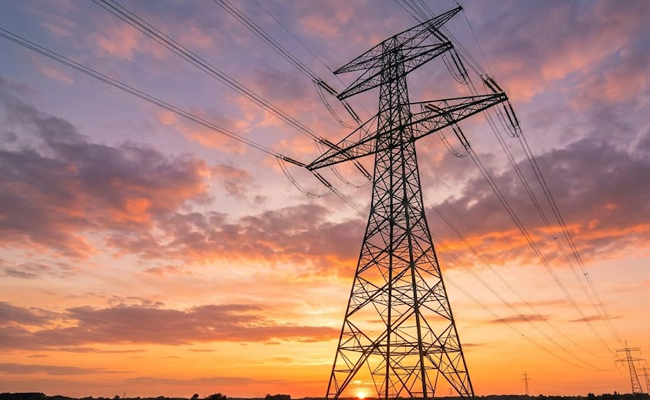
Gandhinagar (PTI): Gujarat has initiated battery storage systems at five locations in the state, with a total capacity of 870 MW, to maintain the stability of the renewable power grid, officials said on Saturday.
Battery Energy Storage Systems (BESS) are essential for storing electricity generated from solar and other renewable sources. They help manage additional load and maintain grid stability.
“Gujarat has initiated battery storage systems at five locations with a total capacity of 870 MW,” an official release stated.
The state has also registered 13 projects across Ahmedabad, Gandhinagar, Banaskantha, Patan and Kutch districts to set up additional battery storage systems, it said.
Modhera in Gujarat, India’s first solar village, has launched the country’s first BESS integrated with a solar power plant, it said.
"Under the leadership of Chief Minister Bhupendra Patel, the state has continued to advance in this direction and has strengthened its position among the leading states driving battery storage systems in India,” the release said.
Recently, a battery storage system was commissioned at Charal in the Sanand taluka of Ahmedabad, it said.
Four systems are operational at Modhera in Mehsana and Lakhpat in Kutch. The state government has also included advanced energy storage systems as a key component in the Gujarat Integrated Renewable Energy Policy, 2025, the release said.
Accordingly, standalone battery storage projects, works linked with new renewable energy installations, and those integrated with existing renewable energy systems are being approved, it said.
Once the Standard Operating Procedure is approved, registrations for battery storage will open for commercial and industrial users, it said, adding that the move will allow them to set up battery storage alongside their solar or wind projects.
The state government is developing battery storage systems across Gujarat, with companies being invited in through a competitive bidding process.
GETCO (Gujarat Energy Transmission Corporation) and power distribution companies strategically identify locations for battery storage systems based on grid capacity and operational requirements, the release said.
Power generation from solar and other renewable sources fluctuates throughout the day. Excess energy generated during peak hours can be stored and supplied later during periods of high demand, especially in the evening when solar output declines. Battery storage systems help reduce stress on the grid and improve grid stability, it added.