
Gold worth Rs 14.62 cr seized from Kannada actress Ranya Rao: DRI

Bengaluru, Mar 5 (PTI): Gold bars worth Rs 12.56 crore were seized from Kannada actress Ranya Rao at Kempegowda International Airport, following which searches were conducted at her residence and gold jewellery worth Rs 2.06 crore and Indian currency amounting to Rs 2.67 crore were also recovered, DRI said on Wednesday.
Rao is the stepdaughter of senior IPS officer Ramachandra Rao, a senior police official told PTI.
The DGP-rank officer is currently serving as the Chairman and Managing Director of the Karnataka State Police Housing and Infrastructure Development Corporation Ltd, he added.
The total seizure in the case stood at Rs 17.29 crore, including assets worth Rs 4.73 crore, marking a significant blow to organised gold smuggling networks.
ALSO READ: Kannada actress Ranya Rao arrested at Bengaluru Airport for possessing 14.8 kg of gold
According to DRI (Directorate of Revenue Intelligence) officials, the 14.2 kg haul is one of the largest gold seizures at Bengaluru airport in recent times.
In a statement, the Ministry of Finance said the DRI successfully intercepted a passenger carrying foreign-origin gold bars worth Rs 12.56 crore at Kempegowda International Airport, Bengaluru.
"Acting on specific intelligence, DRI officers intercepted an Indian woman, aged around 33, who had arrived from Dubai to Bengaluru on an Emirates flight on March 3. Upon examination, gold bars weighing 14.2 kg were found ingeniously concealed on her person," the statement read.
The DRI operates under the Ministry of Finance.
According to the Ministry, the contraband, valued at Rs 12.56 crore, was seized under the provisions of the Customs Act, 1962.
"Following the interception, DRI officers searched her residence on Lavelle Road, Bengaluru, where she lives with her husband. The search led to the seizure of gold jewellery worth Rs 2.06 crore and Indian currency amounting to Rs 2.67 crore," the statement added.
The Ministry further stated that the woman had been arrested under the relevant provisions of the Customs Act, 1962, and remanded to judicial custody.
Meanwhile, Karnataka Home Minister G Parameshwara said that he cannot comment on the case of gold smuggling by the Kannada actress until the Directorate of Revenue Intelligence completes the investigation.
"The investigation is ongoing. The DRI is handling the case, and until they provide definite information, I cannot comment. Let them complete their inquiry first. Internally, I have asked our department to look into it, and they will gather some information," he told reporters.
Distancing himself from the actress, her stepfather, Rao, told reporters here that the law would take its course.
According to him, Ranya got married just four months ago and has not visited them since.
Stating that he was unaware of Ranya and her husband's business dealings, he said the news came as a "huge shock and disappointment."
Let the Truth be known. If you read VB and like VB, please be a VB Supporter and Help us deliver the Truth to one and all.
Rajasthan: ACB court sends former IAS Subodh Agarwal to 2-day police remand in JJM scam
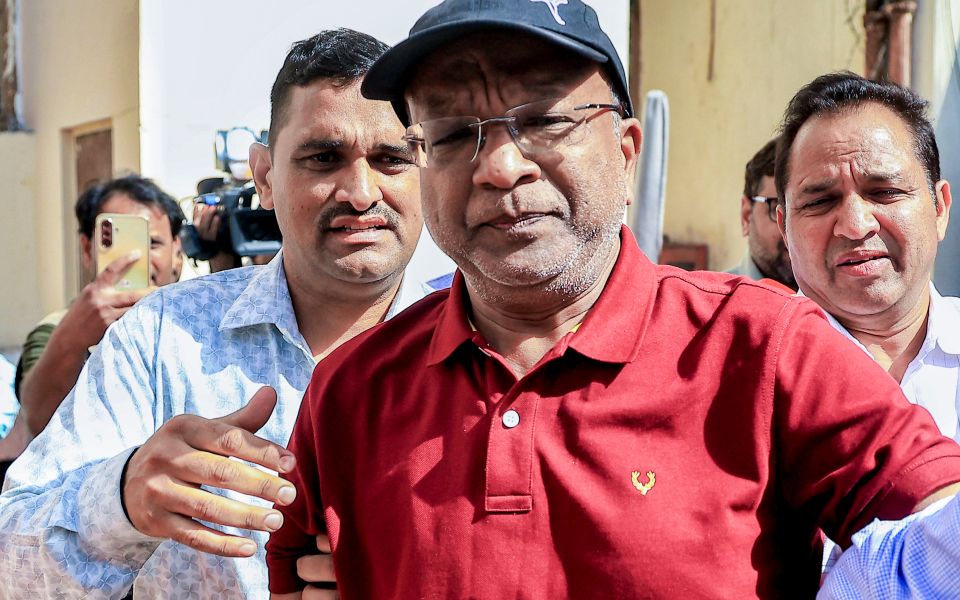
Jaipur (PTI): Retired IAS officer Subodh Agarwal, arrested in connection with the alleged Rs 960-crore Jal Jeevan Mission scam, was produced before an ACB court on Monday, which sent him to two days' police remand.
The Anti-Corruption Bureau had sought a three-day remand for further questioning in the matter, but the court granted two days' custody.
The order was passed by the ACB Court-1.
A team from the ACB arrested Agarwal on Thursday in connection with the multi-crore Jal Jeevan Mission corruption case.
He was sent to a three-day police remand on Friday. On completion of the remand period, the ACB produced him in court.
Agarwal was serving as the additional chief secretary of the public health engineering department when the alleged scam took place.
Some firms had allegedly secured tenders by submitting forged completion certificates in connivance with officers. Last month, the ACB arrested nine persons, including senior engineers and retired officials, in connection with the scam. Earlier, the ACB had arrested contractors.
_vb_90.jpeg)
_vb_90.jpeg)
_vb_23.jpeg)