Guarantee schemes improve family relationships of 89% beneficiaries, states version of Guv’s speech
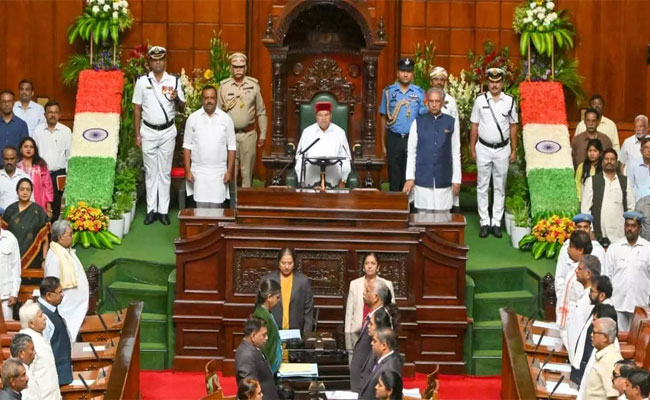
Bengaluru: The state government has said in the version of the Governor’s address prepared by it that 89 per cent of beneficiaries have seen an improvement in their family relationships due to the state government’s ambitious five guarantee schemes.
So far, Rs 1,16,706 crore has been allocated for the five guarantee schemes, Gruha Jyoti, Gruha Lakshmi, Anna Bhagya, Shakti and Yuvanidhi.
It has been also informed in the speech that the FPI has entered into agreements with academic and research institutions such as King’s College London, Just Jobs Network, XKDR Forum, Azim Premji University, Indus Action and Lokneeti/CSDS to scientifically evaluate the social and economic impacts of these schemes.
Extensive studies conducted by these organisations have confirmed revolutionary changes in food security, poverty eradication and women empowerment in the state.
It is stated that people are spending the money received through the guarantee schemes on nutritious food, medicines and children’s education.
The proportion of households receiving cash transfers from the government into bank accounts has increased from 9.3 per cent in 2022 to 72.7 per cent by 2024.
According to a study by Azim Premji University, the number of women travelling under the Shakti scheme on many routes, including major commercial areas of Bengaluru, is higher than that of men, marking a significant change in the city’s mobility.
The scheme saves an average of Rs 1,500 to Rs 2,000 per month per woman. It has helped 19 per cent of women across the state and 34 per cent in Bengaluru secure well-paid jobs. It is also stated that 83 per cent of people have been able to access good health services.
It is stated that due to the ‘Anna Bhagya’ scheme, which is making the dream of a ‘hunger-free Karnataka’ a reality, 83 per cent of women are improving their family’s nutrition by purchasing quality food items such as pulses, vegetables, fruits, eggs and meat with the money saved through the guarantee schemes.
About 80 per cent of women feel that they are more financially independent and play a leading role in family decision-making due to the ‘Gruha Lakshmi’ scheme.
Further, 37 per cent of beneficiaries have said that they are becoming debt-free by using the money from the guarantee schemes to repay old family loans.
Karnataka has initiated a new paradigm through the women empowerment schemes implemented by the government. It is believed that these schemes have not only provided financial assistance but have also enabled social transformation.
As a result of the ‘Yuva Nidhi’ scheme, which supports the youth, 28 per cent of young people are engaged in skill learning, while 20 per cent are becoming financially independent.
The ‘Gruha Lakshmi Credit Cooperative Society’ has been established to support the financial independence of women. It was proposed in the speech that the ‘Akka Pade’ (which means elder sister force) scheme will be implemented in the year 2025–26 with the aim of providing immediate protection to women and children in danger and distress.
Let the Truth be known. If you read VB and like VB, please be a VB Supporter and Help us deliver the Truth to one and all.
Trump says he ‘hasn’t even thought about’ continuing Iran ceasefire
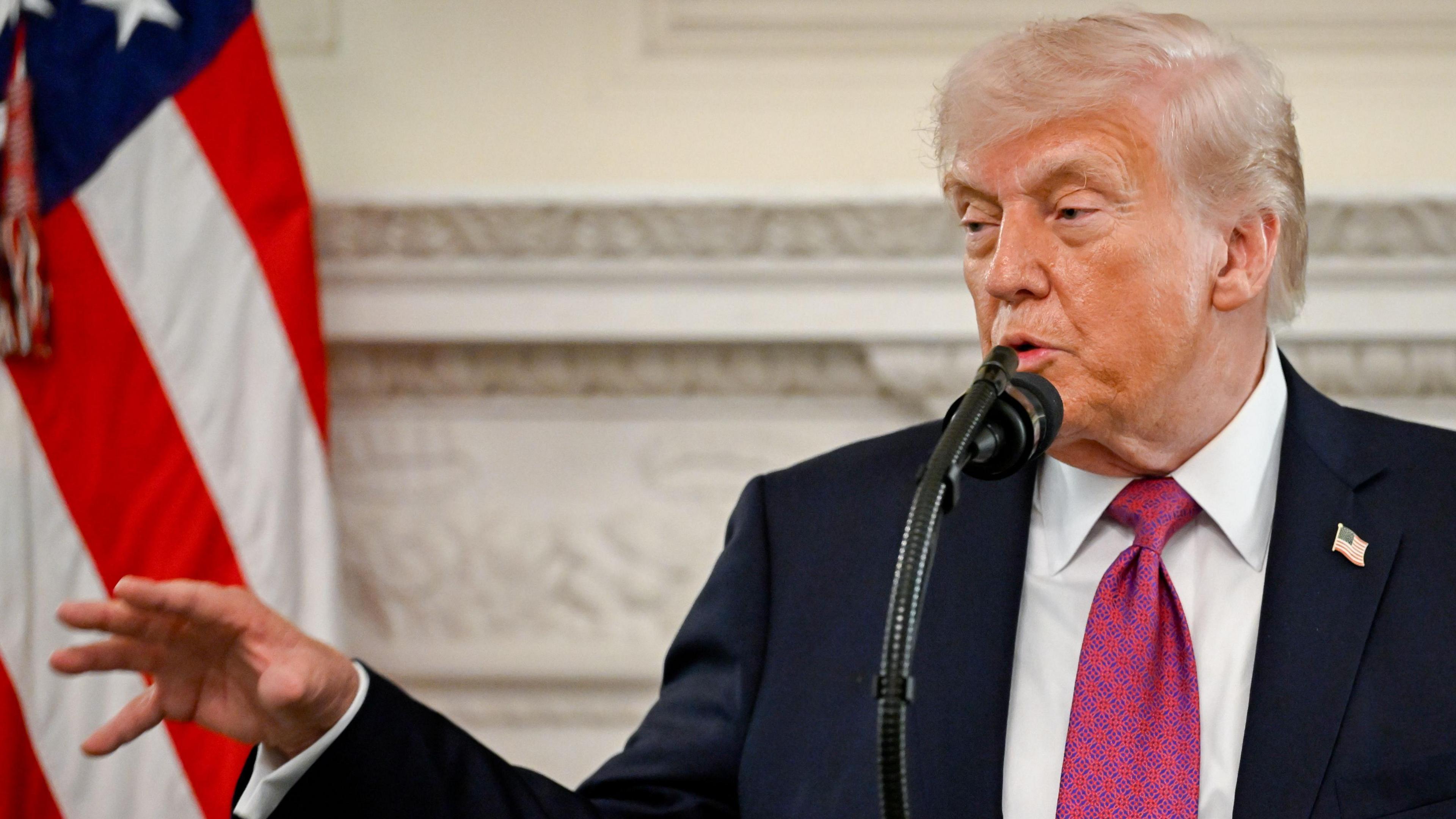
Washington: US President Donald Trump has said he has not yet considered whether he would continue the ceasefire involving Iran, while also claiming the United States holds the advantage in negotiations.
Speaking to reporters, Trump said he was prepared to make a deal with “whoever is running the show” in Iran.
“They are fighting with each other, there’s tremendous infighting. They’re probably fighting for leadership in many cases. I think they’re fighting not to be leader because we knocked out two levels of leaders,” he said.
Trump added, “When they want they can call me. We have all the cards, we’ve won everything.”
Referring to ongoing negotiations, he said, “They gave us a paper that should’ve been better. And, interestingly, immediately when I cancelled it [envoy trip to Pakistan], within 10 minutes we got a new paper that was much better.”
“We talked about they will not have a nuclear weapon, very simple … They offered a lot, but not enough,” he added.
When asked whether he would continue the ceasefire, Trump replied, “I haven’t even thought about it.”
The remarks come as uncertainty remains over the future of the temporary truce and broader negotiations between Washington and Tehran.