Honour killing in Hubballi: Minister Santosh Lad meets attack victims, calls incident condemnable
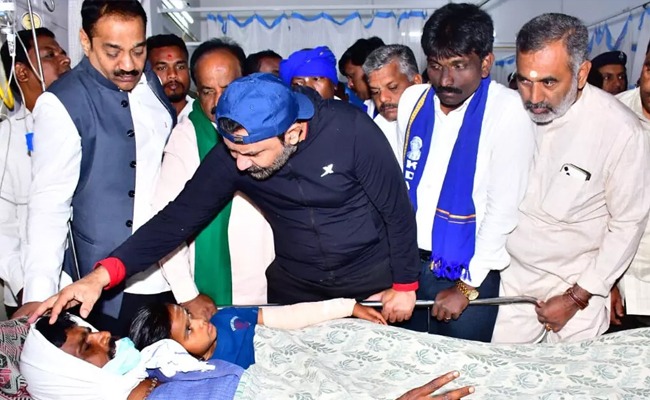
Hubballi: Karnataka Labour Minister Santosh Lad has termed the recent incident of honour killing of a young woman by her father for marrying a man of low caste in Inam-Veerpur village of the taluk as inhuman.
“Even after completing 80 years of gaining Independence, it is unfortunate that we are ruled by the caste system. We are yet to gain equality and humanitarian values in society,” he told reporters, after meeting the people injured in connection to the case.
ALSO READ: Shravan Singh, Operation Sindoor’s 'Youngest Civil Warrior', receives Rashtriya Bal Puraskar
The district administration and medical officials’ quick action has saved the lives of the injured people, while the arrival of the police team at the scene prevented a major mishap, the minister said.
Lad assured that the government was taking necessary steps in the case. “We are in constant touch with the Superintendent of Police (SP) and Deputy Commissioner (DC). The Panchayat Development Officer (PDO) was suspended on Friday since the official had failed to fulfill his duties. We are also in support of the bereaved family,” he added.
“I paid a visit to the village yesterday (Friday) and told the locals that a round of counseling would be undertaken for them,” the minister said.
Referring to people helping the deceased woman’s husband, Lad said, “I was informed that the family received no help during such a situation, which is equivalent of a social boycott. The entire government, however, stands by the boy’s family."
Let the Truth be known. If you read VB and like VB, please be a VB Supporter and Help us deliver the Truth to one and all.
BJP leads in 5 of 7 bypoll seats as counting continues; Congress leads in Karnataka’s Bagalkot

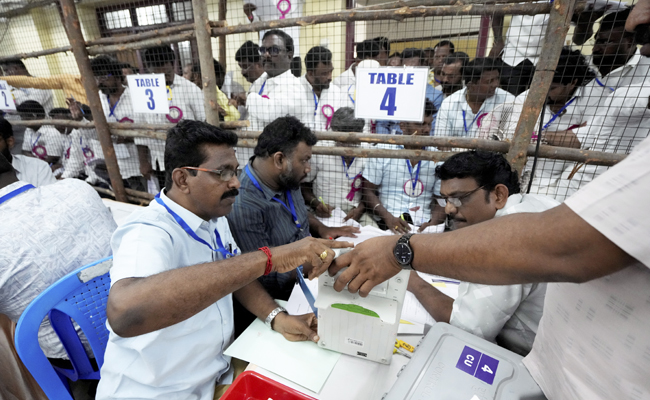
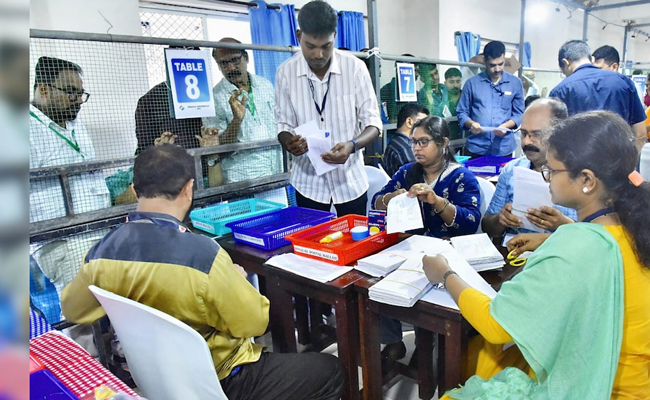
New Delhi: The Bharatiya Janata Party is leading in five out of the seven seats where counting of votes for the by-elections is currently underway, according to early trends.
In Maharashtra’s Baramati, Sunetra Pawar of the Nationalist Congress Party is in the lead.
In Karnataka’s Bagalkot constituency, Congress candidate Umesh Meti is ahead.
The counting process is ongoing, and final results are yet to be declared.