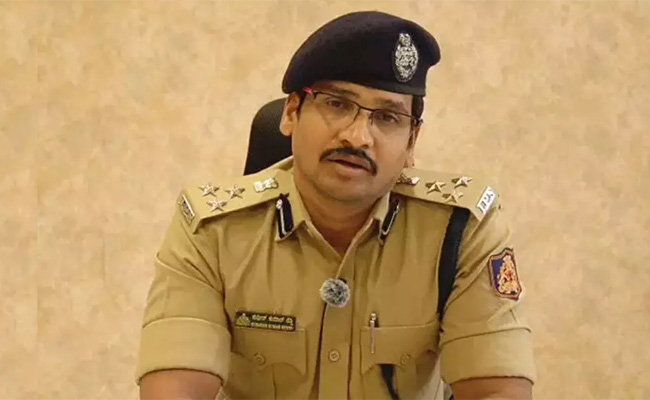
"How some thing that was sweet then, has turned bitter today?"
HDK hits back at Yeddyurappa
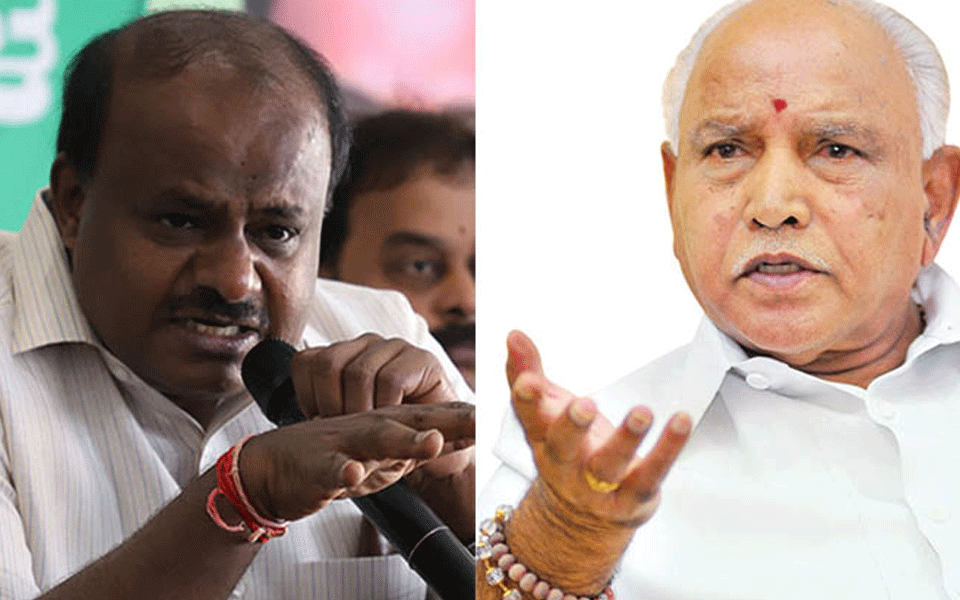
Bengaluru,Jun 24: Chief Minister H D Kumaraswamy Monday said his 'Grama Vastavaiya' (overnight stay in villages) programme was not a 'political gimmick', even as the BJP Monday dismissed it and said the people need relief from the "daily street fight" between Congress and JD(S) leaders.
Dismissing the initiative as a drama, BJP state unit chief B S Yeddyurappa alleged that the chief minister was wasting crores of rupees in the name of 'Grama Vastavaiya'.
Hitting back at Yeddyurappa, Kumaraswamy said, Grama Vastavya is not a political gimmick, it can be done only with "freedom of conscience", "humanity", and a will power to solve problems with a "motherly heart".
'Grama Vastavya' is aimed at taking administration to the people.
Rejecting Yeddyurappa's allegation that crores of rupees were being spent on the programme, Kumaraswamy said spending on him during the Grama Vastavaiya was only limited to travel cost, and basic facilities for stay at a government school.
Pointing out that at Chandaraki village, foundations were laid for various projects worth 58 crore , he said, those programmes don't come under the cost of Grama Vastavaiya.
"I hope that those in responsible positions speak after knowing the reality," Kumaraswamy said in a statement.
Yeddyurappa claimed that internal squabble in the ruling Congress-JD(S) coalition had created an atmosphere that the government may collapse any time and asked Kumaraswamy as to when people would get relief from his administration that has lost direction.
"During his stay at Chandaraki village in Yadgir district last week- just imagine- he (CM) claims to be a simple man and boasted that state's exchequer will be burdened if he travels by a helicopter, Rs 1.22 crore was spent for luxury, food and other things- you (CM) should be ashamed," the BJP leader said.
Yeddyurappa also hit out at Kumaraswamy for boasting about his simplicity, while "running the administration from a five star hotel."
Kumaraswamy launched the 'Grama Vastavya' at Chandaraki village Friday, while his stay at Herur village in Kalaburagi rural taluk on Saturday was postponed due to heavy rain.
The state BJP Monday released a book "Grama Vastavaiya - Zero Performance" that lists out the current status of about42 villages that Kumaraswamy had visited during his first stint as chief minister in 2006-07.
Kumaraswamy said during the BJP-JD(S) coalition government Yeddyurappa also took part in Grama Vastavya programme along with him at Srirampura village of Arkalgud taluk in Hassan district.
"How some thing that was sweet then, has turned bitter today?"
"If there is constructive criticism on administrative matters I will take them seriously and take action.
I request Yeddyurappa through media not to bring down the dignity of the office of leader of opposition by speaking about my personal matters that do not come under the domain of the government," he said.
The leader of the opposition also alleged that 'Grama Vastavaiya' showed that the chief minister was unable to implement the decisions taken in the state capital at the local level.
He has lost control over bureaucracy and does not have faith in his district in-charge ministers, Yeddyurappa alleged.
"At the time when science and technology in the country has progressed, why are you playing the 'Grama-Drama' of solving the issues through Grama Vastavya? Isn't this a publicity gimmick? Will you come out with a white paper about your achievements in previous Grama Vastavaiya," he asked.
Yeddyurappa hit out at Kumaraswamy for allegedly running the administration from a five-star hotel.
"Mr chief minister, when will people get relief from your administration that has lost direction and from daily street fight of your coalition parties?" he asked.
"Watching and reading about street fighting between Congress-JD(S) leaders, people are cursing.
There is loot taking place every day in government departments, still CM is making speeches about developing the state- when is the relief from such illusion?" he said.
Meanwhile, the Congress said the credit for the Chief Minister's outreach programme goes to the entire coalition government, not to JD(S) alone.
"This is coalition government, the Chief Minister is not alone for JD(S), he is Chief Minister for the entire state.
If he does grama vastavaiya will it (credit) go only to JD(S)? It will go to entire government," Karnataka Deputy Chief Minister G Parameshwara, who is from the Congress, said.
'Grama Vastavya' is a popular programme that Kumaraswamy had launched during his first stint as Chief Minister heading the BJP-JD(S) coalition government in 2006-07.
During his previous stint, Kumaraswamy used to spend the nights at villagers' houses as part of the initiative.
This time, however, he has decided to stay in government schools.
Let the Truth be known. If you read VB and like VB, please be a VB Supporter and Help us deliver the Truth to one and all.
Iran Shocks World, Hits F-35
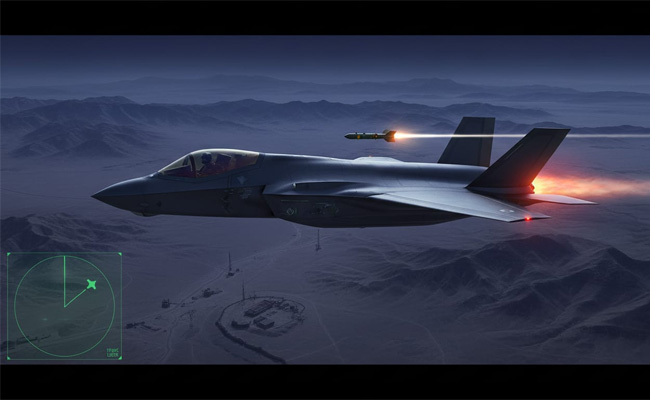
America's most advanced fighter jet, the F-35, was never hit in combat — not once, in its entire history. Countries spend over ₹900 crore to buy just one of these aircraft. The whole world believed this plane was untouchable. Then, on March 19, something happened over Iranian skies that shocked military experts across the globe.
Iran hit it. And nobody saw it coming.
America Was Too Confident — That Was the Problem
Before understanding how this happened, you need to understand what America believed going into this. The US had been bombing Iran since February 28. After roughly 20 days of heavy strikes, US Defence Secretary Pete Hegseth announced that Iran's air defences were completely destroyed — finished, flattened, gone.
US President Donald Trump even said proudly, "We can fly wherever we want, and no one is even firing at us."
Based on this confidence, America flew its prized F-35 deep into the heart of central Iran. That alone tells you how sure they were. You don't send your most expensive jet into enemy territory unless you believe there is zero danger.
But Iran, a country under heavy international sanctions, still had something left. And it used that something extremely well.
So How Did Iran Actually Hit a Stealth Jet?
Here is where it gets interesting for regular people to understand.
We have all heard the word "stealth" — it sounds like the plane is completely invisible. But India Today explained that stealth only means it is hard to detect by radar. Hard — not impossible. It does not mean the aircraft is totally invisible.
Think of it this way. Even if you cannot see someone in a dark room, you can still feel their body heat if they stand close enough. That is almost exactly what happened here.
The F-35's engines produce enormous heat. Iran's weapon likely used an infrared sensor — basically a heat-seeking system — to detect that heat, lock onto it, and follow the jet. No radar needed. The F-35's biggest advantage, its radar-invisibility, simply did not matter.
The weapon Iran likely used was the 358 missile — also called SA-67 — which is a loitering munition. Think of it as a slow, intelligent drone that flies around patiently waiting, scanning the sky for heat signals from aircraft engines. Once it finds one, it chases it down. Iran has used this exact weapon before against American MQ-9 Reaper drones — and since this war started, America has already lost more than 12 of those drones.
This Has Happened Before — In 1999
This is not the first time America's "invisible" aircraft was brought down by a smarter enemy.
In 1999, during NATO's bombing campaign over Serbia, the US flew its F-117 Nighthawk — which was then considered the world's most advanced stealth aircraft. Serbian forces shot it down using an old Soviet missile system from the 1960s. Not with new technology — with clever thinking. They briefly switched on their radar, caught the jet at the right moment when its stealth was less effective, and fired.
The lesson both then and now is the same — no aircraft is completely invincible. Smart tactics can beat expensive technology.
Why This Changes Everything in the Iran War
Here is the bigger picture that really matters.
America and Israel had told the world that Iran's air defences were basically dead. Based on that, they sent massive B-1 and B-2 bombers — aircraft that are normally used only when a country is 100% sure it controls the enemy's sky. That is a huge military risk to take.
But if an F-35 — the most advanced aircraft in the sky — can still be hit, then Iran's defences are clearly not dead. Some pieces are still very much alive and working.
This means the US and Israel may now be forced to completely rethink their war plan. Their jets may need to fly higher, use longer-range weapons, and spend far more time and money finding where Iran's remaining defence systems are hiding underground.
Around 15 countries use the F-35 today. Even India was offered this jet by Trump during PM Modi's White House visit — though India has not shown interest so far.
Geopolitical expert Adam summed it up simply — a heavily sanctioned country just tracked, chased, and hit the world's most expensive stealth jet. That is not a small thing.
Sometimes, one moment changes everything.
(Girish Linganna is an award-winning science communicator and a Defence, Aerospace & Geopolitical Analyst. He is the Managing Director of ADD Engineering Components India Pvt. Ltd., a subsidiary of ADD Engineering GmbH, Germany.)
Disclaimer: The views and opinions expressed in this article are solely those of the author. They do not necessarily reflect the views, policies, or position of the publication, its editors, or its management. The publication is not responsible for the accuracy of any information, statements, or opinions presented in this piece.
_vb_55.jpeg)