K'taka govt cracks whip against 8 agencies that failed to provide skill education
Bengaluru (PTI): The Karnataka government has cracked the whip against eight project implementing agencies that have failed to provide skill education to candidates even after getting financial aid from the state government under the 'Deen Dayal Grameen Kaushalya Yojana', and instructed officials to blacklist them and file criminal cases immediately.
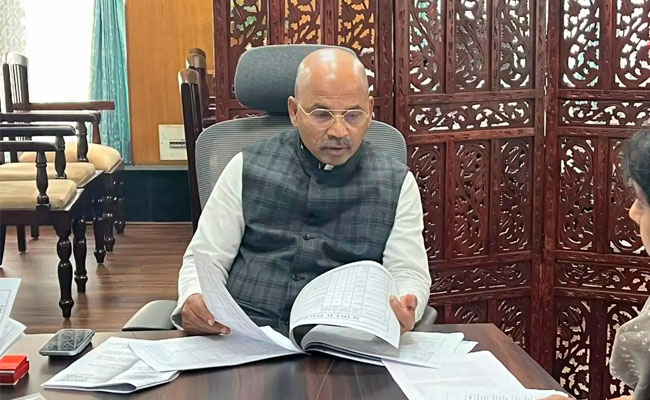
Sharan Prakash Patil, the Minister for Medical Education, Skill Development and Livelihood in a meeting here on Wednesday expressed his displeasure against the agencies that have failed to implement the Government's ambitious scheme aimed at providing vocational training to those studying diploma, ITI and other job-oriented courses.
He instructed officials to register criminal cases against them in the jurisdictional police stations to review the progress of the National Rural Livelihood Mission. Patil also instructed officials to blacklist errant project implementing agencies (PIA) immediately and to stop issuing tenders to such firms in future.
He directed the officials to recover Rs 74.65 crore with interest from the PIAs for violating the rules of this scheme being implemented jointly by the central and state governments to provide vocational training for candidates studying job-oriented courses in rural and urban areas.
The agencies that have failed to achieve the desired goal will be considered as defaulters and action will be taken against officials who have released funds to these companies, he said.
The Minister asked the officials to collect complete details of some of these agencies that are functioning from other states, and inform the Centre and prevent them from receiving any funds. He also ordered a probe against unqualified agencies promising to provide training by giving false information and warned of strict disciplinary action against officials if they fail to act.
Pulling up the officials over laxity in implementing the scheme, Patil warned of strict action against them.
''The concerned officials must visit the training centres at the district and taluk levels every month and review the progress. And the lower-rung officials must submit reports to the senior officers. I will be holding monthly meetings to review the progress and will not hesitate to act against those showing laxity,'' warned the Minister.
The scheme was started on September 25, 2014 on the 98th birth anniversary of Pandit Deen Dayal Upadhyaya in a launch by the Prime Minister to help unemployed youth find jobs and achieve something on their own.
This scheme is being implemented by the Skill Development, Entrepreneurship and Livelihood department and aimed at providing free vocational training or skill education to youth aged 18 to 35 years from across the country and help them get employed in the private sector.
Let the Truth be known. If you read VB and like VB, please be a VB Supporter and Help us deliver the Truth to one and all.
KSCA expresses disappointment over missing IPL playoffs, says it was ready to host matches in B’luru

Bengaluru: The Karnataka State Cricket Association (KSCA) has issued a clarification stating that it was fully prepared to host the IPL playoffs and final matches in Bengaluru but the fixtures were allotted to other venues.
In a media note, KSCA said it was disappointed with the decision. The association stated that its president, former India cricketer Venkatesh Prasad, had been in touch with the Board of Control for Cricket in India (BCCI) and had formally conveyed the association’s readiness and interest in hosting the matches at the M. Chinnaswamy Stadium.
KSCA said the IPL matches held in Bengaluru this season were appreciated for smooth conduct, crowd management and overall experience for spectators. It said this reflected its ability to handle high-profile matches.
The association also stated that it had sent a detailed communication to the BCCI explaining its preparedness and the operational arrangements followed during the current IPL season. According to KSCA, these systems have been in place since the start of the Indian Premier League in 2008 and were followed consistently, including during previous playoff matches hosted in Bengaluru.
The clarification added that the communication sent to the BCCI was only meant to provide factual and operational details and to bring clarity on logistical and stakeholder-related requirements involved in hosting such matches.
KSCA said that although it had shown willingness and preparedness, the BCCI has decided to allocate the playoff matches to other venues. It added that the reasons for this decision have not been formally shared with the association, but it respects the authority of the board in taking such decisions.
The association further said it remains ready to host matches of national and international importance and will continue to cooperate with the BCCI, franchises, government authorities and other stakeholders for conducting cricket events.
The statement was issued by KSCA official spokesperson Vinay Mruthyunjaya, who also thanked the media and cricket fans for their continued support.