Police consulting legal experts on action against BJP MP Pratap Simha: Mysuru City Commissioner
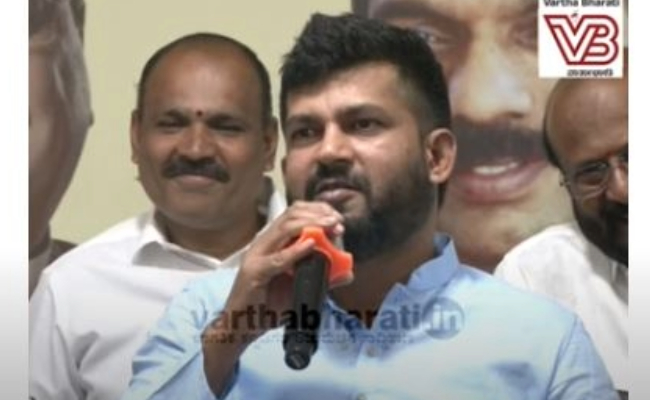
Mysuru: City Police Commissioner Ramesh Banoth, who held an emergency press meet at his office on Thursday to speak about the prohibitory orders in the city during the 'Mahisha Dasara' celebrations told reporters that the city police would take action against BJP MP Pratap Simha for his controversial statement against 'Mahisha Dasara' as advised by legal experts.
"The Mysuru Police team is keeping a watch on the MP's statements and activities. We have consulted legal experts about the matter and expect a response from the experts latest by tomorrow. Any legal action against Pratap Simha will be taken after we receive the written response of the experts," said Banoth.
In response to a question on the recent Karnataka Congress spokesperson M Laxman's demand for the city police to voluntarily book a case and arrest Pratap Simha for his statements, Banoth stated that the Mysuru police will take any action in the matter after a reply from the legal experts. "We are focusing on maintaining peace as well as law and order in the city and will take any necessary action to do so," he stressed.
MP Pratap Simha had recently declared that the BJP would fight desperately against holding 'Mahisha Dasara' celebrations in Mysuru. "We have built this party and even the nation putting forth struggles at necessary levels. Similarly, we will fight against the worship of an evil character like Mahisha. If necessary, we will also destroy all citizens who attend the event to celebrate 'Mahisha Dasara' here," he had said in a press meet held at the BJP Mysuru unit office.
Let the Truth be known. If you read VB and like VB, please be a VB Supporter and Help us deliver the Truth to one and all.
NEET student hangs self in Rajasthan's Sikar
Jaipur (PTI): A student preparing for the NEET examination allegedly committed suicide by hanging himself in a rented room in Rajasthan's Sikar on Friday, police said.
According to the police, the student allegedly hanged himself from a ceiling fan using his sister's scarf while one sister was attending coaching classes and the other was in the bathroom.
He had appeared in the NEET UG exam 2026, which was cancelled due to paper leak, they said.
Udyog Nagar SHO Rajesh Kumar said that the deceased, identified as Pradeep Meghwal, was a resident of Kanika ki Dhani village in Jhunjhunu's Gudha Gaudji area.
He had been living in a rented room in Sikar's Jaldhari Nagar area with his two sisters while preparing for NEET over the last three years.
His elder sister later found him hanging and informed the landlord and police after bringing him down, officials said.
The SHO said the body was kept at SK Hospital mortuary, and a postmortem had not been conducted.
The student's father, Rajesh Kumar Meghwal, told police that Pradeep's NEET examination had gone well and the family was expecting him to score around 650 marks.
Former Rajasthan deputy chief minister Sachin Pilot expressed grief over the incident and linked it to anxiety among students after reports of irregularities and paper leaks in NEET 2026.
Pilot said repeated paper leak incidents and cancellation of examinations were affecting students' mental health and demanded a time-bound investigation and strict action against those responsible.