
Pollution levels surge in Bengaluru as metro use decreases after fare hike
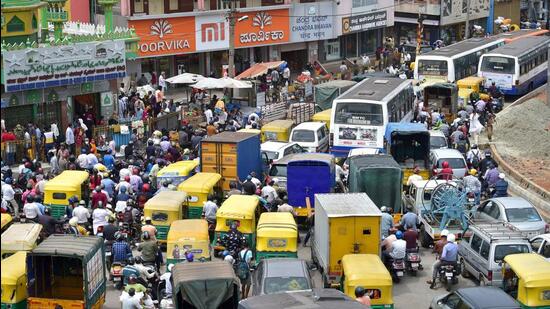
Bengaluru: Pollution levels in Bengaluru have witnessed a significant increase following the fare hike for Namma Metro on February 9, with a noticeable shift in travel patterns as commuters turn to road transport options.
Data from the National Air Quality Monitoring Centre reveals a rise in air pollution, coinciding with a drop in metro ridership, a trend also highlighted in ongoing research at the Indian Institute of Science (IISc), as reported by Deccan Herald on Wednesday.
The Bangalore Metro Rail Corporation Ltd (BMRCL) has confirmed about a 10.5 percent dip in daily ridership since the fare increase. Yashvanth Chavan, official spokesperson, acknowledged the decline, adding that the corporation is still evaluating the full impact.
Commuters like Sathyanarayan M, a content developer, have shifted away from the metro due to the rising cost of travel. “The fare from Yelachenahalli to MG Road has doubled to Rs 66, making it too expensive. I now prefer using my Bullet motorcycle which requires 1 litre of petrol but is still cheaper and convenient,” he told the news outlet.
Research from the IISc’s Sustainable Transportation Lab, led by Professor Ashish Verma, indicates that many former metro riders are now opting for city buses, two-wheelers, and cars. “We will be able to put a number on these changes within the next two days. Empirically, the AQI data suggests the hypothesis that it is correlated to people moving away from Namma Metro to road transport,” he said.
Air quality data recorded during peak hours (10:00 AM and 6:00 PM) before and after the fare hike shows a marked increase in pollutants, added DH. On February 10, the first Monday after the fare hike, the average PM 2.5 levels in the Jayanagar 5th Block area surged to 112-114 microgram/cubic metre compared to 43-54 microgram/cubic metre before the hike.
A senior official noted that traffic congestion and construction dust were major contributors to the rising pollution levels. He said that vehicle movement stirs up dust, exacerbating the pollution problem, adding that this highlights the need to reduce the number of vehicles on the road and shift to public transport.
Let the Truth be known. If you read VB and like VB, please be a VB Supporter and Help us deliver the Truth to one and all.
Rajasthan: ACB court sends former IAS Subodh Agarwal to 2-day police remand in JJM scam
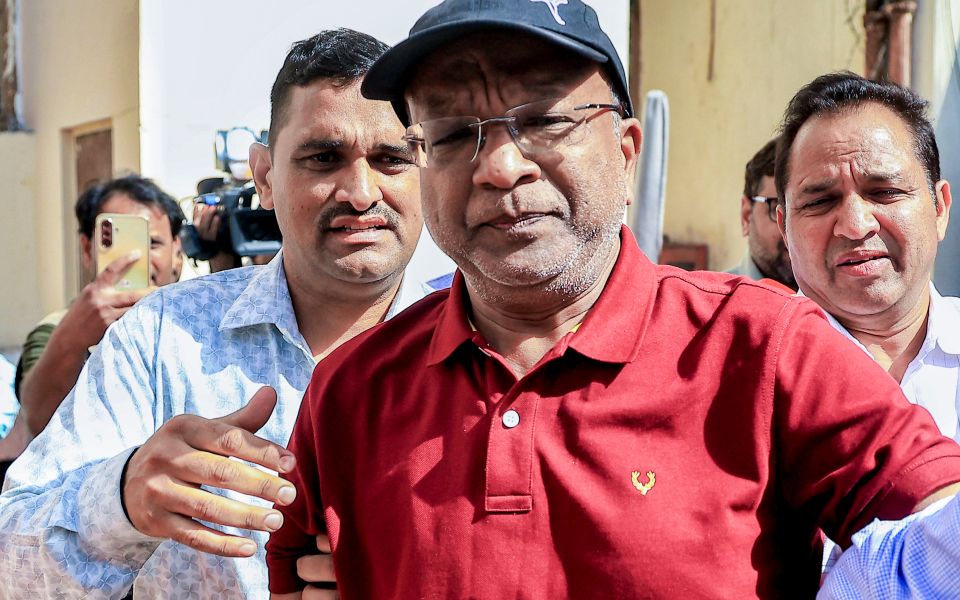
Jaipur (PTI): Retired IAS officer Subodh Agarwal, arrested in connection with the alleged Rs 960-crore Jal Jeevan Mission scam, was produced before an ACB court on Monday, which sent him to two days' police remand.
The Anti-Corruption Bureau had sought a three-day remand for further questioning in the matter, but the court granted two days' custody.
The order was passed by the ACB Court-1.
A team from the ACB arrested Agarwal on Thursday in connection with the multi-crore Jal Jeevan Mission corruption case.
He was sent to a three-day police remand on Friday. On completion of the remand period, the ACB produced him in court.
Agarwal was serving as the additional chief secretary of the public health engineering department when the alleged scam took place.
Some firms had allegedly secured tenders by submitting forged completion certificates in connivance with officers. Last month, the ACB arrested nine persons, including senior engineers and retired officials, in connection with the scam. Earlier, the ACB had arrested contractors.
_vb_90.jpeg)
_vb_90.jpeg)
_vb_23.jpeg)