22 times Indian media spread misleading news on 'Pakistan Zindabad slogans'
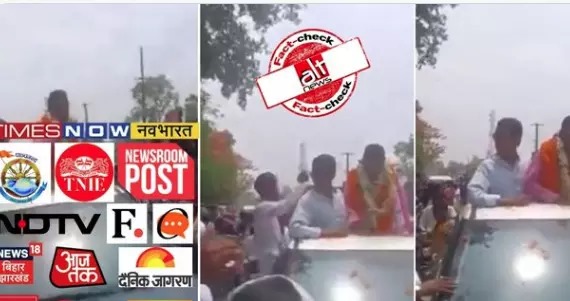
Bengaluru: In a case of alleged media misrepresentation, Congress candidate Naseer Hussain's celebratory moment following the Rajya Sabha election results has become the center of controversy. As Hussain emerged from the Vidhan Sabha after the vote count, his supporters surrounded him, chanting slogans like "Nasir Saab Zindabad." However, certain media outlets reportedly misrepresented the cheers, framing them as "Pakistan Zindabad."
The incident gained attention as BJP supporters and some news channels amplified the false narrative, giving precedence to the allegations over the election results. Several newspapers prominently featured the BJP's claims on their front pages, sparking a debate on the responsibility of media houses in verifying information before publication.
This incident is part of a broader pattern where political opponents, especially those from the Muslim community, have been targeted with accusations of being supporters of Pakistan. Fact-checking organizations like Alt News have documented numerous instances—22 to be precise—where BJP supporters, news anchors, and media outlets have allegedly engaged in such portrayals in the past. Journalist Muhammad Zubair shared this list, highlighting a recurrent trend of attempting to brand political rivals as traitors.
- In a Muslim event organized by BJP member Shabnam Ali of Ujjain, the slogan 'Kazi Saab Zindabad' was changed to 'Pakistan Zindabad'.
- Fake news was spread that slogan of 'Pakistan Zindabad' was raised in Gram Panchayat elections in Kutch, Gujarat. Kutch SP himself later clarified that this is not Pakistan Zindabad but Radhubhai Zindabad.
- In the nomination procession of Jharkhand Mukhiya candidate Shakir Hussain, the slogan 'Shakir Hussain Zindabad' was changed to 'Pakistan Zindabad'.
- Media like Zee, Aaj Tak, ABP, News 18 carried a report in Trichy even though the slogan of 'Pakistan Zindabad' was not shouted in Uwaisi's Jharkhand rally.
- Several TV media channels, news organizations and BJP leaders have falsely claimed that 'Pakistan Zindabad' slogans were shouted when its activists protested against the NIA attack on PFI leaders in September 2022.
- Media falsely reported that AIMIM supporters shouted slogans of 'Pakistan Zindabad' in Jaipur. The slogan "Uwaisi Saab Zindabad" was broadcast wrongly.
- In February 2022, at a SP-RLD candidate rally, supporters chanted 'Akif Bhai Zindabad'. That's what the BJP leaders in Trichy had been campaigning by saying that they had shouted the slogan of 'Pakistan Zindabad'. Finally, the police chief clarified this.
- 31 Rohingyas who were 'elected' in West Bengal went viral for shouting 'Pakistan Zindabad'. In the end, Bahraich police denied this. The supporters of the newly elected Pradhan chanted slogans like 'Hajji Saab Zindabad'.
- In 2021, after the UP Panchayat election results, the media spread false news that they shouted 'Pakistan Zindabad', but in reality, the shouts of 'Haji Saab Zindabad' were distorted and spread false news.
- In November 2020, Assam BJP MLA Himanta Biswa Sharma tweeted that 'Pakistan Zindabad' slogan was shouted while welcoming All India United Democratic Front (AIUDF) chief Maulana Badruddin Ajmal at Silchar Airport. In fact AIUDF supporters chanted 'Aziz Khan Zindabad' was falsely spread as Pakistan Zindabad. This was a false news spread by BJP.
- In May 2020, a video purportedly showing supporters of Maharashtra Samajwadi Party (SP) leader Abu Azmi shouting 'Pakistan Zindabad' at Wadala station in Mumbai went viral. But when fact checked, it was found that 'Sajid Bhai Zindabad' was shouted.
- An anti-CAA rally was held in Lucknow in December 2019. BJP leaders and media spread lies that 'Pakistan Zindabad' slogan was shouted on this occasion. But later came to know that it shouted "Kashif Saab Zindabad" and spread fake news.
- Edited video of a man quoting Ravi Shankar Guruji's 2016 'World Culture Festival' event on the banks of the Yamuna river, claiming to be Naseem Khan, Congress MLA from Mumbai's Chandivali constituency. In this video clip, the person Ravi Shankar Guruji says ``Pakistan Zindabad should be accompanied by Jai Hind''. Prime Minister Modi and Rajnath Singh had said that if they have the courage, they should file a case of sedition against Ravi Shankar Guruji.
- In July 2019, a video claiming that madrasa students of Madhya Pradesh's Mandsaur had shouted slogans of 'Pakistan Zindabad' went viral. Clarifying this, Mandasaur SP said, "The children shouted 'Sabir Sir Zindabad' to their teacher.
- A video went viral in 2019 claiming that Congress party workers had shouted slogans of “Pakistan Zindabad”. When fact checked, it was found that it shouted "Bhati Saab Zindabad".
- Right-wing social media handles spread falsehoods that Saharanpur students shouted pro-Pakistan slogans in February 2023. When the news was chased, it shouted "Zayd Sir Zindabad, Zayd Sir Zindabad, Monis Sir Zindabad, Monis Sir Amar Rahe" and it was distorted as Pakistan Zindabad.
- In 2022, in Hazaribagh, Jharkhand, a false news was spread that the newly elected panchayat committee members shouted pro-Pakistan slogans during the celebration. The media had reported the same by quoting the statements of state BJP leaders. As far as the incident is concerned, FIR has been registered against 62 people. When doing a fact check about this, it was found that "Chhoti Cha Zindabad" was shouted. Chhoti Ram aka was called “Chhoti Cha” and chanted in his favour.
- In May 2022, false news was spread that pro-Pakistan slogans were shouted in Jhalawar, Rajasthan during the Eid celebration. In Alt News fact check about this, “No anti-national slogans were shouted. As the situation got out of hand, the police department arrested two Muslim youths under Section 151," a police official told Altnews.
- The media and BJP leaders spread false news claiming that pro-Pakistan slogans were shouted at a Samajwadi Party rally in Uttar Pradesh in February 2022. When fact-checked, there was nowhere to shout “Pakistan Banana High”. "Mati Chor Bhagana Hai" slogan was spread in Trichy.
- Dainik Jagran, Dainik Bhaskar, Amar Ujala and Jansatta media reported in November 2017 that they shouted slogans of 'Pakistan Zindabad' at an AIMIM rally in Ghaziabad, Uttar Pradesh. When the fact was checked, it was found that the activists shouted "Haji Shahid Zindabad". The station house officer of the local police station also confirmed the same.
- When a Muslim leader won the sarpanch election in Katni, Madhya Pradesh in July 2022, false news was spread that pro-Pakistan slogans were shouted. When doing a fact check about this, it was found that 'Wajid Bhai Zindabad' was shouted.
- In April 2022, during the Ramanavami procession, a video of Muslim youth pelting stones and chanting Pakistan Zindabad in Newasa, Ahmednagar district of Maharashtra went viral. The Ahmednagar police, who had clarified about this, had denied that Muslims had shouted pro-Pak slogans during the Ramanavami celebrations.
A Thread 🧵
— Mohammed Zubair (@zoo_bear) February 27, 2024
We at @AltNews have observed that supporters of the BJP often portray members of opposition as pro-Pakistan. We have debunked several such claims where names of leaders have been misrepresented as ‘Pakistan Zindabad’ by BJP members & News Channels & their Anchors. 👇
Let the Truth be known. If you read VB and like VB, please be a VB Supporter and Help us deliver the Truth to one and all.
Commercial LPG hike: Delhi restaurant owners warn of higher menu rates, job losses
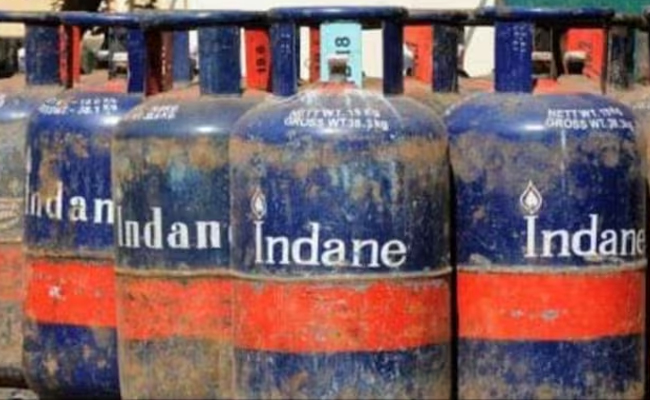
New Delhi (PTI) A day after a 50 per cent rise in commercial LPG cylinder prices, Delhi's food business, with restaurant owners and street vendors have warned of higher menu rates, financial strain and potential job losses if the trend persists.
The price of commercial LPG was hiked by a steep Rs 993 per 19 kg cylinder, marking the third consecutive monthly hike amid rising global energy prices linked to the West Asia conflict.
For many in the restaurant industry, the spike has been both sudden and steep.
Manpreet Singh, honorary treasurer of the National Restaurant Association of India, said that eateries are already grappling with supply challenges alongside rising costs.
"There is a huge difficulty in getting these cylinders, and black marketing is also increasing in many unregulated sectors," he said, noting that prices that were once around Rs 1,600, often dropping to nearly Rs 1,300 with discounts, have now surged to between Rs 3,000 and Rs 4,000 per cylinder.
He further added that a medium-sized restaurant typically uses between two and five cylinders daily, making the increase particularly burdensome as costs mount.
Singh further said that as costs mount, smaller establishments could struggle to stay afloat. Instead, the association has advised restaurants to shift towards piped natural gas connections through Indraprastha Gas Limited as a more sustainable alternative.
"If this problem continues, PNG is the only long-term solution," he said, adding that temporary measures like coal offer limited relief due to slower cooking times and that it can largely be used only for tandoors.
Echoing similar concerns, Kabir Suri, owner of Mamagoto in Khan Market, said the impact is already visible across the industry. "There has been almost a threefold increase in cylinder prices for restaurants," he said, adding that rising fuel and logistics costs are compounding the pressure.
"If this continues, it will become a significant financial burden, and food prices will inevitably go up. Adding to this burden, higher fuel costs are also affecting logistics and transportation, making a price rise unavoidable. The extent of the impact will vary between small eateries and large chains depending on their scale," he said.
Global oil prices have surged nearly 50 per cent following disruptions in energy supply chains due to the West Asia conflict, pushing up commercial fuel costs and transport expenses.
A West Delhi-based restaurateur said they are trying to manage rising costs while keeping their staff secure. "We are trying to ensure that our staff, from kitchen workers to waiters, are paid on time and do not face immediate hardship," the owner said.
"We are a small restaurant with seating for about 20 to 25 people at a time. But if this continues for long, we will have to take difficult calls. There is only so much we can absorb, and menu prices will have to go up. We hope this does not continue for a longer period," he said.
Another restaurant owner in North Delhi, who did not wish to be named, said operational adjustments alone may not be enough. "We are checking our costs very carefully and trying to cut wherever possible, but if fuel prices remain high, it will eventually affect how we run the business," the owner said.
"Coal helps in tandoor cooking, but it takes more time," the owner further added.
The strain is even more acute among street vendors, many of whom operate on thin margins. A vendor in Saket said he had recently expanded his business, moving from a mobile cart to a rented outlet.
"I have a family to feed and more responsibilities now. Earlier, I managed with a moving cart, but after renting the place, expenses increased," he said. "Whenever cylinders were unavailable, I had to buy them at higher rates in the black market. Now even regular supply is too expensive, and if this continues, we may have to shut down," he added.
In Laxmi Nagar, another vendor said they are struggling to keep the business running. "Sometimes we even used domestic cylinders from home when supply ran out because we had to keep the stall running," he said, adding that rising costs leave little choice but to increase prices or bear losses.
On April 1, the rates of commercial LPG cylinders were hiked by Rs 195.50 per cylinder, followed by a Rs 114.5 hike on March 1, taking the total increase over the past three months to Rs 1,303. With the latest revision, a 19 kg commercial LPG cylinder now costs Rs 3,371.5 in Delhi, up from Rs 2,078.5 earlier.
The prices of domestic LPG cylinders used for household cooking have remained unchanged. They were last increased by Rs 60 per 14.2 kg cylinder on March 7 and currently cost Rs 913 in Delhi.