Korean martial art 'hapkido' takes baby steps in India
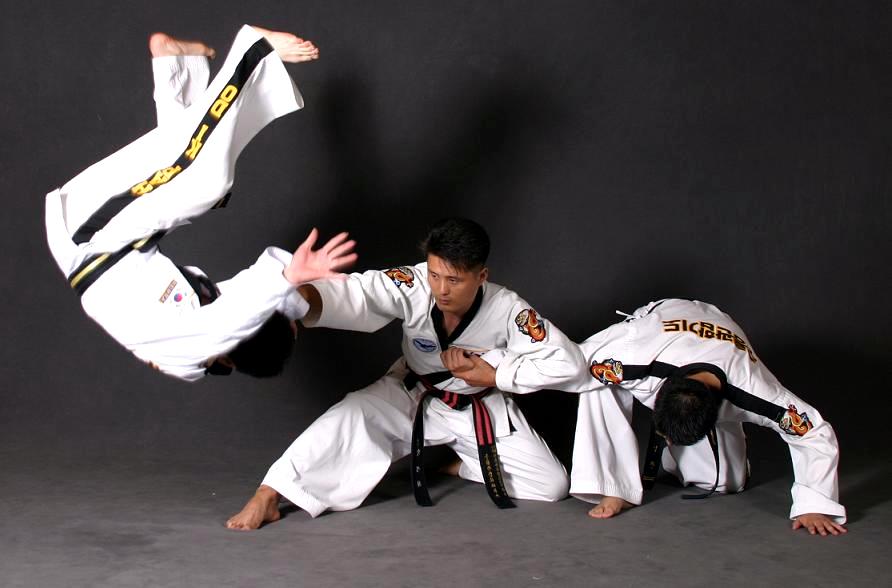
New Delhi: As a martial art, it is not as well-known as its more famous counterparts like kung fu, karate and judo, yet the Korean hapkido is slowly but surely catching on in India -- with the fifth edition of a national-level championship having concluded last week.
And the man working to popularise this sport in India -- considered the birthplace of martial arts -- is Hapkido Association of India founder Tarsem Sharma.
The self-defence technique, which originated in Korea after World War II, was initially taught by Choi Yong-Sool, and is believed to have evolved from a Japanese martial art called daito-ryu jujutsu.
The art, which employs joint locks, grappling, and throwing techniques, was later combined with various kicking, striking and ground-fighting skills employed in judo.
Sharma, an expert in taekwondo -- another Korean martial art -- was introduced to hapkido when he came in contact with its world federation chief, Grand Master Bermas Kim of South Korea, and Asian federation president Mohammed Raza of Iran on the internet.
The duo invited him to the Asian Championships held in 2013 where Sharma became intrigued with the sport. On his return to India, Sharma roped in several taekwondo practitioners to set up a national body for hapkido.
"I represented India as a team leader at the Asian Hapkido Games in Iran in 2013. The idea of bringing this art to our country came from there.
"I was in talks with Korean Master Kim and Iranian Mohammed Raza about hapkido through the Internet, but after going to Iran I got to know the sport better. It has techniques related to acupressure and physiotherapy which made me take more interest in it," Sharma told IANS.
The sport has slowly achieved a level of recognition. "We have got an appreciation certificate from IOA (Indian Olympic Association) and are also in talks with the School Games Federation of India to include the discipline," Sharma informed.
Master Rajesh Prasad, chief instructor of the Jharkhand State Hapkido Association, feels that the sport is as modern as the latest mobile phones being launched in the country.
"I have been associated with the sport for the last five years. I give hapkido training in Jharkhand, where people are quite crazy about it. A lot of boxing, taekwondo and judo practitioners are veering towards this sport because it is new in India. It is a modern sport, much like the new mobiles being launched in the market.
Elaborating on the benefits of hapkido, Prasad said it can be used by women to defend themselves and should be included as a part of the curriculum in every school.
"I have been into different martial arts since my childhood. My experience says that if women are trained in hapkido, they can easily defend themselves because it requires minimal strength. In fact, it is the strength of the opponent that we turn around," Prasad explained.
"If people were aware about this sport, they would have implemented it for girls in every school, because keeping cameras everywhere to protect them is not possible," Prasad said.
Noting that most forms of martial arts had originated in this country, Prasad said that Indians need to reclaim their rich heritage in the genre.
"Most forms of martial arts were born in India. Kalaripayattu (the martial art form of Kerala) is the oldest such. From here it went to China as Shaolin and today our country is behind others (in the discipline)," Prasad rued.
"We are having to learn from other countries to develop this sport in our own country," he added.
Talking about the future of hapkido in India, Prasad said politicians should stay away from it.
"If politics stays away from hapkido, then in the world of martial arts in the country, it will become the most revolutionary discipline," Prasad concluded.
Let the Truth be known. If you read VB and like VB, please be a VB Supporter and Help us deliver the Truth to one and all.
Allahabad HC orders probe into 'reinstatement' of teacher in UP's Barabanki
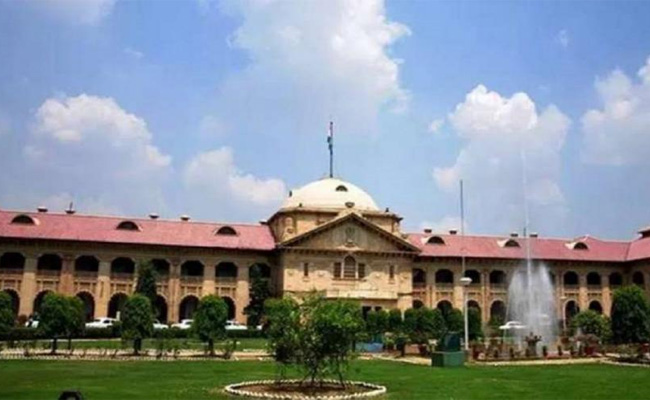
Lucknow (PTI): The Lucknow Bench of the Allahabad High Court on Friday ordered a probe by the special task force (STF) into alleged irregularities in the rejoining of a teacher at City Intermediate College in Barabanki, observing that the reinstatement appeared to be prima facie illegal.
The court also directed the recovery of the salary paid to the teacher during the disputed period.
A bench of Justice Rajeev Singh passed the order on a petition filed by the college management committee. The court expressed doubts over the roles of the District Inspector of Schools (DIOS), Barabanki, the college principal and the teacher concerned and hence, directed a detailed inquiry into the matter.
Taking note of alleged manipulation of records and misleading submissions, the court ordered the immediate transfer of the Barabanki DIOS to ensure a fair probe. It also directed the initiation of disciplinary proceedings against the then joint director of education of the Ayodhya division.
In its order, the court found that the teacher, Abhay Kumar, was initially appointed as an assistant teacher in 2018 but joined an Eklavya Model Residential School in Chhattisgarh as a lecturer in June 2024 without obtaining permission from the management. His subsequent request to retain the lien was rejected.
Despite this, he was allowed to rejoin the Barabanki College in September 2025 on the directions of the joint director of education and the DIOS, and was even paid the salary for October 2025. The court termed the rejoining "wholly illegal" and lacking any legal basis.
The bench also expressed concern over lapses in communication within the education department and directed the Uttar Pradesh chief secretary to ensure that official orders are communicated through email and WhatsApp as well, to prevent disputes.
The matter is next listed for hearing on May 28 when a compliance report is sought.