800,000 Indians may be forced to leave Kuwait after the Gulf country approves expat quota bill

Dubai: A total of 8 lakh Indians could be forced to leave Kuwait as it's National Assembly committee has approved a draft expat quota bill seeking to reduce the number of foreign workers in the Gulf country, according to media reports.
The National Assembly's legal and legislative committee has determined that the expat quota bill is constitutional.
According to the bill, Indians should not exceed 15 per cent of the population. This could result in 800,000 Indians leaving Kuwait, as the Indian community constitutes the largest expat community in the country, totalling 1.45 million, the Gulf News reported, citing a Kuwaiti newspaper.
The current population of Kuwait is 4.3 million, with Kuwaitis making up 1.3 million of the population, and expats accounting for 3 million.
Amid a slump in oil prices and the coronavirus pandemic, there has been a spike in anti-expat rhetoric as lawmakers and government officials call for reducing the number of foreigners in Kuwait.
Last month, Kuwait's Prime Minister Sheikh Sabah Al Khalid Al Sabah proposed reducing the number of expats from 70 per cent to 30 per cent of the population, the report said.
Assembly Speaker Marzouq Al-Ghanem told Kuwait TV that he and a group of lawmakers will submit to the Assembly a comprehensive draft law calling for a gradual reduction of expats in Kuwait.
Kuwait has a real problem in its population structure, in which 70 per cent are expats, the Speaker said, adding that what is more serious is that 1.3 million of the 3.35 million expats "are either illiterate or can merely read and write", the people Kuwait does not really need, the Kuwait Times reported.
"I understand that we recruit doctors and skilled manpower and not unskilled laborers. This is an indication that there is a distortion. Visa traders have contributed in increasing this figure, Ghanem said.
The Speaker said the draft law they intend to file will propose to impose a cap on the number of expats, whose numbers must decrease gradually by stating that this year expats will be 70 per cent, next year 65 per cent and so on, the report said.
The expat quota bill will now be referred to the concerned committee for consideration. It states that the Indian expatriate community should not exceed 15 per cent of the national population, which means around 800,000 of them might be required to leave Kuwait, the Arab News reported.
According to the Indian embassy in Kuwait, there are about 28,000 Indians working for the Kuwaiti Government in various jobs like nurses, engineers in national oil companies and a few as scientists.
The majority of Indians (5.23 Lakh) are deployed in private sectors. In addition, there are about 1.16 lakh dependents. Out of these, there are about 60,000 Indian students studying in 23 Indian schools in the country.
The bill will now be transferred to the respective committee so that a comprehensive plan is created. It proposes similar quotas for other nationalities. Kuwait is a top source of remittances for India. In 2018, India received nearly USD 4.8 billion from Kuwait as remittances.
Foreigners have accounted for the majority of Kuwait's COVID-19 cases as the disease spread among migrant workers living in overcrowded housing.
According to the latest data from Johns Hopkins University, more than 49,000 cases of coronavirus have been reported in Kuwait. Globally, more than 5 lakh people have died and over 11 million have been infected by COVID-19.
Let the Truth be known. If you read VB and like VB, please be a VB Supporter and Help us deliver the Truth to one and all.
CPI(M) rebel Kunhikrishnan hopes for 5,000-vote win in Payyanur
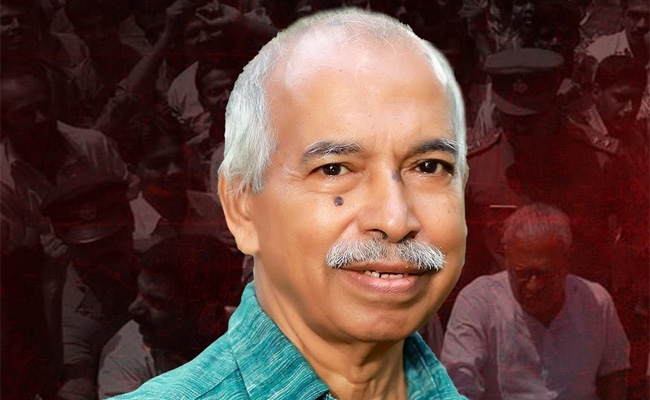
Kannur (Kerala) (PTI): CPI(M) rebel candidate V Kunhikrishnan, who contested as a UDF-backed Independent from Payyanur here, on Saturday said he was hoping to win the Assembly election by a margin of 5,000 votes.
Kunhikrishnan was expelled from the CPI(M) earlier this year after raising allegations of corruption in the party’s martyrs’ fund against sitting MLA T I Madhusoodanan.
Speaking to a TV channel, Kunhikrishnan said he had announced his candidature as a mark of protest and not with expectations of victory.
However, he said the situation had changed drastically, with a strong undercurrent within CPI(M) votes favouring him.
"The undercurrent in CPI(M) votes cannot be measured. Now people are giving a response indicating victory with a margin of at least 5,000 votes," he said.
Payyanur is considered a CPI(M) stronghold, and a defeat for Madhusoodanan there would be a major setback for the party.
On political violence in Payyanur, Kunhikrishnan said he had been facing it since filing his nomination.
"The people leading this violence should think about how long they can continue it. It is the police which has to take the initiative to stop this violence as part of maintaining law and order. But the police are not intervening at the required level," he said.
Regarding his political future, Kunhikrishnan said efforts were underway to strengthen Left groups, and discussions were being held across Kerala in that regard.
"After discussing with others, a decision will be taken," he said.
Kunhikrishnan is among six former CPI(M) leaders who either exited the party or were suspended before contesting for the UDF in the April 9 Assembly elections.
Elections to the 140-seat Kerala Assembly were held on April 9, and the counting of votes will be held on May 4.