In just a week, wildfires burn 1 million acres in California
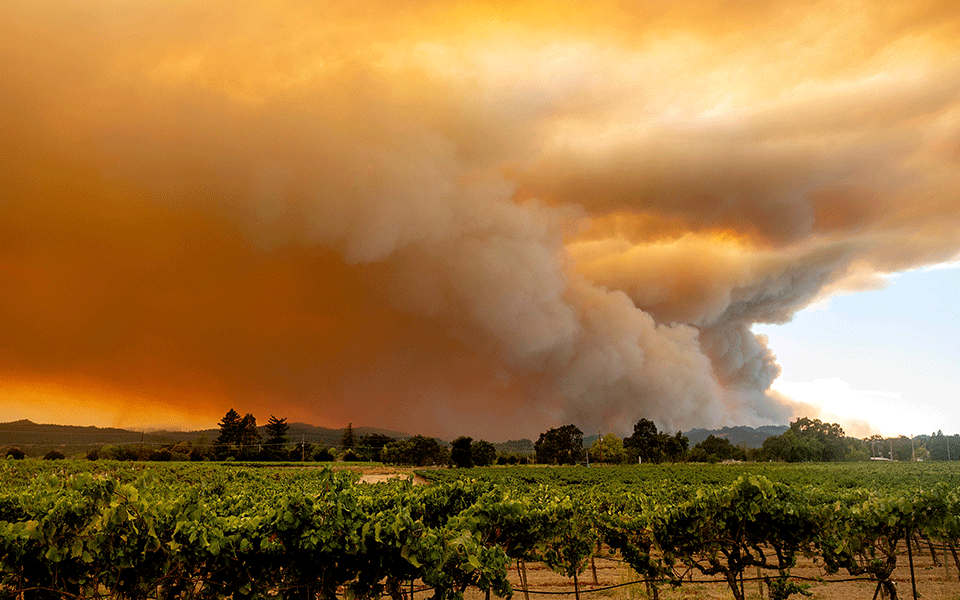
San Francisco: Weary firefighters in California raced Saturday to slow the spread of wildfires that burned nearly one million acres statewide in a week and destroyed hundreds of homes ahead an expected weather change that could bring more lightning strikes like the ones that sparked many of the blazes.
Responding to the emergency, President Donald Trump issued a major disaster declaration to provide federal assistance. Gov. Gavin Newsom said in a statement that the declaration will also help people in counties affected by the fires with crisis counseling, housing and other social services.
Two clusters of wildfires in the San Francisco Bay Area grew to become the second- and third-largest wildfires in recent state history by size. Light winds and cooler and more humid nighttime weather helped fire crews make progress on those fires and a third group of fires south of San Francisco ahead of the forecast of warm, dry weather, erratic wind gusts and lightning, state fire officials said.
The National Weather Service issued a red flag warning of high fire danger across the Bay Area and along the Central Coast, beginning from Sunday morning to Monday afternoon.
The worst is not behind us. We are in a battle rhythm, California Department of Forestry and Fire Protection (Cal Fire) Chief Thom Porter tweeted.
Since thousands of lightning strikes began on Aug. 15, the state reported 585 wildfires that have burned nearly a million acres, or 1,562 square miles (4,046 square kilometers), according to Cal Fire.
Many were small and remote. The bulk of damage was from three fire complexes that were ravaging forest and rural areas in and around the San Francisco Bay Area. They have burned 1,045 square miles (2,700 square kilometers). The fires have killed five people, torched nearly 700 homes and other structures and forced tens of thousands from their houses.
Tuesday night when I went to bed I had a beautiful home on a beautiful ranch, said 81-year-old Hank Hanson of Vacaville. By Wednesday night, I have nothing but a bunch of ashes.
In Santa Cruz County, the fire was threatening Boulder Creek, an old logging community of about 5,000 in the Santa Cruz Mountains on the edge of California's oldest state park -- Big Basin Redwoods. Fire officials said they expected the blaze to reach the community, but they took advantage of recent good weather to try to herd flames around the town.
Earlier in the week, fire officials in charge of each of the three major wildfires said they were strapped for resources. Some firefighters were working 72-hour shifts instead of the usual 24 hours. By Friday, the approximately 13,700 firefighters on the line began to get help on the ground and with aircraft from 10 states, along with the National Guard and U.S. military.
Those fires were a top priority. But in a sign of how overburdened the state's firefighting agency is, fire officials said only 1,400 firefighters were assigned to battle the LNU Lightning Complex fire in wine country north of San Francisco, which was only 15% contained.
In comparison, about 5,000 firefighters were assigned to the Mendocino Complex fire in 2018, the largest fire in recent state history.
All of our resources remain stretched to capacity that we have not seen in recent history, said Shana Jones, the chief for Cal Fire's Sonoma-Lake-Napa unit.
We are making progress, but we are not out of the woods, she said.
Underscoring the danger the fires pose for firefighters, the Sonoma County sheriff's office released dramatic video of the helicopter rescue Friday night of two firefighters trapped on a ridge line at Point Reyes National Seashore. They were hoisted to safety as flames advanced.
Had it not been for that helicopter, those firefighters would certainly have perished, Sonoma County Sheriff Mark Essick said.
Containment for the fire burning in the Santa Cruz Mountains and along the coast of San Mateo County, south of San Francisco, was at just 5%, and 115 homes and other structures had been destroyed. Firefighters established a fire break aimed at protecting the evacuated University of California, Santa Cruz campus and the surrounding area.
It's not a silver bullet. But it gives us a really good stronghold to keep the fire from moving south toward those communities, Cal Fire Battalion Chief Mark Brunton said.
Let the Truth be known. If you read VB and like VB, please be a VB Supporter and Help us deliver the Truth to one and all.
Commercial LPG hike: Delhi restaurant owners warn of higher menu rates, job losses
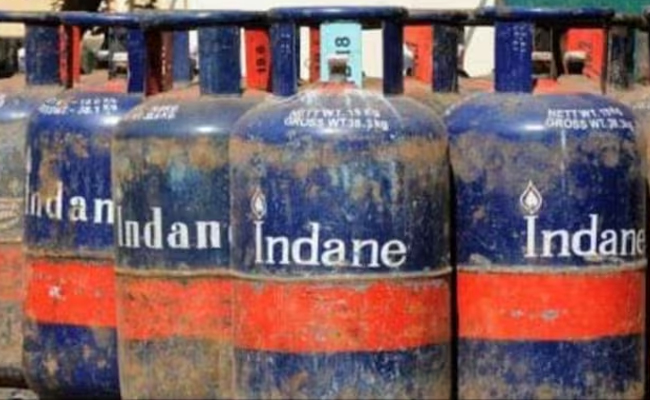
New Delhi (PTI) A day after a 50 per cent rise in commercial LPG cylinder prices, Delhi's food business, with restaurant owners and street vendors have warned of higher menu rates, financial strain and potential job losses if the trend persists.
The price of commercial LPG was hiked by a steep Rs 993 per 19 kg cylinder, marking the third consecutive monthly hike amid rising global energy prices linked to the West Asia conflict.
For many in the restaurant industry, the spike has been both sudden and steep.
Manpreet Singh, honorary treasurer of the National Restaurant Association of India, said that eateries are already grappling with supply challenges alongside rising costs.
"There is a huge difficulty in getting these cylinders, and black marketing is also increasing in many unregulated sectors," he said, noting that prices that were once around Rs 1,600, often dropping to nearly Rs 1,300 with discounts, have now surged to between Rs 3,000 and Rs 4,000 per cylinder.
He further added that a medium-sized restaurant typically uses between two and five cylinders daily, making the increase particularly burdensome as costs mount.
Singh further said that as costs mount, smaller establishments could struggle to stay afloat. Instead, the association has advised restaurants to shift towards piped natural gas connections through Indraprastha Gas Limited as a more sustainable alternative.
"If this problem continues, PNG is the only long-term solution," he said, adding that temporary measures like coal offer limited relief due to slower cooking times and that it can largely be used only for tandoors.
Echoing similar concerns, Kabir Suri, owner of Mamagoto in Khan Market, said the impact is already visible across the industry. "There has been almost a threefold increase in cylinder prices for restaurants," he said, adding that rising fuel and logistics costs are compounding the pressure.
"If this continues, it will become a significant financial burden, and food prices will inevitably go up. Adding to this burden, higher fuel costs are also affecting logistics and transportation, making a price rise unavoidable. The extent of the impact will vary between small eateries and large chains depending on their scale," he said.
Global oil prices have surged nearly 50 per cent following disruptions in energy supply chains due to the West Asia conflict, pushing up commercial fuel costs and transport expenses.
A West Delhi-based restaurateur said they are trying to manage rising costs while keeping their staff secure. "We are trying to ensure that our staff, from kitchen workers to waiters, are paid on time and do not face immediate hardship," the owner said.
"We are a small restaurant with seating for about 20 to 25 people at a time. But if this continues for long, we will have to take difficult calls. There is only so much we can absorb, and menu prices will have to go up. We hope this does not continue for a longer period," he said.
Another restaurant owner in North Delhi, who did not wish to be named, said operational adjustments alone may not be enough. "We are checking our costs very carefully and trying to cut wherever possible, but if fuel prices remain high, it will eventually affect how we run the business," the owner said.
"Coal helps in tandoor cooking, but it takes more time," the owner further added.
The strain is even more acute among street vendors, many of whom operate on thin margins. A vendor in Saket said he had recently expanded his business, moving from a mobile cart to a rented outlet.
"I have a family to feed and more responsibilities now. Earlier, I managed with a moving cart, but after renting the place, expenses increased," he said. "Whenever cylinders were unavailable, I had to buy them at higher rates in the black market. Now even regular supply is too expensive, and if this continues, we may have to shut down," he added.
In Laxmi Nagar, another vendor said they are struggling to keep the business running. "Sometimes we even used domestic cylinders from home when supply ran out because we had to keep the stall running," he said, adding that rising costs leave little choice but to increase prices or bear losses.
On April 1, the rates of commercial LPG cylinders were hiked by Rs 195.50 per cylinder, followed by a Rs 114.5 hike on March 1, taking the total increase over the past three months to Rs 1,303. With the latest revision, a 19 kg commercial LPG cylinder now costs Rs 3,371.5 in Delhi, up from Rs 2,078.5 earlier.
The prices of domestic LPG cylinders used for household cooking have remained unchanged. They were last increased by Rs 60 per 14.2 kg cylinder on March 7 and currently cost Rs 913 in Delhi.