Sri Lanka announces raft of relief for Ditwah-affected; Prez says life restored to normalcy
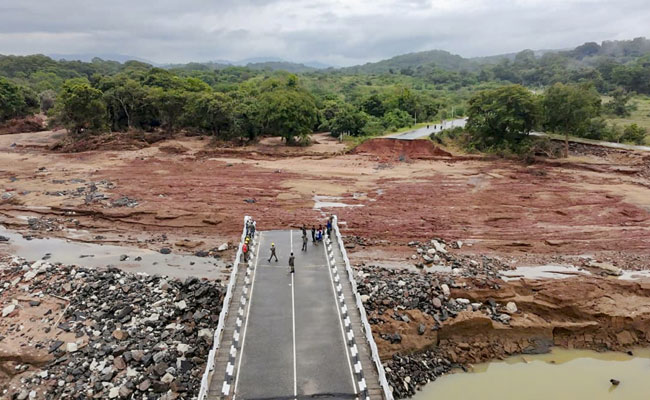
Colombo (PTI): Sri Lankan President Anura Kumara Dissanayake on Saturday said his government has been able to restore public life to normalcy within a very short period after Cyclone Ditwah devastated the island nation and took over 600 lives.
Dissanayake's claim came a day after he announced a massive relief package to all those affected by Cyclone Ditwah and requested the IMF for an additional USD 200 million to meet excess expenditure to cope up with the disaster.
The International Monetary Fund's (IMF) Colombo office on Saturday said the request would be considered at the global lender’s executive board on December 15.
The island nation has been grappling with widespread flooding, landslides and severe infrastructure collapse following Cyclone Ditwah, which has also acutely strained the country's disaster-response capacity.
ALSO READ: 11 killed in mass shooting at South African bar
As many as 611 people had died and over 200 remained missing even as search operations for those buried under landslides continued a week after the cyclone struck the country.
Data from the Disaster Management Centre (DMC), as of Saturday evening, showed 1,14,126 persons from at least 33,622 families have taken refuge at 956 shelters.
Dissanayake visited the central district of Kandy, which was the worst hit by the disaster with 232 deaths and 81 disappearances as of Saturday and also tops the list for the number of houses destroyed totally and partially.
Although some expected it would take a long time for the country to recover after the Ditwah cyclone disaster, the government has already been able to restore public life to normalcy within a very short period, Dissanayake said at Kandy.
Dissanayake visited one of the relief camps in Kandy and spoke with the survivors and the displaced.
He also reviewed the progress of the rapid programmes underway to restore essential infrastructure in the district, including the highway network, electricity, water and fuel supply, irrigation systems and communication facilities.
The president also instructed that water supply in the district be fully restored within three days and gave a December 31 deadline for restoring the electricity supply in the district.
ALSO READ: Russia unleashes massive drone, missile attack on Ukraine as diplomatic talks continue
Earlier on Friday, Dissanayake, who is also the Minister of Finance, told the parliament that the maximum amount of grant is to be given to the families of those who lost their lives and to the cyclone-hit agri-land holders.
He announced LKR 1 million for each life lost and LKRs 1,50,000 per hectare for replanting paddy and other grains affected among other grants for several sectors.
Announcing the formation of a National Task Force for Reconstruction, the president also announced a one off grant of LKR 50,000 for purchasing essential household items for homes destroyed; a LKR 25,000 monthly allowance for three months for families leaving evacuation centres to rent alternative housing; LKR 2,00,000 grant to restart registered livestock farms destroyed by the disaster, and LKR 4,00,000 compensation for each registered fishing boat completely damaged.
He also announced LKR 5 million grant to construct a new house for fully destroyed homes, and LKR 5 million grant for land acquisition to rebuild homes lost to disaster.
The Central Bank too on Friday announced temporary debt relief for businesses affected with new loan facilities for the affected borrowers.
Meanwhile, an IMF representative in Sri Lanka on Saturday said that the island nation’s request for additional USD 200 million outside the USD 340 million due as the sixth tranche of the IMF bail out “would be considered” by the global lender’s executive board on December 15.
Evan Papageorgiou, IMF Mission Chief for Sri Lanka, in a statement acknowledged the scale of destruction in the wake of the devastating impact and widespread destruction caused by Cyclone Ditwah.
“The Sri Lankan government has formally requested approximately USD 200 million under the IMF’s Rapid Financing Instrument (RFI) — equivalent to 26 percent of the country’s quota. This request is currently under consideration and subject to approval by the IMF Executive Board,” the statement said.
Let the Truth be known. If you read VB and like VB, please be a VB Supporter and Help us deliver the Truth to one and all.
Commercial LPG hike: Delhi restaurant owners warn of higher menu rates, job losses
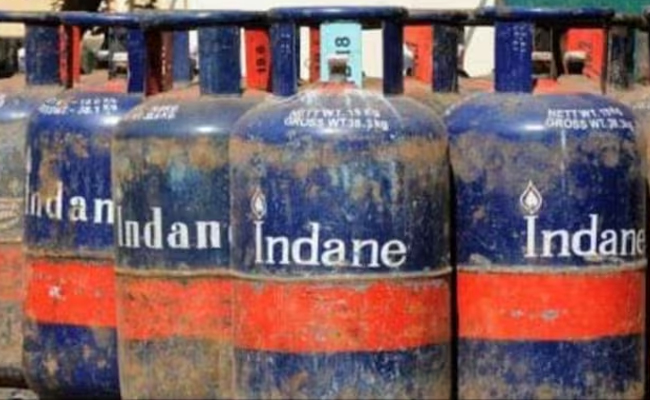
New Delhi (PTI) A day after a 50 per cent rise in commercial LPG cylinder prices, Delhi's food business, with restaurant owners and street vendors have warned of higher menu rates, financial strain and potential job losses if the trend persists.
The price of commercial LPG was hiked by a steep Rs 993 per 19 kg cylinder, marking the third consecutive monthly hike amid rising global energy prices linked to the West Asia conflict.
For many in the restaurant industry, the spike has been both sudden and steep.
Manpreet Singh, honorary treasurer of the National Restaurant Association of India, said that eateries are already grappling with supply challenges alongside rising costs.
"There is a huge difficulty in getting these cylinders, and black marketing is also increasing in many unregulated sectors," he said, noting that prices that were once around Rs 1,600, often dropping to nearly Rs 1,300 with discounts, have now surged to between Rs 3,000 and Rs 4,000 per cylinder.
He further added that a medium-sized restaurant typically uses between two and five cylinders daily, making the increase particularly burdensome as costs mount.
Singh further said that as costs mount, smaller establishments could struggle to stay afloat. Instead, the association has advised restaurants to shift towards piped natural gas connections through Indraprastha Gas Limited as a more sustainable alternative.
"If this problem continues, PNG is the only long-term solution," he said, adding that temporary measures like coal offer limited relief due to slower cooking times and that it can largely be used only for tandoors.
Echoing similar concerns, Kabir Suri, owner of Mamagoto in Khan Market, said the impact is already visible across the industry. "There has been almost a threefold increase in cylinder prices for restaurants," he said, adding that rising fuel and logistics costs are compounding the pressure.
"If this continues, it will become a significant financial burden, and food prices will inevitably go up. Adding to this burden, higher fuel costs are also affecting logistics and transportation, making a price rise unavoidable. The extent of the impact will vary between small eateries and large chains depending on their scale," he said.
Global oil prices have surged nearly 50 per cent following disruptions in energy supply chains due to the West Asia conflict, pushing up commercial fuel costs and transport expenses.
A West Delhi-based restaurateur said they are trying to manage rising costs while keeping their staff secure. "We are trying to ensure that our staff, from kitchen workers to waiters, are paid on time and do not face immediate hardship," the owner said.
"We are a small restaurant with seating for about 20 to 25 people at a time. But if this continues for long, we will have to take difficult calls. There is only so much we can absorb, and menu prices will have to go up. We hope this does not continue for a longer period," he said.
Another restaurant owner in North Delhi, who did not wish to be named, said operational adjustments alone may not be enough. "We are checking our costs very carefully and trying to cut wherever possible, but if fuel prices remain high, it will eventually affect how we run the business," the owner said.
"Coal helps in tandoor cooking, but it takes more time," the owner further added.
The strain is even more acute among street vendors, many of whom operate on thin margins. A vendor in Saket said he had recently expanded his business, moving from a mobile cart to a rented outlet.
"I have a family to feed and more responsibilities now. Earlier, I managed with a moving cart, but after renting the place, expenses increased," he said. "Whenever cylinders were unavailable, I had to buy them at higher rates in the black market. Now even regular supply is too expensive, and if this continues, we may have to shut down," he added.
In Laxmi Nagar, another vendor said they are struggling to keep the business running. "Sometimes we even used domestic cylinders from home when supply ran out because we had to keep the stall running," he said, adding that rising costs leave little choice but to increase prices or bear losses.
On April 1, the rates of commercial LPG cylinders were hiked by Rs 195.50 per cylinder, followed by a Rs 114.5 hike on March 1, taking the total increase over the past three months to Rs 1,303. With the latest revision, a 19 kg commercial LPG cylinder now costs Rs 3,371.5 in Delhi, up from Rs 2,078.5 earlier.
The prices of domestic LPG cylinders used for household cooking have remained unchanged. They were last increased by Rs 60 per 14.2 kg cylinder on March 7 and currently cost Rs 913 in Delhi.